Parallel ranging laser sensors represent a significant advancement in industrial measurement and automation technology. These sensors utilize laser beams projected in parallel arrays to simultaneously measure distances to multiple points or surfaces with high precision. Unlike single-point laser sensors, parallel ranging systems capture a broader field of view, enabling comprehensive spatial analysis in real-time. This capability is particularly valuable in dynamic industrial environments where speed, accuracy, and reliability are paramount.
The operational principle of parallel ranging laser sensors is based on time-of-flight (ToF) or phase-shift measurement techniques. In ToF systems, the sensor emits short laser pulses and calculates distance by measuring the time taken for the light to reflect off a target and return. Phase-shift systems, on the other hand, modulate the laser beam's intensity and determine distance by analyzing the phase difference between emitted and reflected signals. Parallel configurations amplify these methods by employing multiple laser diodes or scanning mechanisms to generate a set of parallel beams. This allows for the creation of detailed depth maps or profiles, facilitating applications such as object detection, dimension verification, and surface inspection.

In manufacturing and logistics, parallel ranging laser sensors are instrumental in quality control processes. For instance, on assembly lines, they can rapidly scan components to ensure dimensional conformity, detecting deviations as small as a few micrometers. This non-contact measurement avoids part damage and reduces downtime. Additionally, in robotic guidance systems, these sensors provide precise positioning data, enabling robots to navigate complex spaces, pick and place items accurately, and collaborate safely with human workers. The automotive industry leverages parallel ranging for vehicle alignment checks and weld seam inspection, while the electronics sector uses it for PCB flatness assessment and component placement verification.
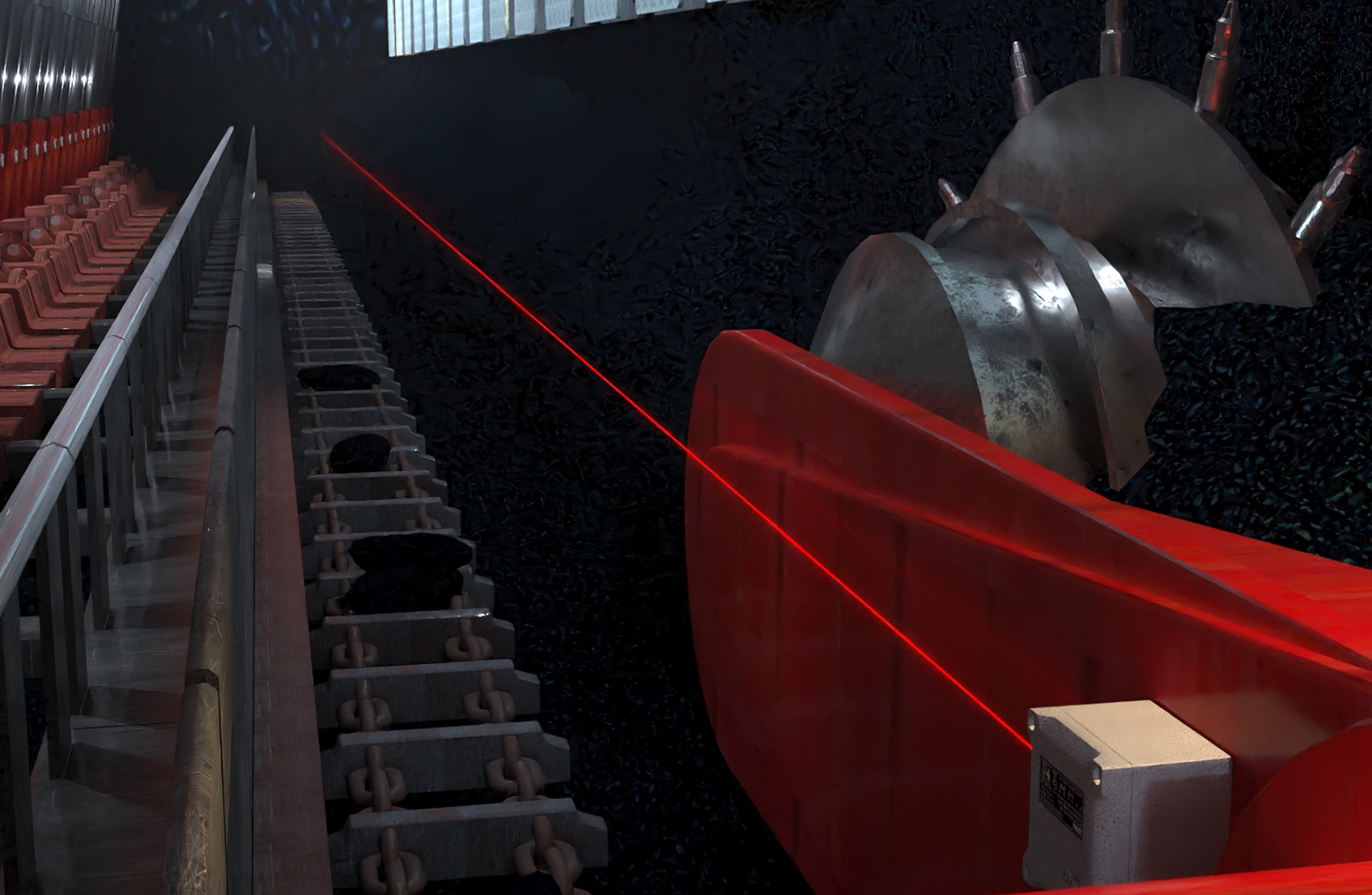
Another critical application is in warehouse automation, where parallel ranging sensors assist in palletizing, inventory management, and autonomous mobile robot (AMR) navigation. By generating real-time 3D maps of storage areas, they help optimize space utilization and streamline retrieval processes. In construction and civil engineering, these sensors monitor structural deformations, measure land topography, and guide heavy machinery with millimeter-level accuracy, enhancing safety and efficiency on site.
The advantages of parallel ranging laser sensors include high measurement speed, often exceeding thousands of points per second, and robustness in challenging conditions. They perform consistently in varying lighting environments, from dark warehouses to brightly lit factories, and are resistant to dust, vibrations, and temperature fluctuations when properly housed. However, challenges such as interference from reflective surfaces or ambient light noise require careful calibration and filtering algorithms. Modern sensors integrate advanced signal processing and machine learning to mitigate these issues, improving data accuracy.
Looking ahead, trends in parallel ranging technology point toward miniaturization, increased resolution, and enhanced connectivity. Integration with IoT platforms allows for seamless data sharing across industrial networks, enabling predictive maintenance and smarter decision-making. As industries embrace Industry 4.0, the demand for sophisticated sensing solutions like parallel ranging laser sensors is set to grow, driving innovations in automation, safety, and operational excellence.
In summary, parallel ranging laser sensors are transformative tools in industrial settings, offering multi-point measurement capabilities that boost productivity and precision. Their versatility across sectors underscores their importance in modern engineering, making them a cornerstone of advanced automation systems.