In the rapidly evolving landscape of industrial automation and precision measurement, laser sensors have emerged as indispensable tools, pushing the boundaries of what is possible in high-end applications. These devices, which utilize laser technology to detect, measure, and analyze objects with exceptional accuracy, are revolutionizing sectors ranging from manufacturing and aerospace to healthcare and robotics. Unlike conventional sensors, laser sensors offer non-contact operation, high resolution, and rapid response times, making them ideal for environments where precision and reliability are paramount.
One of the most prominent high-end applications of laser sensors is in the field of autonomous vehicles and advanced driver-assistance systems (ADAS). Here, LiDAR (Light Detection and Ranging) sensors, a type of laser sensor, create detailed 3D maps of the surroundings by emitting laser pulses and measuring the time it takes for them to reflect back. This enables real-time object detection, distance calculation, and navigation, ensuring safety and efficiency in self-driving cars. The precision of laser sensors allows for the identification of obstacles as small as pedestrians or debris, even in low-light conditions, a critical advantage over traditional radar or camera systems.
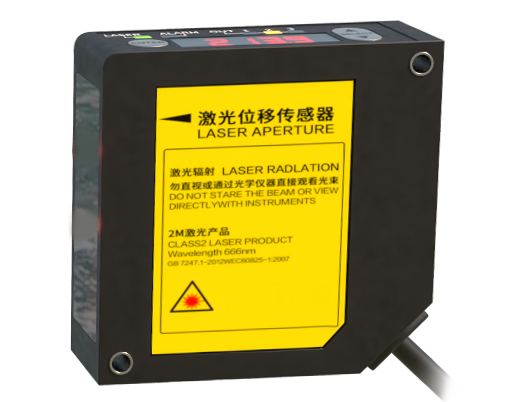
In aerospace and defense, laser sensors play a crucial role in guidance, tracking, and surveillance. They are used in missile defense systems to accurately track targets and in satellite communication for alignment and distance measurement. The ability to operate over long distances with minimal interference makes laser sensors invaluable for applications such as terrain mapping, atmospheric monitoring, and secure data transmission. For instance, in aircraft manufacturing, laser sensors are employed for quality control, inspecting components like turbine blades for microscopic defects that could compromise performance. This level of detail ensures compliance with stringent safety standards and reduces downtime.
The healthcare industry has also embraced laser sensors for advanced diagnostic and therapeutic purposes. In medical imaging, laser-based techniques like optical coherence tomography (OCT) provide high-resolution, cross-sectional images of tissues, aiding in early disease detection, particularly in ophthalmology for retinal scans. Additionally, laser sensors are integral to surgical robots, where they guide precise incisions and monitor tissue responses in real-time. This enhances minimally invasive procedures, leading to faster recovery times and improved patient outcomes. In research, laser sensors facilitate DNA sequencing and cellular analysis, driving innovations in personalized medicine.
Robotics and smart manufacturing further highlight the versatility of laser sensors. In industrial robots, these sensors enable precise positioning and object recognition, allowing for tasks such as welding, assembly, and packaging with sub-millimeter accuracy. They are key components in collaborative robots (cobots) that work alongside humans, using laser scanners to ensure safety by detecting proximity and preventing collisions. In smart factories, laser sensors contribute to predictive maintenance by monitoring equipment vibrations and wear, thus minimizing unplanned outages and optimizing production lines. The integration with IoT (Internet of Things) platforms allows for data-driven decision-making, enhancing overall operational efficiency.
Moreover, environmental monitoring and energy sectors benefit from laser sensor applications. For example, in renewable energy, laser sensors are used to assess wind patterns for turbine placement or to inspect solar panels for efficiency losses. In pollution control, they detect gas emissions and particulate matter with high sensitivity, supporting regulatory compliance and public health initiatives. The non-invasive nature of laser sensing makes it suitable for monitoring fragile ecosystems without disruption.
Despite their advantages, the deployment of laser sensors in high-end applications faces challenges such as high costs, sensitivity to environmental factors like dust or fog, and the need for specialized expertise. However, ongoing advancements in miniaturization, cost reduction, and adaptive algorithms are addressing these issues. Future trends include the development of quantum laser sensors for unprecedented sensitivity and the integration with artificial intelligence for autonomous decision-making.
In conclusion, laser sensors represent a cornerstone of modern technological progress, enabling breakthroughs across diverse industries. Their ability to deliver precise, reliable data in demanding environments underscores their value in driving innovation and efficiency. As research continues to expand their capabilities, laser sensors will undoubtedly play an even more pivotal role in shaping the future of automation, safety, and sustainability.