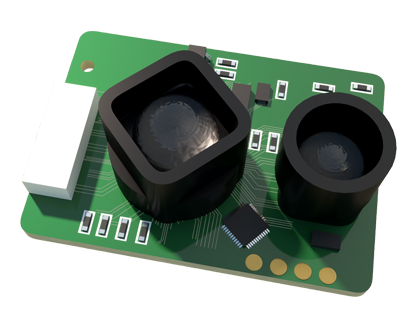
Laser distance sensors have become indispensable tools across various industries, from manufacturing and robotics to construction and logistics. Their ability to provide precise, non-contact measurements makes them critical for applications like level monitoring, object detection, positioning, and quality control. However, the true potential of a high-quality laser sensor is unlocked only when it is correctly integrated into a larger system. This integration hinges on understanding its interface—the crucial bridge between the sensor's raw measurement data and the control system that acts upon it. This article delves into the common interface types, their characteristics, and key selection criteria for engineers.
The primary function of any sensor interface is to communicate the measured distance value. This communication can be analog or digital, each with distinct advantages. Analog interfaces, typically voltage (e.g., 0-10 V) or current (e.g., 4-20 mA), are a classic and widely understood technology. A 0-10V output might correspond linearly to the sensor's measuring range. The 4-20 mA current loop is particularly valued in industrial environments for its high noise immunity and ability to power the sensor over the same two wires (two-wire technology). Analog signals are straightforward to connect to PLCs (Programmable Logic Controllers) and other control devices with analog input cards. However, they are generally limited to transmitting just the primary measurement value and offer lower resolution compared to modern digital interfaces.
Digital interfaces have largely become the standard for new systems due to their robustness, speed, and data richness. They transmit data as discrete binary values, eliminating the signal degradation and noise susceptibility inherent in analog transmission over long distances. Common serial digital interfaces include RS-232, RS-422, and RS-485. RS-232 is a point-to-point interface suitable for short distances. RS-485, on the other hand, supports multi-drop networks, allowing multiple sensors to communicate on a single bus, which simplifies wiring in complex installations. These interfaces often use simple ASCII-based protocols or manufacturer-specific commands to request and receive data.
For high-speed and deterministic communication, fieldbus systems and Industrial Ethernet protocols are paramount. Interfaces like PROFIBUS DP, DeviceNet, or Modbus RTU (over RS-485) are established fieldbus standards. Modern sensors increasingly feature Industrial Ethernet interfaces such as EtherNet/IP, PROFINET, EtherCAT, or Modbus TCP/IP. These protocols enable not only fast data transfer but also seamless integration into Industry 4.0 and IIoT (Industrial Internet of Things) architectures. They allow for the transmission of extensive data packets containing not just the distance value, but also status information, diagnostic data, and configuration parameters. Furthermore, they support sophisticated functions like synchronous triggering of multiple sensors or changing parameters on-the-fly via the network.
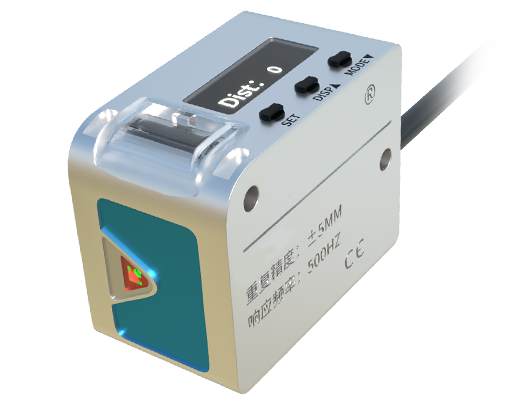
Beyond these, several other interface types are prevalent. Push-pull (NPN/PNP) switches or transistor outputs provide simple binary signals—for instance, to trigger an alarm when a measurement exceeds a set threshold. Incremental encoder outputs (A/B quadrature signals) are used for precise position tracking in motion control systems. Some sensors also offer IO-Link, a point-to-point serial communication standard that adds a digital "conversation layer" to a standard 3-wire sensor connection. IO-Link enables detailed parameterization, advanced diagnostics, and process value access from the sensor, making it a powerful tool for smart sensor applications without the complexity of a full fieldbus.
Selecting the appropriate interface requires a careful analysis of the application needs. Key considerations include: Data Requirements: Does the system need just a simple analog value, a single digital value, or rich data with diagnostics? Network Architecture: Is it a simple point-to-point connection, a multi-drop bus, or part of a larger Ethernet network? Speed and Update Rate: How quickly must the measurement data be refreshed in the control system? Distance: What is the physical distance between the sensor and the controller? Noise Environment: Is the installation in an electrically noisy area with motors or drives? System Compatibility: What interfaces are available on the existing PLC, PAC (Programmable Automation Controller), or data acquisition system? Finally, consider future needs like predictive maintenance or data analytics, which may favor digital, network-capable interfaces.
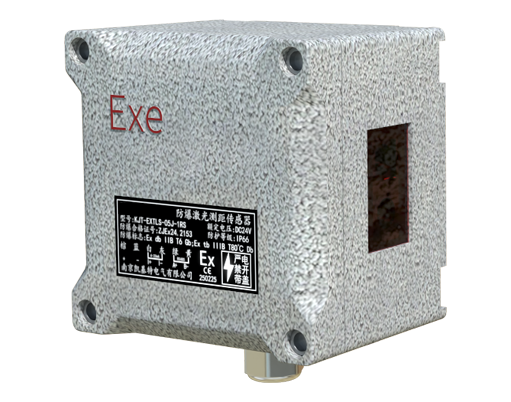
In conclusion, the interface is a fundamental specification of a laser distance sensor, dictating its compatibility, performance, and functionality within an automated system. While analog interfaces remain relevant for simple tasks, digital interfaces—especially serial communications and Industrial Ethernet—offer superior performance, reliability, and future-proofing for modern industrial applications. A thorough evaluation based on technical requirements, environmental conditions, and system integration goals will lead engineers to the optimal interface choice, ensuring accurate data flow and maximizing the return on investment from their laser sensing technology.