In the realm of industrial automation and control systems, the classification and function of components are foundational to system design and communication. A common point of inquiry, particularly for those new to the field or specifying components for a project, is whether a proximity switch falls under the broader category of sensors. The short and definitive answer is yes, a proximity switch is unequivocally a type of sensor. However, this simple affirmation warrants a detailed exploration to understand the nuances, working principles, and specific roles that distinguish proximity switches within the vast sensor family.
Fundamentally, a sensor is any device that detects or measures a physical property and records, indicates, or otherwise responds to it. It converts a physical phenomenon—such as light, heat, motion, or, crucially for our discussion, the presence of an object—into an electrical signal that can be interpreted by a control system. Proximity switches perform this exact function. Their primary purpose is to detect the presence or absence of a target object within a specified range without any physical contact. Upon detection, they produce a discrete, on/off electrical output signal. This binary output is a key characteristic that aligns them with a specific subclass of sensors often referred to as "proximity sensors" or "non-contact switches."
The working principle of a proximity switch further cements its identity as a sensor. Several technologies are employed, each sensing a different physical property to achieve detection:
1. Inductive Proximity Switches: These are among the most common. They generate an electromagnetic field. When a metallic object (the target) enters this field, it induces eddy currents within the object, which causes a change in the oscillation amplitude of the sensor's internal circuit. This change is detected and triggers the switching output. They are ideal for detecting metals.
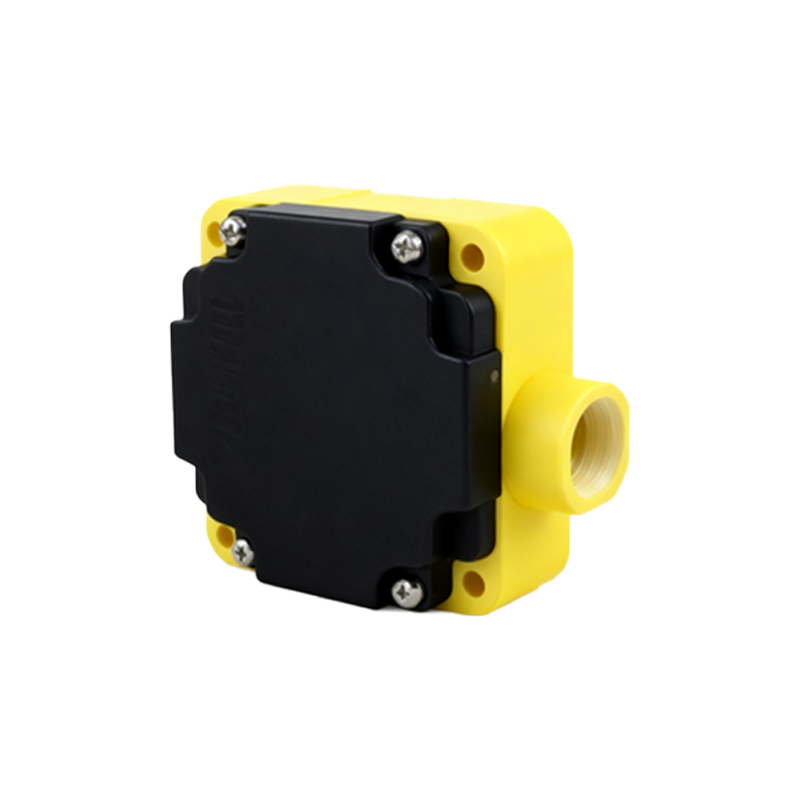
2. Capacitive Proximity Switches: These switches generate an electrostatic field. They can detect both metallic and non-metallic materials (plastics, wood, liquids, granules) by sensing changes in capacitance caused by the target object entering the field. This makes them versatile for various material detection tasks.
3. Ultrasonic Proximity Switches: These emit high-frequency sound waves and evaluate the reflected echo. The time taken for the echo to return is used to determine the presence and sometimes distance of an object. They are effective for detecting objects of most materials, including transparent ones, and are used in challenging environments.
4. Photoelectric Switches: While sometimes categorized separately, they function as non-contact proximity devices. They use a light beam (visible, infrared, or laser) and detect its interruption or reflection by an object to trigger an output signal.
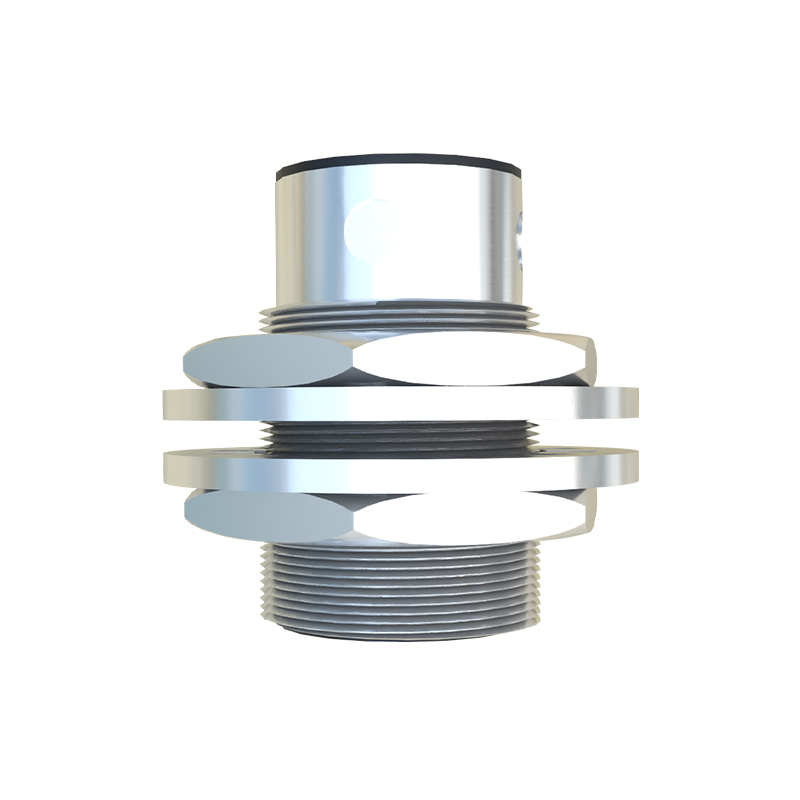
In each case, the core action is sensing—detecting a change in a field or wave caused by an external object—and then transducing that change into a usable electrical signal. This is the quintessential definition of a sensor.
The term "switch" in "proximity switch" specifically describes the nature of its output and its role in a control circuit. Unlike analog sensors that provide a continuous range of values (e.g., temperature, pressure sensors), a proximity switch provides a discrete, binary output. It acts as a switching element in an electrical control loop, much like a mechanical limit switch, but without physical contact. Therefore, "proximity switch" is a functional descriptor highlighting its application: it is a sensor that performs a switching action based on proximity.
In technical documentation, datasheets, and industry catalogs, these devices are interchangeably and correctly labeled as both "proximity sensors" and "proximity switches." The choice of term often depends on context. When emphasizing the detection capability and sensing technology, engineers refer to them as sensors. When focusing on their function in controlling a circuit—activating a relay, stopping a motor, counting parts on a conveyor—the term "switch" is more frequently used.
Key applications underscore their sensory role. They are deployed for object detection, position verification, end-of-travel limits, counting, jam detection, and speed monitoring. In a programmable logic controller (PLC) system, the input from a proximity switch is processed as a digital input, providing critical real-time data about the state of the machine or process—a fundamental task for any sensor.
In conclusion, the question "Is a proximity switch a sensor?" can be confidently answered in the affirmative. A proximity switch is a specialized, non-contact sensor designed to detect the presence of an object within its sensing range and output a discrete switching signal. It embodies the core principle of sensing and transduction. Understanding this classification is vital for proper component selection, system integration, and clear technical communication in electrical engineering and industrial automation projects. The dual terminology reflects its dual nature: a sensor in its detection mechanism