Laser distance sensors have become indispensable tools across various industrial sectors, offering high-precision, non-contact measurement solutions. Their classification is essential for selecting the appropriate sensor for specific applications, ensuring optimal performance and efficiency. This article delves into the primary categorization methods based on operating principles, measurement ranges, and application environments, providing a comprehensive guide for engineers and procurement specialists.
Firstly, laser distance sensors are classified by their fundamental operating principles. The most common types include time-of-flight (ToF) sensors, triangulation sensors, and phase-shift measurement sensors. Time-of-flight sensors calculate distance by measuring the time taken for a laser pulse to travel to a target and back. They are ideal for long-range measurements, typically from a few meters to several kilometers, and are widely used in surveying, forestry, and large-scale construction. Triangulation sensors, on the other hand, use a laser beam, a receiver, and geometric triangulation to determine distance. They excel in short to medium-range applications (from millimeters to a few meters) with high accuracy, making them suitable for quality control on production lines, robotics, and automotive assembly. Phase-shift sensors measure the phase difference between emitted and reflected laser beams, offering superior precision for medium-range tasks in industries like semiconductor manufacturing and precision engineering.
Secondly, classification by measurement range is crucial for matching sensor capabilities with project requirements. Sensors are broadly grouped into short-range (up to 10 meters), medium-range (10 meters to 100 meters), and long-range (over 100 meters) categories. Short-range sensors, often based on triangulation, provide micron-level accuracy for tasks such as wafer inspection or component alignment. Medium-range sensors, including many phase-shift models, balance accuracy and range for applications like warehouse automation or vehicle detection. Long-range ToF sensors are deployed in outdoor environments for monitoring large structures, mining operations, or aerial mapping, where durability and long-distance capability are paramount.

Thirdly, environmental factors lead to another classification: indoor versus outdoor sensors. Indoor laser sensors are designed for controlled settings with stable lighting and temperature, focusing on high precision and fast response times. They commonly feature compact designs and interfaces like USB or Ethernet for integration into factory networks. Outdoor sensors must withstand harsh conditions, including rain, dust, extreme temperatures, and direct sunlight. These models typically have robust housings (e.g., IP67-rated enclosures), enhanced laser power for visibility in bright light, and temperature compensation mechanisms. Applications include agricultural machinery guidance, traffic management, and civil engineering projects.
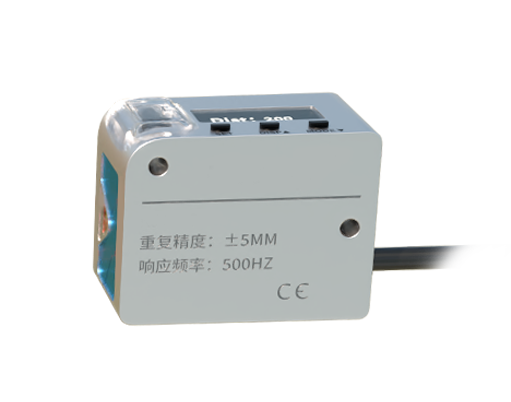
Additionally, laser distance sensors can be categorized by their output signals and connectivity options. Analog output sensors (e.g., 4-20 mA or 0-10 V) are used in process control systems for continuous monitoring, while digital output sensors (e.g., RS-232, RS-485, or IO-Link) enable data transmission to PLCs or computers for automation. Wireless variants with Bluetooth or Wi-Fi are gaining popularity for mobile or remote installations, such as drone-based surveying or temporary site monitoring.

In conclusion, understanding the classification of laser distance sensors—by principle, range, environment, and output—empowers professionals to make informed decisions. As technology advances, hybrid sensors combining multiple methods are emerging, offering versatile solutions. For instance, some modern sensors integrate ToF and triangulation to cover wider ranges with consistent accuracy. By aligning sensor specifications with operational needs, industries can enhance productivity, safety, and quality, driving innovation in fields from manufacturing to infrastructure development.