In modern industrial automation and precision measurement, laser sensor probes have become indispensable tools due to their high accuracy, non-contact operation, and rapid response capabilities. At the core of these devices lies the principle of laser-based measurement, which leverages coherent light to detect, analyze, and quantify various physical parameters such as distance, displacement, thickness, and surface characteristics. This article delves into the fundamental working mechanisms, key components, and practical applications of laser sensor probes in industrial settings.
The operation of a laser sensor probe primarily relies on the emission of a focused laser beam toward a target object. The laser source, typically a semiconductor or diode laser, generates monochromatic light with high coherence and low divergence. This beam is directed through optical lenses to ensure precise focusing. Upon striking the target surface, the laser light interacts in multiple ways: it may be reflected, scattered, or absorbed, depending on the material properties and surface conditions. The reflected light is then captured by a detector within the probe, such as a photodiode or CCD array, which converts optical signals into electrical data for processing.
Two common measurement techniques employed in laser sensor probes are triangulation and time-of-flight (ToF). In triangulation-based sensors, the laser beam, detector, and target form a geometric triangle. By analyzing the position of the reflected light spot on the detector, the system calculates the distance to the target with micron-level precision. This method is widely used in applications requiring high-resolution measurements, such as quality inspection on production lines or dimensional analysis of mechanical parts. Alternatively, ToF sensors measure the time taken for a laser pulse to travel to the target and back, enabling distance calculation based on the speed of light. ToF is advantageous for long-range measurements and environments where rapid scanning is essential, such as in robotics or logistics automation.
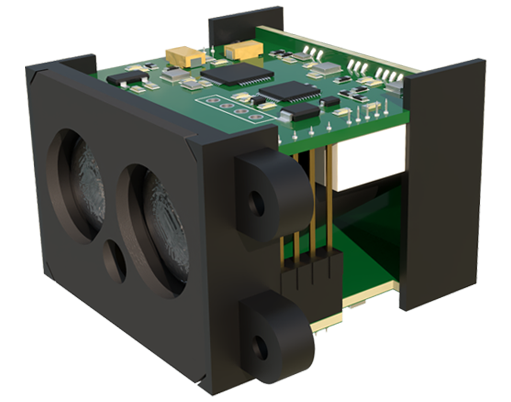
Key components of a laser sensor probe include the laser emitter, optics, detector, and signal processing unit. The laser emitter must provide stable output with consistent wavelength to ensure measurement reliability. Optical elements, like lenses and filters, optimize beam quality and minimize interference from ambient light. Advanced probes often incorporate features such as automatic calibration, temperature compensation, and adaptive algorithms to maintain accuracy under varying industrial conditions, such as vibrations or thermal fluctuations.
In practice, laser sensor probes are deployed across diverse industries. In manufacturing, they monitor assembly tolerances, detect defects, and control robotic positioning. In automotive engineering, probes measure component dimensions and align systems with sub-millimeter accuracy. The electronics sector relies on them for PCB inspection and semiconductor wafer mapping, while in aerospace, they facilitate non-destructive testing of structural integrity. Their non-contact nature prevents damage to delicate surfaces, and their speed supports real-time feedback in high-throughput processes.
Despite their advantages, challenges persist, including sensitivity to environmental factors like dust, humidity, or extreme temperatures. Innovations in probe design, such as protective housings and enhanced signal filtering, continue to address these issues. Emerging trends include the integration of AI for data analysis and the development of compact, multi-functional probes for IoT-enabled smart factories.
Overall, laser sensor probes exemplify the convergence of optics, electronics, and software engineering, driving efficiency and precision in industrial automation. By understanding their underlying principles, engineers can optimize deployment and harness their full potential for innovative solutions.