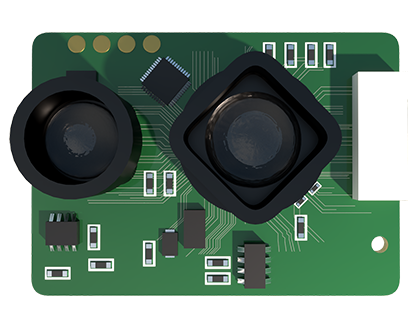
In the rapidly evolving landscape of industrial automation and precision measurement, long-range laser sensors have emerged as a cornerstone technology. These sophisticated devices utilize laser light to detect, measure, and profile objects at distances far exceeding the capabilities of traditional photoelectric or ultrasonic sensors. Their ability to deliver high accuracy over extended ranges makes them indispensable in a wide array of demanding applications, from logistics and infrastructure to heavy machinery and outdoor environments.
The fundamental principle behind a long-range laser sensor is based on the time-of-flight (ToF) or phase-shift measurement method. In a typical ToF sensor, a laser diode emits a short, focused pulse of light towards a target. A high-speed receiver then captures the reflected light. By precisely calculating the time difference between the emission and reception of the laser pulse, the sensor's internal processor can determine the distance to the target with remarkable accuracy. Advanced models employ signal processing algorithms to filter out ambient light noise and compensate for varying surface reflectivities, ensuring reliable performance even in challenging conditions. The laser's inherent properties—coherence, low divergence, and monochromaticity—enable the creation of a tightly focused beam that can travel long distances with minimal energy loss and spot size expansion.

The applications for long-range laser sensors are vast and continually expanding. In warehouse and logistics automation, they are deployed for high-bay storage retrieval, pallet dimensioning, and vehicle guidance for automated guided vehicles (AGVs) over large areas. The construction and mining industries leverage these sensors for monitoring stockpile volumes, measuring excavation depths, and ensuring the safe operation of large cranes by providing anti-collision detection. In transportation infrastructure, they facilitate tasks such as bridge deflection monitoring, tunnel profiling, and overhead clearance checking for vehicles. Furthermore, in agricultural automation, long-range sensors assist in field mapping and guidance for large machinery. Their robustness against dust, varying light conditions, and weather elements makes them suitable for both indoor and outdoor use.
Selecting the appropriate long-range laser sensor for a specific application requires careful consideration of several key parameters. The primary specification is, of course, the measuring range, which can vary from several meters to over several hundred meters for specialized models. However, range alone is not sufficient. Accuracy and resolution are critical; high-precision applications like structural monitoring demand sub-millimeter accuracy, while logistics may tolerate centimeter-level precision. The laser's spot size at the target distance influences measurement stability on uneven surfaces. Response time or measurement rate determines how quickly the sensor can update distance readings, which is vital for dynamic applications like moving vehicle detection. Environmental ratings for ingress protection (IP) and temperature are essential for outdoor or harsh industrial settings. Finally, the type of output (analog, digital, serial interface) and connectivity options must align with the existing control system architecture.

Modern advancements are pushing the boundaries of what these sensors can achieve. The integration of multi-echo technology allows a single sensor to detect multiple distances within one laser pulse, enabling it to "see through" partial obstructions like wire fences or foliage. Some sensors now incorporate onboard intelligence for edge computing, such as performing window-based switching or complex logic functions without a separate PLC. The development of eye-safe laser classes has also made powerful long-range sensors safer for use in environments with personnel.
In conclusion, long-range laser sensors represent a powerful fusion of optics, electronics, and software, providing a non-contact measurement solution where distance and precision are paramount. Their versatility and reliability solve complex challenges across numerous industries, enabling higher levels of automation, safety, and efficiency. As technology progresses, we can anticipate sensors with even greater ranges, higher speeds, and smarter functionalities, further solidifying their role as a critical component in the toolkit of modern industrial engineering and beyond. Engineers and system integrators must thoroughly analyze their application requirements against sensor specifications to harness the full potential of this transformative technology.