In the intricate world of industrial automation, where precision, reliability, and safety are paramount, proximity sensors stand as silent sentinels. These non-contact detection devices are fundamental components, enabling machines to "sense" the presence or absence of an object without any physical touch. Their role is critical in countless applications, from simple part detection on a conveyor belt to complex robotic positioning and high-speed counting operations. This guide delves into the core principles, types, and applications of proximity sensors, providing a comprehensive overview for engineers and technicians.
At its heart, a proximity sensor operates by emitting a field or beam and detecting changes in that field caused by a target object. The absence of mechanical contact is their defining advantage, leading to virtually wear-free operation, high switching frequencies, and exceptional longevity. This non-contact nature also allows for the detection of fragile, soft, or hot objects that could be damaged or could damage a mechanical limit switch.
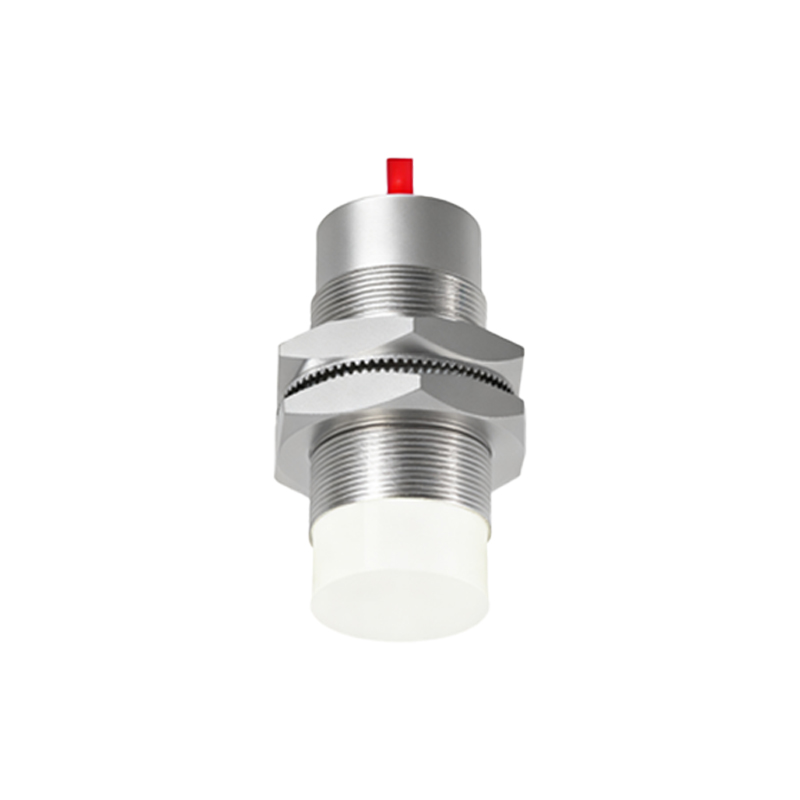
The landscape of proximity sensors is primarily defined by their underlying technology. The most prevalent types include:
Inductive Proximity Sensors: These are the workhorses of metal detection. They generate an electromagnetic oscillating field. When a metallic object enters this field, it induces eddy currents within the target, causing a change in the oscillation amplitude. This change is detected by the sensor's circuitry, triggering a switching output. Inductive sensors are robust, resistant to dirt, dust, and moisture (often rated IP67 or higher), and are ideal for detecting ferrous and non-ferrous metals at short ranges, typically up to 60mm. Common applications include detecting piston position in cylinders, monitoring gear teeth, and part presence in machine tools.
Capacitive Proximity Sensors: These sensors can detect both metallic and non-metallic materials—liquids, plastics, wood, glass, and granules. They function by generating an electrostatic field. Any object with a dielectric constant different from air entering this field alters the capacitance of the system, which is detected by the sensor. Capacitive sensors are perfect for level detection in tanks (liquids or powders), detecting filled packages on a line, or sensing the presence of wood or plastic components. Their sensing range is generally shorter than inductive types and can be influenced by environmental factors like humidity.
Ultrasonic Proximity Sensors: These devices operate on a sonar principle. They emit high-frequency sound waves (ultrasonic pulses) and measure the time taken for the echo to return from a target object. This time-of-flight measurement allows them to not only detect presence but also measure distance with high accuracy. Ultrasonic sensors are excellent for detecting objects of virtually any material, shape, or color, and are unaffected by dust, smoke, or light conditions. They are widely used in parking assistance systems, bulk material level sensing, and collision avoidance for automated guided vehicles (AGVs).
Photoelectric Sensors: While often categorized separately, photoelectric sensors are a key member of the proximity detection family. They use light, typically infrared, visible red, or laser, to detect objects. The three main modes are through-beam (separate emitter and receiver), retro-reflective (bounces light off a reflector), and diffuse (reflects light directly off the target). They offer the longest sensing ranges, from a few centimeters to hundreds of meters, and can detect tiny objects. Applications include bottle counting on high-speed lines, web break detection, and palletizing robot guidance.
Selecting the right proximity sensor requires careful consideration of several parameters: the target material, required sensing distance (rated operating distance), environmental conditions (temperature, chemicals, washdown needs), output type (PNP/NPN, analog, IO-Link), electrical requirements, and housing style (barrel, rectangular, ring-shaped). For instance, a food processing plant would require capacitive or ultrasonic sensors with stainless steel housings and high IP69K ratings for washdown, while an automotive welding line would heavily rely on rugged inductive sensors.
The integration of smart features is a significant trend. Modern proximity sensors with IO-Link communication provide far more than a simple on/off signal. They enable parameter setting via the controller, offer diagnostic data (like operating temperature, signal strength, or contamination warnings), and facilitate predictive maintenance, thereby reducing downtime and increasing overall equipment effectiveness (OEE).
In conclusion, proximity sensors are indispensable in modern industrial systems. Their ability to provide reliable, non-contact detection across a vast array of materials and challenging environments makes them a cornerstone of automation. Understanding their distinct technologies—inductive for metals, capacitive for nearly all materials, ultrasonic for distance and difficult conditions, and photoelectric for long-range and precision—empowers engineers to design more efficient, safe, and intelligent machinery. As Industry 4.0 advances, the role of these sensors will only grow, evolving from simple switches to intelligent data points