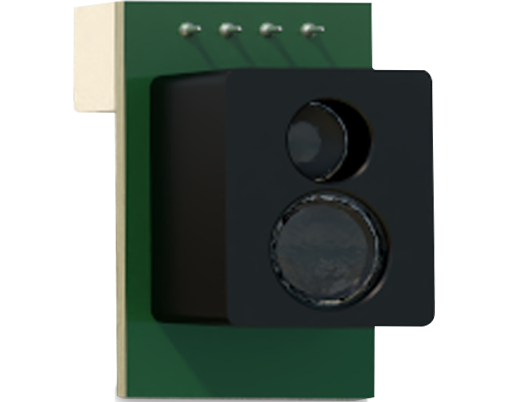
Laser sensors have become indispensable tools in modern industrial automation, offering unparalleled precision, speed, and reliability. Their non-contact measurement capability makes them ideal for a wide range of applications where traditional sensors fall short. This article delves into several key application scenarios, illustrating how laser sensors drive efficiency and quality across various sectors.
In manufacturing and assembly lines, laser displacement sensors are extensively used for precise dimensional inspection and positioning. For instance, in automotive assembly, they measure critical gaps between body panels, door seals, and component alignments with micron-level accuracy. This ensures consistent product quality and fit. Similarly, in electronics manufacturing, laser sensors verify the height and coplanarity of surface-mount components on printed circuit boards (PCBs) before soldering, preventing costly defects. The high-speed response of modern laser sensors allows for real-time, 100% inspection even on fast-moving production lines, a task impossible for manual checks.
Material handling and logistics represent another major domain. Laser distance sensors and LiDAR (Light Detection and Ranging) systems are the core of automated guided vehicles (AGVs) and autonomous mobile robots (AMRs). They create detailed 2D or 3D maps of the environment, enabling precise navigation, obstacle avoidance, and pallet detection in dynamic warehouse settings. Furthermore, laser profile sensors mounted on conveyor systems perform vital tasks like volume measurement for parcels, box dimensioning for optimal packaging, and checking for overhanging loads that could cause jams or safety hazards. This data integrates seamlessly with Warehouse Management Systems (WMS) for optimized inventory control and routing.
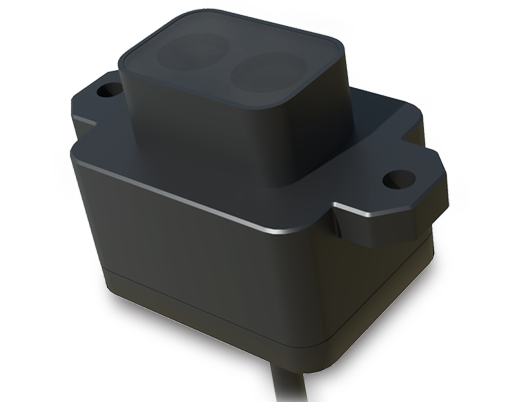
Quality control and defect detection processes are revolutionized by laser-based vision systems. In the metals industry, laser triangulation sensors scan rolled steel, aluminum, or copper strips to detect surface imperfections like scratches, dents, or pits. They also measure flatness and thickness profiles continuously. In food and pharmaceutical packaging, laser sensors verify fill levels in bottles and containers, check cap placement and seal integrity, and inspect label positioning—all critical for compliance and consumer safety. The coherent, monochromatic light of lasers provides excellent contrast, even on reflective or transparent surfaces, which are challenging for conventional vision systems.
Robotics and collaborative robot (cobot) applications heavily rely on laser sensors for guidance and safety. Laser scanners create protective fields around dangerous machinery or define safe working zones for human-robot collaboration. In robotic bin picking, a complex task in unstructured environments, 3D laser vision systems identify randomly oriented parts, determine their precise position and orientation, and guide the robot gripper for successful grasping. This flexibility is key to small-batch, high-mix production.
Emerging applications continue to expand the laser sensor landscape. In additive manufacturing (3D printing), laser sensors monitor the powder bed fusion process in real-time, detecting anomalies in layer deposition. In agriculture, LiDAR on autonomous tractors and harvesters enables precision farming by mapping terrain and crop rows. Even in infrastructure monitoring, long-range laser sensors measure deformation in bridges, dams, and wind turbine blades.
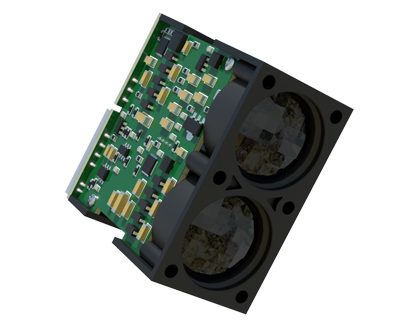
The selection of a laser sensor depends on specific requirements: measurement range, spot size, resolution, response time, and environmental robustness (resistance to dust, temperature fluctuations, or vibrations). Technologies like time-of-flight (ToF), triangulation, and confocal chromatic sensing each have their optimal use cases.
In conclusion, the application scenario map for laser sensors is vast and continuously evolving. From ensuring micrometer precision on a factory floor to guiding autonomous vehicles in a warehouse, their ability to deliver accurate, non-contact data in real-time is transforming industrial operations. As Industry 4.0 and the Industrial Internet of Things (IIoT) advance, the integration of laser sensor data with cloud platforms and AI analytics will unlock even greater potential for predictive maintenance, process optimization, and fully autonomous systems, solidifying their role as a cornerstone of smart manufacturing and beyond.