In industrial automation and control systems, proximity sensors are indispensable components for detecting the presence or absence of objects without physical contact. However, a common challenge faced by engineers is the inherent limitation of a sensor's standard sensing range. When application requirements demand detection beyond these nominal distances, the concept of "extending" or "lengthening" a proximity sensor's effective range becomes critical. This article delves into the technical methodologies, considerations, and practical implementations for successfully increasing the operational distance of proximity sensors.
Fundamentally, the sensing range of a proximity sensor—be it inductive, capacitive, ultrasonic, or photoelectric—is determined by its internal design, coil/oscillator configuration, and the properties of the target material. The nominal range specified in datasheets is typically defined for a standard target under ideal conditions. Extending this range involves manipulating the sensor's environment or its signal processing chain to enhance sensitivity.
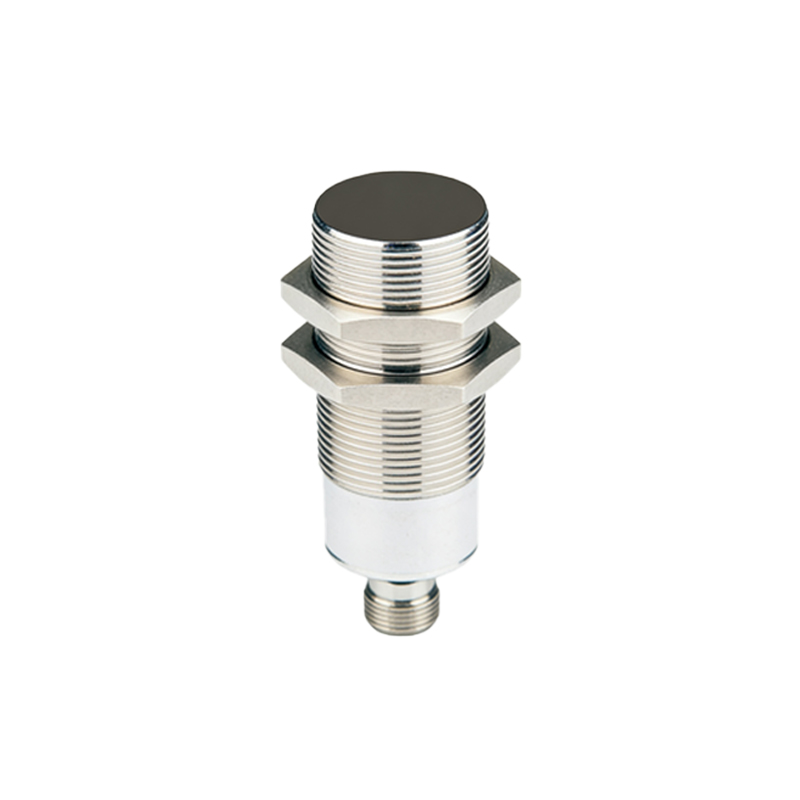
One primary technical approach is the use of external amplifiers or boosters. These are specialized electronic units installed between the sensor and the controller (PLC). They work by amplifying the sensor's output signal. For inductive sensors, an amplifier can increase the oscillation energy, allowing the electromagnetic field to extend further and detect metallic targets at greater distances. It is crucial to select an amplifier compatible with the sensor's technology and voltage specifications. The installation must follow strict guidelines to avoid signal noise interference, which can cause false triggering.
Another method involves the strategic use of sensing faces or target materials. For inductive sensors, using a larger actuator or a target made of ferrous material like mild steel can marginally increase the effective sensing distance. Conversely, for capacitive sensors, adjusting the sensitivity potentiometer to its maximum and ensuring a large, grounded target can extend the range for detecting non-metallic materials. However, this often comes at the cost of reduced stability and increased susceptibility to environmental changes like humidity.
For photoelectric sensors, range extension is often achieved through optical means. Employing sensors with focused lenses (e.g., polarized retro-reflective or through-beam types) inherently offers longer ranges. To extend these further, one can use a high-quality, clean reflector with high reflectivity or a more powerful light source emitter. Additionally, installing fiber optic cables attached to the sensor head can physically separate the sensing point from the electronics, effectively "lengthening" the sensor's reach to several meters while allowing installation in confined spaces. The core diameter and material of the fiber optic cable significantly influence the achievable range and must be chosen based on the application.
Ultrasonic sensors present unique opportunities for range extension through parameter tuning. Increasing the duration of the emitted sonic pulse can enhance energy output, improving the signal-to-noise ratio for distant echoes. Furthermore, programming a longer "blanking time" can prevent the sensor from interpreting near-field reflections as the return signal, allowing it to listen for fainter echoes from farther targets. Software-based gain control, available in many advanced models, can dynamically amplify the received echo signal based on distance.
Regardless of the method, critical engineering considerations must be addressed. Extended range often compromises switching frequency. A sensor operating at its maximum range will have a longer response time due to increased signal processing or travel time (for ultrasonic/optical types). Electrical noise becomes a more pronounced adversary; proper shielding, twisted-pair cabling, and grounding are non-negotiable for reliable operation. Environmental factors such as temperature fluctuations, dust, and ambient light (for photoelectrics) have a magnified impact on an extended-range setup, potentially causing drift or failure.
A practical implementation case involves a packaging line where a standard inductive sensor could not detect large aluminum pallets passing at a distance of 12mm (its nominal range for aluminum being 40% of the ferrous range). The solution was to integrate a two-wire DC sensor with an approved signal amplifier and pair it with a 100mm x 100mm aluminum target plate. This combination reliably achieved a stable 15mm sensing range. The setup required careful adjustment of the amplifier's gain and a thorough noise immunity check in the electrically noisy environment.
In conclusion, extending the range of a proximity sensor is a feasible engineering task but requires a systematic approach. The key lies in understanding the underlying sensor technology, selecting the appropriate extension method—be it amplification, optical modification, or target optimization—and meticulously addressing the trade-offs in stability, speed, and noise immunity. Always consult the sensor manufacturer's application notes and perform rigorous in-situ testing under real-world conditions to ensure the extended configuration delivers robust and reliable performance for your specific automation challenge.