In the realm of industrial automation and control, proximity sensors are indispensable components for detecting the presence or absence of objects without physical contact. While traditional inductive proximity sensors are renowned for their reliability in detecting metals, a significant portion of modern manufacturing involves non-metallic materials such as plastics, glass, wood, liquids, and various composites. This necessity has driven the development and widespread adoption of non-metallic proximity sensors, which operate on different physical principles to fulfill these detection tasks with high precision and reliability.
The core principle distinguishing non-metallic sensors from their inductive counterparts is the sensing technology employed. Inductive sensors generate an electromagnetic field and detect changes caused by conductive metals. For non-metallic targets, alternative methods are required. The two most prevalent technologies are capacitive proximity sensors and ultrasonic proximity sensors.
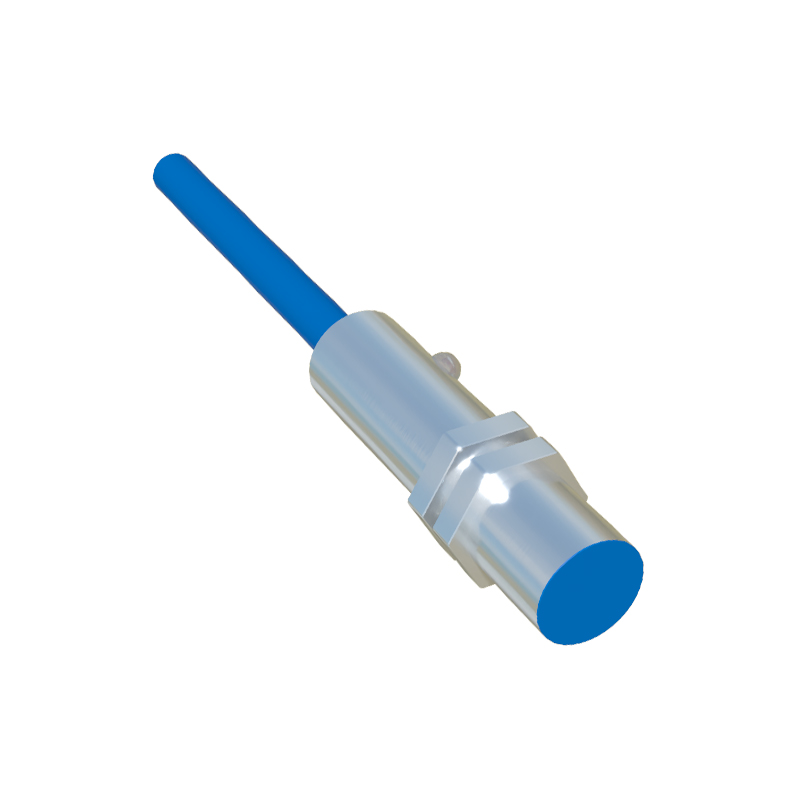
Capacitive proximity sensors function by generating an electrostatic field. The sensor itself acts as one plate of a capacitor, with the target object (or the background) acting as the other. When a non-metallic object enters this field, it alters the dielectric constant between the plates, causing a change in capacitance. This change is detected by the sensor's internal circuitry, which then triggers a switching output. A key advantage of capacitive sensors is their ability to detect virtually any material, including solids, powders, granules, and liquids, provided the material has a dielectric constant different from air. This makes them exceptionally versatile for applications like level detection in plastic or glass containers, presence detection of cardboard boxes, or monitoring granulate flow in hoppers. Many models feature sensitivity adjustment potentiometers, allowing engineers to fine-tune the sensing range and ignore background materials, such as a container wall.
Ultrasonic proximity sensors operate on a time-of-flight principle. They emit high-frequency sound waves (typically beyond human hearing) and measure the time it takes for the echo to return from a target object. The distance to the object is calculated based on the speed of sound in the medium (usually air). Since sound waves reflect off most surfaces, ultrasonic sensors are highly effective for detecting a vast array of non-metallic materials, regardless of color, transparency, or surface texture. They are particularly valuable for applications requiring precise distance measurement or detection over longer ranges than capacitive sensors can typically manage. Common uses include detecting transparent glass or plastic bottles on a conveyor, controlling the loop of a textile web, or measuring the fill level in a bulk silo containing non-metallic materials.
Beyond these primary types, photoelectric sensors are also crucial for non-metallic detection. While they use light beams (visible, infrared, or laser) rather than proximity fields, their through-beam, retro-reflective, and diffuse reflective modes are fundamental for non-contact detection of objects where a clear line-of-sight is available. They excel at detecting small objects, seeing through transparent materials, or offering very long sensing ranges.
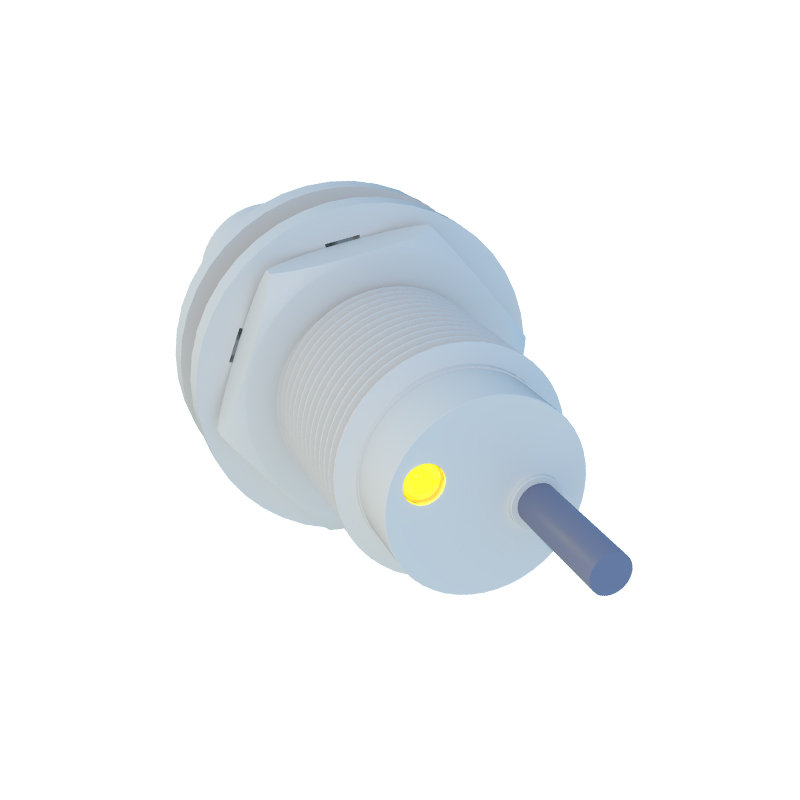
The selection of the appropriate non-metallic proximity sensor depends heavily on the specific application parameters. Key factors include:
Target Material: Dielectric constant for capacitive, sound reflectivity for ultrasonic, opacity and color for photoelectric.
Sensing Distance: Required range from the sensor face to the target.
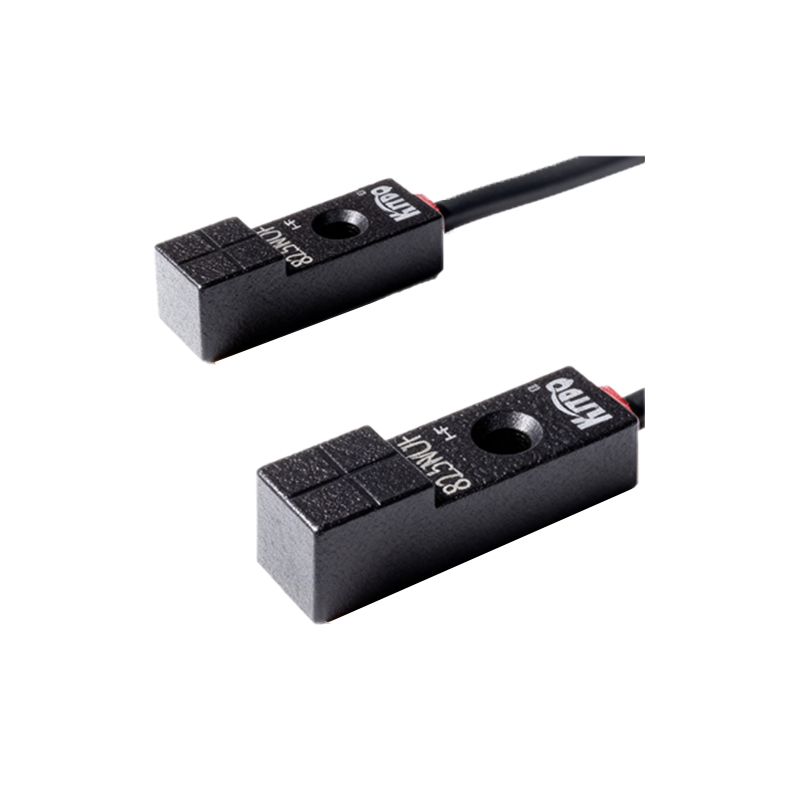
Environmental Conditions: Exposure to dust, moisture, chemicals, or temperature extremes. Many sensors are available with IP67 or IP69K ratings for harsh environments.
Output Requirements: Digital (PNP/NPN) or analog (4-20 mA, 0-10V) signals for integration with PLCs or controllers.
Response Time and Switching Frequency: How quickly the sensor can detect and signal a change, critical for high-speed production lines.
In practice, non-metallic proximity sensors are the backbone of countless automated processes. In packaging machinery, capacitive sensors verify the presence of plastic caps or liquid levels in bottles. In the woodworking industry, ultrasonic sensors ensure precise board positioning. In food and beverage production, they detect plastic containers and control filling operations. The automotive industry uses them to handle composite parts and interior trim components.
Installation and commissioning require careful consideration. For capacitive sensors, ensuring a stable mounting and adjusting sensitivity to avoid false triggers from background interference is vital. For ultrasonic sensors, factors like air turbulence, temperature variations (which affect sound speed), and steep target angles can influence performance. Proper alignment and environmental compensation features in modern sensors mitigate many of these issues.
The ongoing evolution of Industry 4.0 and smart manufacturing further enhances the role of these sensors. Modern non-metallic proximity sensors often come with IO-Link communication capability, enabling not just binary detection but also the transmission of detailed process data (like distance values or sensor health status) to higher-level control systems for predictive maintenance and process optimization.
In conclusion, non-metallic proximity sensors, through capacitive, ultrasonic, and photoelectric technologies, provide robust, flexible, and intelligent solutions for material handling and process control