Vacuum detection sensor lasers represent a critical advancement in industrial monitoring and control systems, offering unparalleled precision in measuring vacuum levels across various applications. These sensors utilize laser-based technology to detect minute changes in pressure within sealed environments, ensuring optimal performance in sectors such as semiconductor manufacturing, aerospace, and pharmaceutical production. The core principle involves emitting a laser beam into a vacuum chamber, where interactions with residual gases or particles alter the beam's properties. By analyzing these alterations—such as wavelength shifts or intensity variations—the sensor calculates vacuum pressure with high accuracy, often achieving resolutions down to 10^-6 Torr or better.
One key advantage of vacuum detection sensor lasers is their non-contact nature, which eliminates contamination risks and mechanical wear common in traditional diaphragm or Pirani gauges. This makes them ideal for cleanroom environments where even microscopic impurities can compromise product quality. For instance, in semiconductor fabrication, maintaining ultra-high vacuum (UHV) conditions is essential for depositing thin films on wafers; laser sensors provide real-time feedback to control systems, preventing defects and enhancing yield rates. Additionally, their fast response time—typically in milliseconds—allows for rapid adjustments in dynamic processes like vacuum coating or electron beam welding.
The technology relies on advanced optical components, including tunable diode lasers and photodetectors, integrated into compact, robust housings resistant to harsh industrial conditions. Modern designs incorporate fiber-optic connections for remote monitoring, enabling deployment in hazardous or hard-to-reach areas without compromising safety. Calibration is straightforward, often automated via embedded software that compensates for environmental factors like temperature fluctuations. As industries push toward Industry 4.0, these sensors are increasingly networked with IoT platforms, facilitating predictive maintenance and data analytics for improved efficiency.
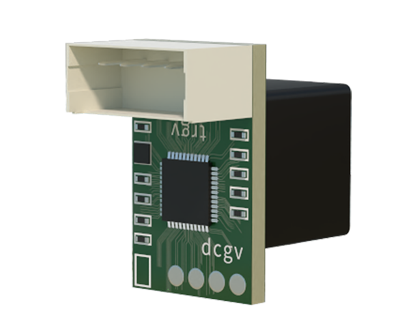
Despite their benefits, challenges remain, such as high initial costs and sensitivity to external vibrations. However, ongoing research focuses on cost reduction through mass production and enhanced algorithms for noise filtering. In summary, vacuum detection sensor lasers are revolutionizing industrial vacuum management by delivering reliable, precise measurements that drive innovation and operational excellence in high-tech fields.