Selecting the right proximity sensor is a critical decision that directly impacts the efficiency, safety, and reliability of automated systems. With a vast array of technologies and specifications available, navigating the options can be daunting. This guide provides a structured approach to help engineers and procurement specialists make an informed choice, focusing on key technical and environmental factors.
The first and most fundamental step is to identify the target material. This single factor dictates the primary sensing technology. For detecting all metals, including ferrous and non-ferrous, an inductive proximity sensor is the standard choice. These sensors generate an electromagnetic field; when a metallic object enters this field, it causes a change that the sensor detects. For non-metallic targets, such as plastic, wood, glass, or liquids, a capacitive proximity sensor is required. Capacitive sensors can detect virtually any material by sensing changes in capacitance. For precise detection of small objects or for applications requiring very long sensing ranges, photoelectric sensors use a beam of light. Finally, for detecting magnetic fields directly, such as from a permanent magnet, a magnetic proximity sensor (often a reed switch or Hall-effect sensor) is used.
Once the technology is narrowed down, the required sensing distance, or range, must be determined. It is crucial to select a sensor with a rated operating distance that exceeds your actual application needs by a safety margin, typically 10-25%. This accounts for factors like mechanical tolerances, temperature variations, and target surface conditions. Never operate a sensor at its absolute maximum limit. Consider both the nominal sensing distance and any reduction factors. For inductive sensors, the sensing distance can be reduced for non-ferrous metals like aluminum or copper. For capacitive sensors, the material's dielectric constant affects the range.
The physical characteristics of the sensor are equally important. Size and shape are often constrained by the installation space. Cylindrical threaded barrels are common, but rectangular, limit-switch style, or ring-shaped sensors are available for specific needs. The housing material, typically nickel-plated brass, stainless steel, or PBT plastic, must be chosen based on the environment. Harsh conditions with washdowns, coolants, or chemicals demand sensors with high IP (Ingress Protection) ratings, such as IP67 or IP69K. The electrical connection type—pre-wired cable, quick-disconnect (M8, M12), or terminal block—should align with your cabinet design and maintenance practices.
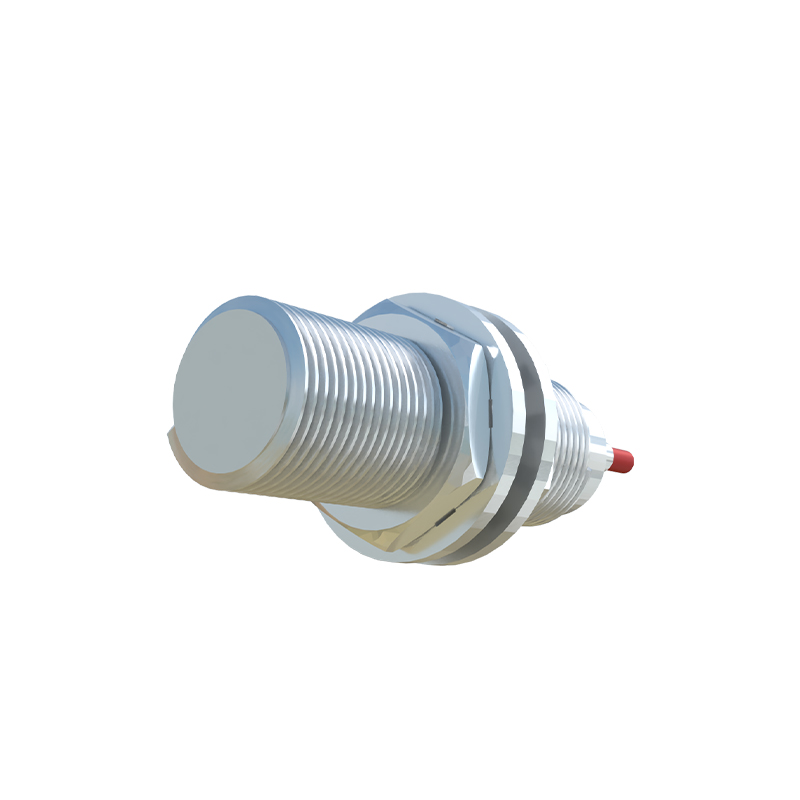
Output configuration is a key electrical consideration. Determine if your control system requires a digital on/off signal (PNP sourcing or NPN sinking) or an analog output (4-20mA, 0-10V) for distance-proportional measurement. The output current rating must be sufficient to drive the connected load, such as a PLC input or a relay. Also, consider the need for normally-open (NO) or normally-closed (NC) operation based on the safety and logic requirements of the circuit.
Environmental factors can severely impact sensor performance and longevity. Extreme temperatures, both high and low, can affect sensing range and damage internal components. Select sensors with a suitable temperature rating. Strong electromagnetic interference (EMI) from motors or welders can cause false triggering; look for sensors with robust shielding and high EMI immunity ratings. In environments with excessive vibration or mechanical shock, sensors with robust construction and secure mounting are essential. For outdoor applications, resistance to UV light and moisture is critical.
Finally, consider special application requirements. Does the sensor need to be flush-mountable to avoid physical damage? Should it have short-circuit, overload, and reverse polarity protection for electrical robustness? For synchronized processes, sensors with adjustable hysteresis or time-delay functions can be invaluable. In food and pharmaceutical settings, compliance with specific material standards (e.g., FDA) may be mandatory.
In conclusion, a methodical selection process—starting with target material, then moving through sensing range, physical form, electrical output, and environmental ruggedness—will lead to the optimal sensor choice. Consulting with technical datasheets and application engineers from reputable suppliers is always recommended to validate the selection for your specific use case, ensuring long-term performance and minimizing costly downtime.