In the realm of industrial automation, robotics, and smart devices, the need for reliable, non-contact detection of objects is paramount. Among the various technologies available, the Hall Effect proximity sensor stands out for its robustness, precision, and versatility. Unlike optical or capacitive sensors, it operates based on a fundamental physical principle, offering unique advantages in challenging environments.
The core of this technology is the Hall Effect, discovered by Edwin Hall in 1879. It describes the generation of a voltage difference—the Hall voltage—across an electrical conductor when a magnetic field is applied perpendicular to the current flow. A Hall Effect proximity sensor harnesses this phenomenon. It typically consists of a Hall element (a thin semiconductor plate), a permanent magnet, and signal conditioning circuitry. In a common configuration, the sensor is in a fixed position. When a ferromagnetic target (like a steel gear tooth or a machine part) approaches, it distorts or concentrates the magnetic field from the permanent magnet. This change in magnetic flux density is detected by the Hall element, which produces a corresponding change in its output voltage. The integrated circuitry then processes this signal to provide a clean, digital on/off switch or a proportional analog output.
This operating principle grants Hall Effect sensors several critical benefits. They are inherently immune to environmental factors such as dust, oil, moisture, and ambient light, which often plague optical sensors. They offer excellent repeatability and can detect targets at consistent distances with high precision. Furthermore, they are capable of high-speed switching, making them ideal for counting revolutions or detecting the position of fast-moving parts. Their solid-state design, with no moving parts, ensures exceptional longevity and reliability, even in applications involving vibration or mechanical shock.
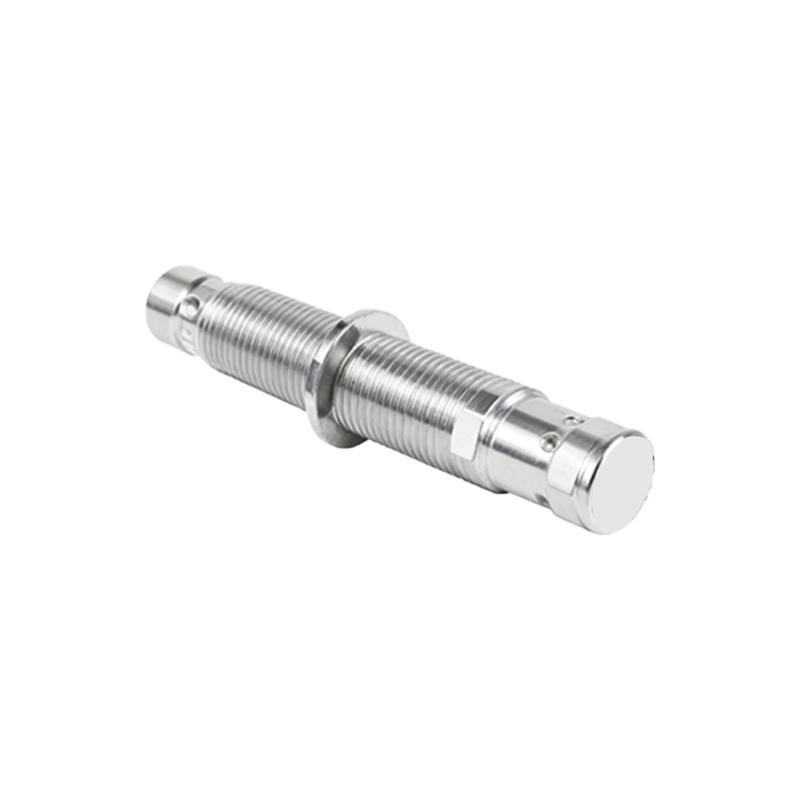
The applications of Hall Effect proximity sensors are vast and varied. In the automotive industry, they are ubiquitous, used for crankshaft and camshaft position sensing, wheel speed detection for anti-lock braking systems (ABS), and detecting seatbelt engagement. In industrial manufacturing, they serve as limit switches on assembly lines, detect the presence of metal parts, and monitor the rotation of motors and conveyors. Consumer electronics also rely on them; for instance, in laptops to detect whether the lid is open or closed, or in smartphones for flip cover detection. They are also found in brushless DC motors to commutate the windings efficiently.
Selecting the right Hall Effect proximity sensor requires careful consideration of several parameters. First, the sensing distance, which is typically short-range (from a few millimeters to several centimeters), must be matched to the application. The type of output is crucial: digital switches are simple and cost-effective for presence detection, while analog outputs provide continuous position information. The operating voltage range (commonly 5V DC, 12V DC, or 24V DC) must be compatible with the control system. Environmental ratings, such as IP (Ingress Protection) codes for dust and water resistance, are vital for harsh conditions. Finally, the target material is key; standard sensors are optimized for ferrous metals, while special versions are needed for detecting permanent magnets or specific non-ferrous alloys.
When integrating these sensors, proper installation is essential. Ensuring the correct orientation relative to the target, maintaining the specified air gap, and using appropriate shielding in electrically noisy environments will guarantee optimal performance. Regular maintenance is minimal, but checking for physical damage or buildup of metallic debris near the sensing face is recommended.
In conclusion, Hall Effect proximity sensors provide a dependable and efficient solution for non-contact position and presence sensing. Their principle of operation, based on magnetic field interaction, makes them uniquely suited for demanding applications where other sensor types might fail. By understanding their working mechanism, key advantages, and selection criteria, engineers and technicians can effectively leverage these powerful components to enhance the intelligence, safety, and efficiency of automated systems across countless industries.