The global laser sensor market is experiencing robust growth, driven by increasing automation across industries and the rising demand for precision measurement and detection solutions. Laser sensors, known for their high accuracy, speed, and non-contact operation, are becoming indispensable in sectors such as manufacturing, automotive, healthcare, and consumer electronics. This article provides a comprehensive analysis of the current market landscape, key drivers, challenges, and future trends shaping this dynamic industry.
Market Size and Growth Projections
Recent market research indicates that the laser sensor market is on a steady upward trajectory. Valued at approximately USD 1.5 billion in 2023, it is projected to reach over USD 2.8 billion by 2030, growing at a compound annual growth rate (CAGR) of around 9.5%. This growth is primarily fueled by the Industry 4.0 revolution, which emphasizes smart factories and interconnected systems. In manufacturing, laser sensors are critical for quality control, robotic guidance, and dimensional gauging. The automotive industry relies heavily on them for advanced driver-assistance systems (ADAS), autonomous vehicle development, and production line automation.

Key Market Drivers
Several factors are propelling the adoption of laser sensors. First, the push for industrial automation and the need for higher operational efficiency are paramount. Companies are investing in automated systems to reduce human error, enhance productivity, and ensure worker safety in hazardous environments. Laser sensors provide reliable data for these systems. Second, the miniaturization of electronic components and the proliferation of Internet of Things (IoT) devices have created new applications. Compact, energy-efficient laser sensors are now integrated into wearable health monitors, smart home appliances, and portable scanners. Third, stringent government regulations regarding product quality and safety, particularly in pharmaceuticals and automotive sectors, mandate the use of precise measurement tools, further boosting market demand.
Technological Advancements
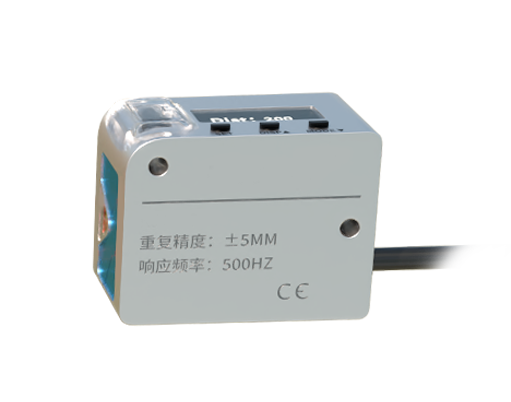
Innovation is at the heart of the laser sensor market's evolution. Recent advancements include the development of 3D laser sensors capable of capturing detailed spatial data for complex inspections and reverse engineering. The integration of artificial intelligence (AI) and machine learning algorithms allows sensors to not only collect data but also analyze patterns and predict maintenance needs, enhancing predictive maintenance strategies. Furthermore, improvements in laser diode technology have led to sensors with longer operational lifespans, lower power consumption, and reduced costs, making them accessible to a broader range of small and medium-sized enterprises.
Challenges and Restraints
Despite the positive outlook, the market faces certain challenges. High initial costs associated with advanced laser sensing systems can be a barrier for some end-users, especially in cost-sensitive markets. Technical complexities related to integration with existing legacy systems also pose implementation hurdles. Additionally, environmental factors such as dust, smoke, or extreme temperatures can affect the performance of some laser sensors, requiring protective enclosures or specialized designs, which add to the overall cost. There is also an ongoing need for skilled personnel to install, calibrate, and maintain these sophisticated systems.
Regional Market Insights
Geographically, the Asia-Pacific region dominates the laser sensor market and is expected to maintain its lead during the forecast period. This is largely due to the massive manufacturing base in countries like China, Japan, and South Korea, coupled with significant investments in industrial automation. North America and Europe are also substantial markets, driven by strong automotive and aerospace industries and early adoption of cutting-edge technologies. Emerging economies in Latin America and the Middle East & Africa are gradually increasing their adoption, presenting future growth opportunities.
Competitive Landscape
The market is characterized by the presence of several established players and innovative newcomers. Key companies include SICK AG, Keyence Corporation, Omron Corporation, Panasonic Corporation, and Banner Engineering Corp. These players compete on factors such as product innovation, accuracy, range, pricing, and after-sales service. Strategic activities like mergers and acquisitions, partnerships, and extensive R&D investments are common as firms strive to expand their product portfolios and geographic reach. The competitive intensity is fostering continuous technological improvements and more cost-effective solutions for customers.
Future Trends and Opportunities
Looking ahead, several trends are set to define the future of the laser sensor market. The expansion of autonomous vehicles and drones will create a massive demand for LiDAR (Light Detection and Ranging) sensors, a specialized type of laser sensor. The healthcare sector offers promising avenues, with applications in non-invasive diagnostics, surgical robotics, and laboratory automation. Furthermore, the growing emphasis on environmental monitoring will drive the use of laser sensors for detecting pollutants, measuring atmospheric conditions, and managing waste. As technology advances, we can anticipate the emergence of even smarter, multi-functional sensors that combine laser measurement with other sensing modalities, offering comprehensive data solutions for complex industrial and commercial challenges.
In conclusion, the laser sensor market is poised for significant expansion, underpinned by technological innovation and cross-industry demand for automation and precision. While challenges exist, ongoing advancements and expanding application areas promise a vibrant and evolving market landscape. Stakeholders who invest in R&D and adapt to emerging needs will be well-positioned to capitalize on the opportunities ahead.