In the realm of electrical engineering and industrial automation, small spot laser sensors have emerged as critical tools for achieving high-precision measurement and inspection. These sensors utilize focused laser beams to detect minute changes in position, distance, or surface characteristics, offering unparalleled accuracy in applications ranging from semiconductor manufacturing to robotics.
The core technology behind small spot laser sensors involves the emission of a coherent light beam, typically from a laser diode, which is then collimated and focused onto a target surface. The reflected light is captured by a receiver, and through triangulation or time-of-flight principles, the sensor calculates precise measurements. Key advantages include their ability to operate with spot sizes as small as a few micrometers, enabling detection of fine details that conventional sensors might miss. This makes them indispensable in quality control processes, such as verifying component dimensions, inspecting solder joints, or monitoring alignment in assembly lines.

From an electrical engineering perspective, integrating these sensors requires careful consideration of factors like response time, environmental robustness, and compatibility with control systems. Modern small spot laser sensors often feature digital interfaces (e.g., IO-Link, Ethernet/IP) for seamless communication with PLCs and SCADA systems, enhancing real-time data acquisition and process optimization. Their low power consumption and compact design further facilitate deployment in space-constrained or energy-sensitive environments.
In practice, industries leverage these sensors for diverse tasks. For instance, in electronics production, they ensure precise placement of microchips on circuit boards, while in automotive manufacturing, they verify tolerances of engine parts. Additionally, advancements in blue laser technology have improved performance on reflective or transparent surfaces, expanding their utility in challenging conditions.
Despite their benefits, engineers must address challenges such as ambient light interference, surface variability, and calibration requirements. Regular maintenance and proper installation—including alignment and shielding—are essential to sustain accuracy. Looking ahead, trends like miniaturization, enhanced AI-driven analytics, and integration with IoT platforms are poised to elevate the capabilities of small spot laser sensors, driving innovation in smart factories and beyond.
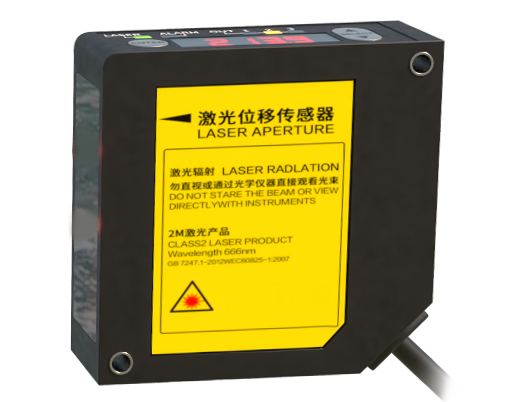
Ultimately, small spot laser sensors represent a fusion of optical precision and electrical engineering expertise, empowering industries to achieve higher efficiency, reliability, and quality in automated systems. As technology evolves, their role in enabling meticulous measurement will continue to grow, underscoring their value in the modern industrial landscape.