In the realm of industrial automation and control systems, the demand for reliable, durable, and precise sensing technology is paramount. Among the various solutions available, non-contact proximity sensors stand out as a cornerstone of modern electrical engineering. These devices detect the presence or absence of an object without any physical contact, offering significant advantages over traditional mechanical limit switches. This article delves into the principles, types, applications, and key selection criteria for non-contact proximity sensors, providing a thorough overview for engineers and technicians.
The fundamental operating principle of a non-contact proximity sensor involves generating an electromagnetic field or a beam of radiation. When a target object enters this field, it causes a change in the field's properties—such as amplitude, frequency, or phase. The sensor's internal circuitry detects this change and converts it into a discrete electrical signal, typically a switch closure (ON) or opening (OFF). This entire process occurs without any physical touch, eliminating mechanical wear and tear, which is a primary cause of failure in contact-based switches.
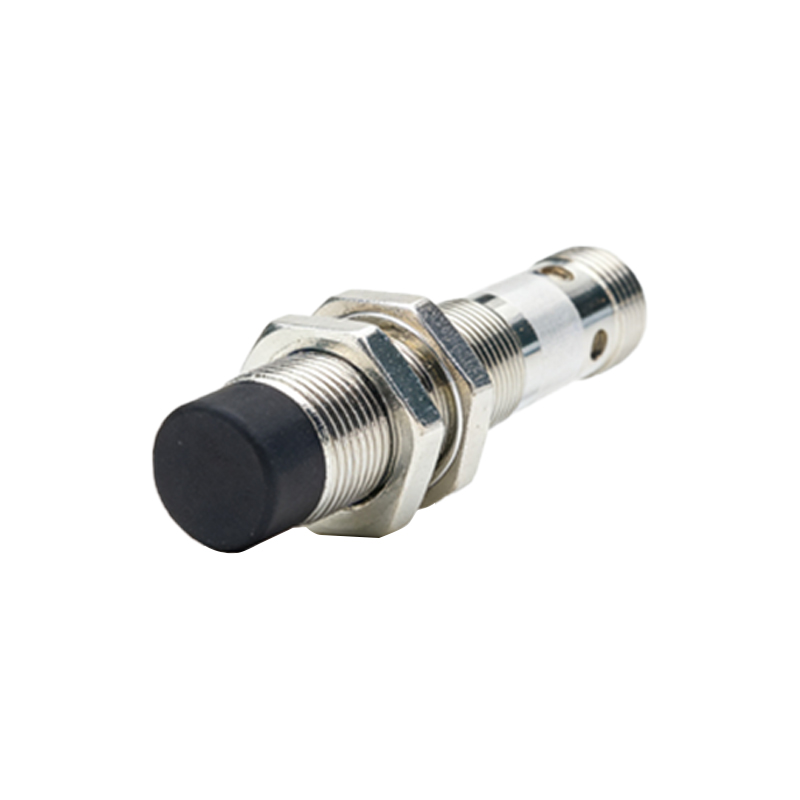
There are several primary types of non-contact proximity sensors, each suited to different materials and applications. The most common is the inductive proximity sensor. It generates an oscillating electromagnetic field and detects the eddy currents induced in conductive metal targets. Inductive sensors are robust, immune to environmental contaminants like dust and oil, and are ideal for detecting metals in harsh industrial environments. Common applications include position sensing of machine parts, counting metal objects on conveyors, and end-of-travel detection.
For non-metallic objects, capacitive proximity sensors are the preferred choice. These sensors can detect a wide variety of materials, including plastics, glass, wood, liquids, and granules. They operate by measuring changes in capacitance between the sensor's active face and the target object. This makes them versatile for tasks such as liquid level detection, material handling of non-metals, and presence sensing of packaged goods. However, they can be more susceptible to environmental factors like humidity.
Magnetic proximity sensors, or reed switches activated by a magnet, are another important category. They detect the presence of a permanent magnet. Their key advantage is the ability to operate through non-magnetic barriers like stainless steel, plastic, or glass, making them perfect for sealed or hazardous environments. They are frequently used for door position sensing, cylinder position feedback in pneumatic systems, and safety interlock systems.
Photoelectric sensors, while sometimes categorized separately, are a vital form of non-contact sensing. They use a light beam (visible, infrared, or laser) to detect objects. When the beam is interrupted or reflected by a target, the sensor's output state changes. They offer very long sensing ranges and can detect objects of almost any material, color, or finish. Common configurations include through-beam, retro-reflective, and diffuse reflective models, used in packaging, material handling, and assembly line automation.
When selecting a non-contact proximity sensor for an application, several critical factors must be considered. First is the sensing range, which is the maximum distance at which the sensor can reliably detect a standard target. It is crucial to note that the effective sensing distance can be influenced by the target material, size, and shape. Environmental conditions are equally important; factors such as temperature extremes, washdown requirements, exposure to chemicals, or heavy vibration dictate the required ingress protection (IP) rating and housing material (e.g., nickel-plated brass, stainless steel, or PBT plastic).
Electrical characteristics cannot be overlooked. Engineers must specify the required output type—PNP (sourcing) or NPN (sinking) transistor outputs, or analog outputs for distance-proportional signals—and ensure compatibility with the programmable logic controller (PLC) or other control system. The operating voltage (commonly 10-30V DC or 90-250V AC) and current rating must also match the system's power supply and load requirements.
Installation and mounting are practical considerations. Many sensors feature built-in LEDs for diagnostic purposes, indicating power status and output activation. Proper mounting, respecting the specified flush or non-flush mounting guidelines, is essential to avoid false triggers from surrounding metal (for inductive sensors) or to achieve the stated sensing range. Regular maintenance, though minimal compared to mechanical switches, involves periodic checks for physical damage, buildup of contaminants on the sensing face, and verification of electrical connections.
In conclusion, non-contact proximity sensors are indispensable components in automated systems, offering unparalleled reliability, speed, and longevity. Their ability to operate without physical contact translates to reduced maintenance costs, fewer production stoppages, and enhanced system flexibility. By understanding the distinct operating principles of inductive, capacitive, magnetic, and photoelectric variants, and by carefully evaluating application requirements against sensor specifications, electrical professionals can optimize system performance and drive efficiency across countless industrial processes, from automotive manufacturing to food processing and beyond.