In the realm of industrial automation and precision measurement, laser sensors have established themselves as indispensable tools. Their ability to provide non-contact, high-speed, and highly accurate measurements makes them a cornerstone technology across diverse sectors, from manufacturing and robotics to logistics and quality control. This article delves into the fundamental principles, key types, practical applications, and critical factors for selecting the right laser sensor for a given task.
At its core, a laser sensor operates by emitting a focused beam of coherent light—typically from a laser diode—towards a target object. The sensor then detects the interaction of this beam with the target. The specific method of detection defines the primary categories of laser sensors. The most common types include triangulation sensors, time-of-flight (ToF) sensors, and confocal displacement sensors.
Triangulation laser sensors are renowned for their exceptional resolution at short to medium ranges. The principle involves projecting a laser spot onto the target surface. The reflected light is focused onto a position-sensitive detector (like a CCD or PSD) at an angle. As the target's distance changes, the position of the reflected spot on the detector shifts. Using simple trigonometric calculations, the sensor's electronics precisely determine the distance or displacement. This makes them ideal for applications such as measuring thickness, vibration, warp, or the precise profile of small components.

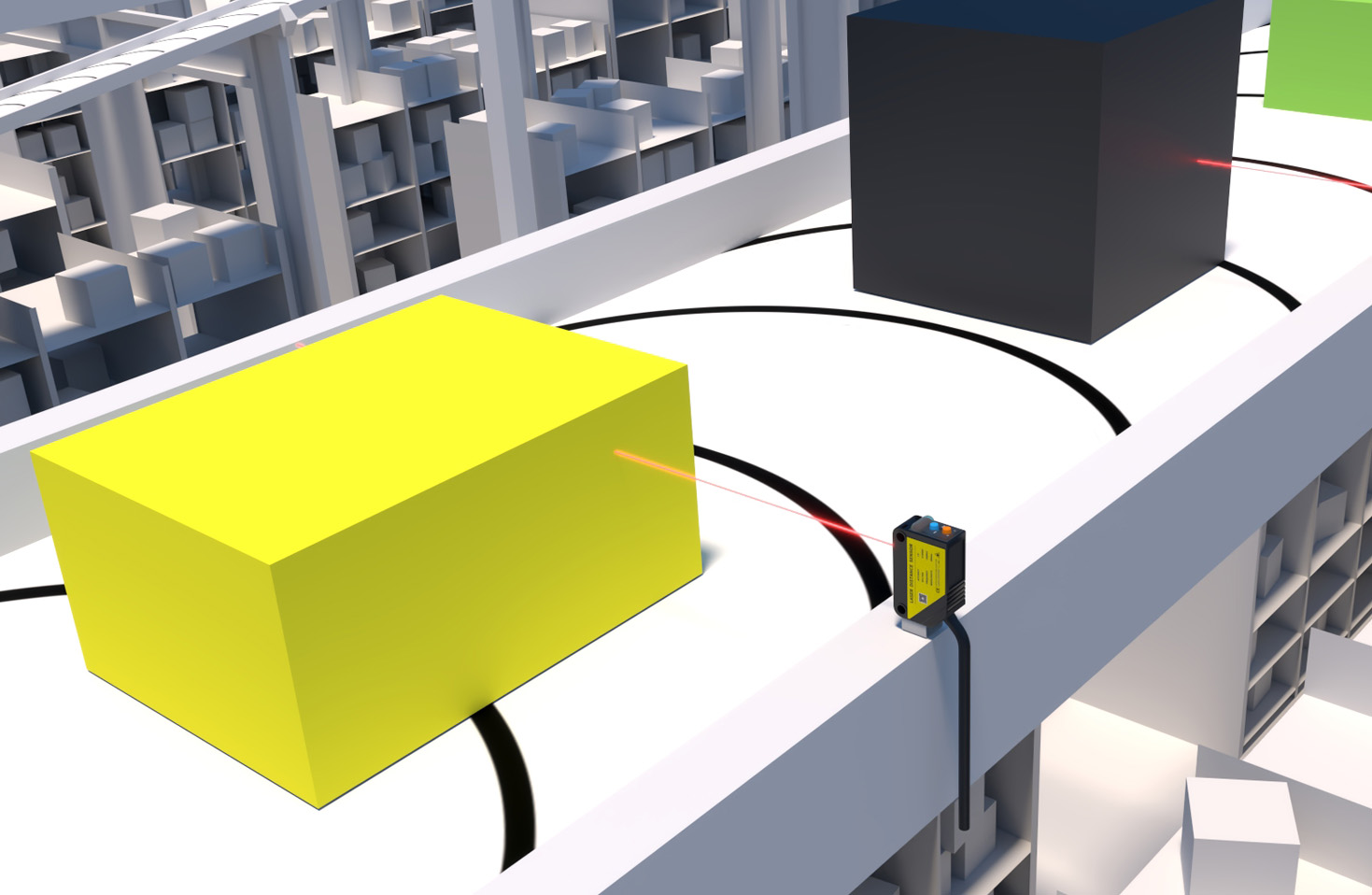
Time-of-Flight (ToF) laser sensors, in contrast, measure distance by calculating the time it takes for a laser pulse to travel to the target and back. They are highly effective for longer ranges, often up to several meters or more, though with typically lower resolution than triangulation sensors at close quarters. ToF sensors are widely used in applications like bulk level monitoring in silos, vehicle detection, and large-scale dimensioning in logistics for measuring packages on conveyor belts.

Confocal chromatic sensors represent the high-precision end of the spectrum. They use white light, where different wavelengths are focused at different distances. By analyzing the color of the reflected light, they can determine the distance to the target with nanometer-level resolution. These are essential for measuring transparent materials (like glass or film), highly reflective surfaces, or for tasks requiring extreme precision, such as in semiconductor wafer inspection.
The applications of laser sensors are vast and continually expanding. In automotive assembly, they ensure precise gap and flush measurements between body panels. In electronics manufacturing, they verify component placement and solder paste height. In robotics, they provide critical feedback for guidance, positioning, and obstacle avoidance. In pharmaceutical packaging, they verify fill levels in vials and blister packs without contamination risk. Furthermore, laser profile scanners, which use a laser line instead of a single point, can capture complex 3D contours for reverse engineering or quality assurance of molded parts.
Selecting the appropriate laser sensor requires a careful analysis of several parameters. Key considerations include:
1. Measurement Range and Standoff Distance: The required distance between the sensor and the target.
2. Resolution and Accuracy: The smallest detectable change and the trueness of the measurement to the actual value.
3. Target Characteristics: The material, color, surface finish (matte, glossy, transparent), and angle of the target significantly affect the laser's reflection.
4. Environmental Conditions: Factors like ambient light, dust, moisture, temperature, and vibration can impact performance. Many industrial sensors feature robust housings (IP67/IP69K ratings) and specialized filters.
5. Output and Connectivity: The required signal output (analog voltage/current, digital switch, serial data like RS-485, or industrial Ethernet protocols like EtherCAT or PROFINET) must integrate with the existing control system.
6. Speed: The measurement rate or response time must match the process dynamics.
In conclusion, laser sensors are a transformative technology enabling higher levels of automation, quality, and efficiency. Their non-contact nature eliminates wear and avoids influencing delicate targets. By understanding the underlying principles—triangulation for precision, ToF for range, and confocal for challenging surfaces—engineers and system integrators can make informed decisions. The ongoing advancements in laser diode technology, detector sensitivity, and embedded signal processing promise even more compact, powerful, and cost-effective sensors, further solidifying their role as the eyes of modern industrial systems. Proper selection, considering the interplay of target properties, environmental factors, and performance specifications, is crucial to unlocking their full potential and ensuring reliable, long-term operation in demanding industrial environments.