Laser bottle displacement sensors represent a critical advancement in industrial automation, particularly within packaging, beverage, and pharmaceutical sectors. These non-contact measurement devices utilize laser triangulation or time-of-flight principles to precisely determine the position, fill level, or presence of bottles on high-speed production lines. Unlike traditional mechanical or capacitive sensors, laser-based systems offer unparalleled accuracy, often within micrometer ranges, without physical interaction that could contaminate or damage containers.
The core operational principle involves emitting a focused laser beam onto the target bottle's surface. A receiver, typically a CMOS or CCD array, detects the reflected light. By calculating the angle or time difference between emitted and reflected beams, the sensor's onboard processor computes the exact distance to the object. This data is transmitted in real-time via standard industrial protocols like IO-Link, Profinet, or analog outputs to a PLC, enabling instantaneous adjustments in conveyor speed, filling heads, or robotic pick-and-place arms. Modern iterations integrate advanced features such as background suppression to ignore irrelevant objects, multi-echo evaluation for transparent or reflective bottles, and integrated temperature compensation for stable performance in harsh environments.
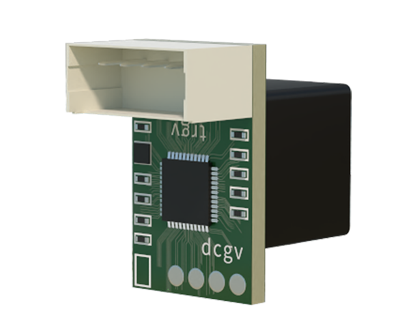
Key advantages of deploying laser bottle displacement sensors include significant reductions in product waste and downtime. For instance, in fill-level monitoring, they ensure each bottle contains the precise liquid volume, preventing underfills that violate regulations and overfills that erode profitability. Their high sampling rates, often exceeding 10 kHz, make them ideal for lines moving thousands of bottles per hour. Furthermore, their immunity to color variations, surface textures, and ambient light fluctuations—challenges that often plague vision systems—ensures reliable operation across diverse packaging materials, from clear glass and colored PET to opaque HDPE.
Integration considerations are paramount. Engineers must account for mounting distance, beam spot size, and the sensor's measurement range relative to bottle dimensions. Environmental factors like dust, steam, or vibration necessitate selecting models with appropriate IP ratings (e.g., IP67) and robust housings. Calibration against master samples during commissioning is essential to align sensor outputs with physical tolerances. Emerging trends include the incorporation of AI-driven analytics for predictive maintenance, detecting subtle deviations in bottle posture or conveyor wear before they cause faults, and the miniaturization of sensors for space-constrained installations.
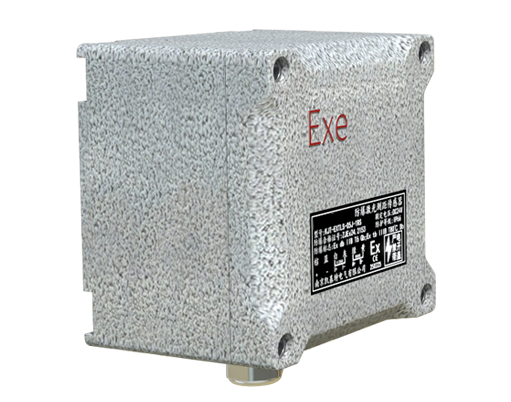
In summary, laser bottle displacement sensors are indispensable for modern, efficient bottling operations. They enhance quality control, optimize throughput, and support Industry 4.0 initiatives by providing precise, digital data for continuous process improvement. As production speeds and quality demands escalate, their role in ensuring precision and reliability will only expand, solidifying their status as a cornerstone technology in automated manufacturing.