In the realm of industrial automation and precision measurement, photoelectric sensors are indispensable. Their core function—detecting the presence, absence, or distance of an object—hinges on the quality and characteristics of their light source. While LEDs dominate many applications for their cost-effectiveness and longevity, laser sources have carved out a critical niche where precision, range, and visibility are paramount. This article delves into the technical specifics of laser sources as employed in photoelectric sensors, examining their principles, types, and key application considerations.
Fundamentally, a laser (Light Amplification by Stimulated Emission of Radiation) generates a coherent, monochromatic, and highly collimated beam of light. This is in stark contrast to the divergent, polychromatic light from a standard LED. Coherence means the light waves are in phase, both temporally and spatially. Monochromaticity indicates a very narrow wavelength band. Collimation results in a beam that diverges very little over long distances. These properties translate directly into operational advantages for sensors: a small, precise spot size even at long ranges, excellent signal-to-noise ratio due to minimal dispersion, and the ability to perform precise edge detection or measurement.
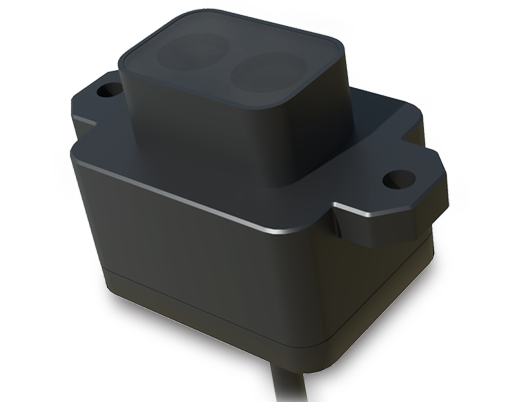
Several types of lasers are utilized in photoelectric sensors, each with distinct properties. The most common are Visible Red Lasers, typically using a 650-670 nm wavelength. They provide a clearly visible red dot or line, invaluable for precise alignment and setup during installation. Their moderate range and good performance in various conditions make them a versatile choice for general-purpose precision sensing. For applications requiring higher visibility or different material responses, Green Lasers (520-532 nm) are often employed. The human eye is more sensitive to green light, and some materials reflect green wavelengths more effectively than red, enhancing detection reliability in specific scenarios.

For long-range applications or where high ambient light is a concern, Infrared (IR) Lasers are the go-to solution. Operating at wavelengths like 780 nm, 850 nm, or 905 nm, they are invisible to the human eye. Their primary advantages include superior resistance to ambient light interference and the ability to achieve very long sensing ranges—often tens or even hundreds of meters in specialized time-of-flight or LIDAR sensors. However, their invisibility makes alignment a challenge, often requiring an integrated visible pilot beam.

A more advanced category is the Laser Diode with modulated output. Instead of emitting a continuous wave, these lasers pulse at a very high frequency. This modulation allows the sensor's receiver to be tuned to the exact frequency of the emitted light, effectively filtering out all other light sources (ambient sunlight, room lighting). This technology, often called "modulated light" or "AC operation," dramatically increases immunity to optical noise, enabling reliable operation in extremely bright environments where other sensors would fail.
Key performance parameters for laser sources in sensors include output power (measured in milliwatts), beam divergence (in milliradians), and wavelength. Engineers must carefully select based on application needs while strictly adhering to laser safety classifications (IEC 60825-1 / FDA 21 CFR). Most sensor-integrated lasers are Class 1, Class 2, or Class 3R, deemed safe under normal operating conditions with built-in safeguards. Class 2 lasers (like common visible red pointers) are safe due to the human blink reflex, while Class 1 devices are inherently safe regardless of exposure time. Ensuring the correct class for the application is a non-negotiable aspect of design and deployment.
In practice, laser-based photoelectric sensors excel in several demanding applications. They are crucial in semiconductor manufacturing for wafer positioning, in logistics for high-speed parcel dimensioning, in automotive assembly for precise gap measurement, and in material handling for detecting thin or transparent objects like glass or plastic films. The tight, visible beam allows for detecting very small objects or precisely defining a detection boundary.
When integrating a laser sensor, engineers must consider the target material's reflectivity at the laser wavelength, the required spot size at the target distance, and the ambient light conditions. Surface color, texture, and angle all affect the amount of light returned to the receiver. A glossy surface may cause a specular reflection away from the receiver, while a matte, dark surface absorbs more light. Understanding these interactions is key to successful implementation.
In conclusion, the laser source is the defining heart of a high-performance photoelectric sensor. Its coherent, focused light enables levels of precision, range, and noise immunity unattainable with conventional light sources. For the engineering professional, selecting the appropriate laser type—visible red, green, infrared, or modulated—requires a clear understanding of the operational principles, safety standards, and application-specific demands. As automation tasks grow more complex, the role of laser-based sensing will only continue to expand, driven by the relentless need for accuracy and reliability in industrial systems.