In the demanding landscape of modern industrial automation, process control, and advanced research, the ability to accurately measure parameters in extreme thermal environments is paramount. High temperature laser sensor probes represent a pinnacle of engineering, designed to deliver precise, non-contact measurements where conventional sensors would fail. These sophisticated devices operate on the fundamental principles of laser triangulation, time-of-flight, or interferometry, emitting a focused laser beam towards a target. The reflected or scattered light is then captured and analyzed to determine critical parameters such as distance, displacement, thickness, or vibration—all without physical contact with the target surface.
The core engineering challenge lies in the probe's construction. Standard electronic components and optical assemblies rapidly degrade when exposed to sustained high temperatures, often exceeding 200°C and, in specialized cases, pushing beyond 1000°C. To overcome this, high-temperature probes incorporate a suite of advanced thermal management and material science solutions. Critical internal components, including the laser diode, detector, and signal processing circuitry, are housed within a actively or passively cooled enclosure. This may involve integrated air or water cooling jackets, heat sinks with high thermal conductivity, or even thermoelectric coolers (Peltier devices) to maintain a stable internal operating temperature.
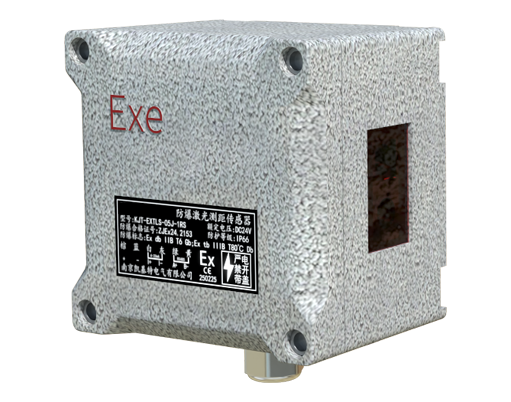
Material selection is equally critical. The probe housing and optical window are typically fabricated from specialized alloys like Inconel or Hastelloy, which offer exceptional resistance to oxidation and thermal creep. The optical window itself is often made from synthetic sapphire or fused silica, materials renowned for their high melting points, thermal shock resistance, and excellent transmission properties for specific laser wavelengths. Furthermore, fiber-optic cabling is frequently employed to decouple the sensitive laser source and detector electronics from the hostile measurement point, allowing the probe head to withstand the intense heat while the control unit remains in a benign environment.
The applications for these robust sensors are vast and critical. In the aerospace sector, they are indispensable for monitoring blade tip clearance and casing deformation in jet engines and gas turbines during operation. Within metallurgy and glass manufacturing, they provide continuous, real-time measurement of product dimensions and surface quality in furnaces and rolling mills. The energy industry relies on them for boiler tube inspection and monitoring in coal-fired and nuclear power plants. Their non-contact nature also makes them ideal for measuring hot, molten, or corrosive materials that would destroy a tactile probe.
When specifying a high-temperature laser sensor probe, engineers must carefully evaluate several key parameters beyond the maximum ambient temperature rating. The stand-off distance and measurement range must be compatible with the installation geometry. The required resolution and accuracy, often in the micron range, dictate the choice of optical principle and detector quality. The laser's wavelength and power must be selected to penetrate any intervening flames, steam, or particulate matter common in industrial settings. Finally, the probe's ingress protection (IP) rating, resistance to electromagnetic interference (EMI), and mechanical robustness against vibration are essential for long-term reliability.

Looking ahead, the evolution of high-temperature laser probes is closely tied to advancements in photonics and materials. The integration of more efficient and compact laser sources, such as VCSELs (Vertical-Cavity Surface-Emitting Lasers), and the development of novel ceramic composites for housings promise even smaller, more resilient probes. Enhanced digital signal processing and embedded intelligence will allow for better compensation of environmental noise and automated calibration. As industries push the boundaries of efficiency and operate in ever more extreme conditions, the high-temperature laser sensor probe will remain an indispensable tool, enabling precise control, ensuring safety, and driving innovation through reliable data captured at the very edge of thermal possibility.