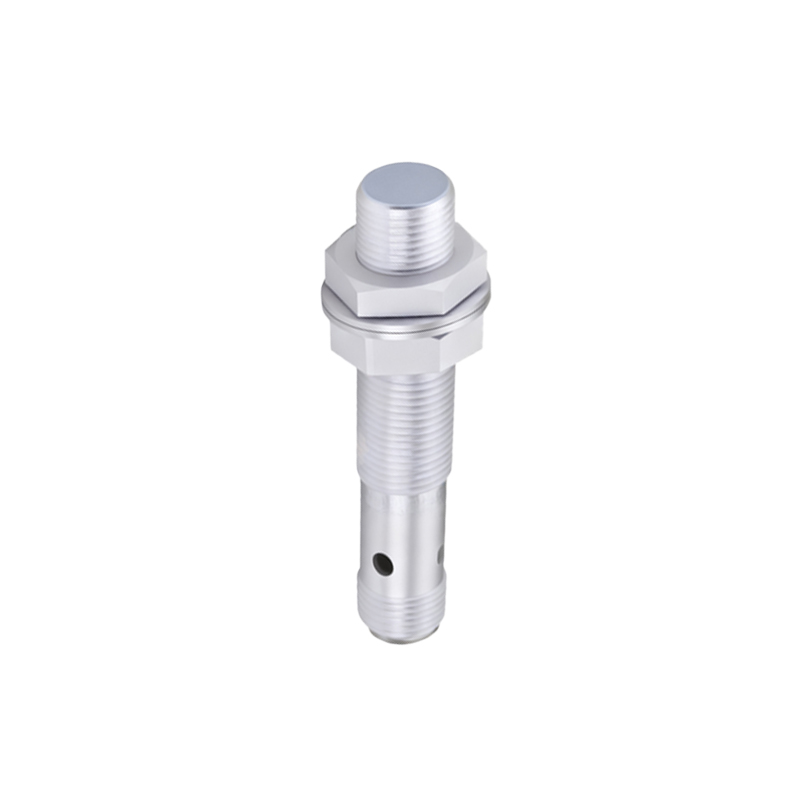
Proximity sensors are ubiquitous in modern technology, silently performing critical functions in smartphones, industrial automation, vehicles, and countless other devices. Their ability to detect the presence or absence of an object without physical contact is a marvel of engineering. But what happens inside these compact devices to enable this capability? The internal principles revolve primarily around the use of electromagnetic fields or beams of radiation.
The most common type is the inductive proximity sensor. Its core component is a coil of wire wound around a ferrite core, connected to an oscillator circuit. When powered, the oscillator generates a high-frequency alternating current that flows through the coil, creating a constantly oscillating electromagnetic field around the sensor's face. In the absence of a metallic target, this field remains stable, and the oscillator runs at its base amplitude. When a conductive metal object enters this active field, eddy currents are induced on the surface of the target. These eddy currents draw energy from the sensor's coil, causing a measurable drop in the amplitude of the oscillator's oscillations. A dedicated threshold detection circuit monitors this amplitude. Once the drop passes a set threshold, it triggers a signal change in the sensor's output circuit, switching a solid-state transistor to indicate the object's presence. This entire process is exceptionally fast and reliable, making inductive sensors ideal for harsh industrial environments to detect metals.
Another widespread principle is used in capacitive proximity sensors. These can detect both metallic and non-metallic materials like plastic, wood, or liquids. Internally, they feature two conductive electrodes arranged as plates or as one active electrode and the sensor housing acting as the second. These electrodes form a capacitor. An oscillator circuit charges this capacitor, creating an electrostatic field. When any object enters this field, it alters the dielectric properties between the electrodes, effectively changing the capacitance. This change affects the oscillator's characteristics, either its frequency or amplitude. A subsequent evaluation circuit detects this change and triggers the output switch. The sensitivity is often adjustable, allowing the sensor to tune out background materials or detect specific targets through thin barriers.
For longer ranges or non-metal detection, photoelectric sensors employ a different internal principle. They contain a light emitter, typically an LED or laser diode, and a photodetector (like a phototransistor). In the most common "through-beam" configuration, these are in separate housings. The emitter sends a continuous or modulated beam of light to the detector. An object interrupting this beam causes the detector's received light intensity to fall, triggering the output. The "retro-reflective" type houses both in one unit, bouncing light off a reflector. The "diffuse" or "proximity" mode has both components side-by-side. Here, the sensor detects light reflected directly off the target itself. Internal circuitry measures the intensity of this returned light, and a potentiometer or digital setting defines the threshold for detection. Advanced versions use modulated light and filters to ignore ambient light interference.
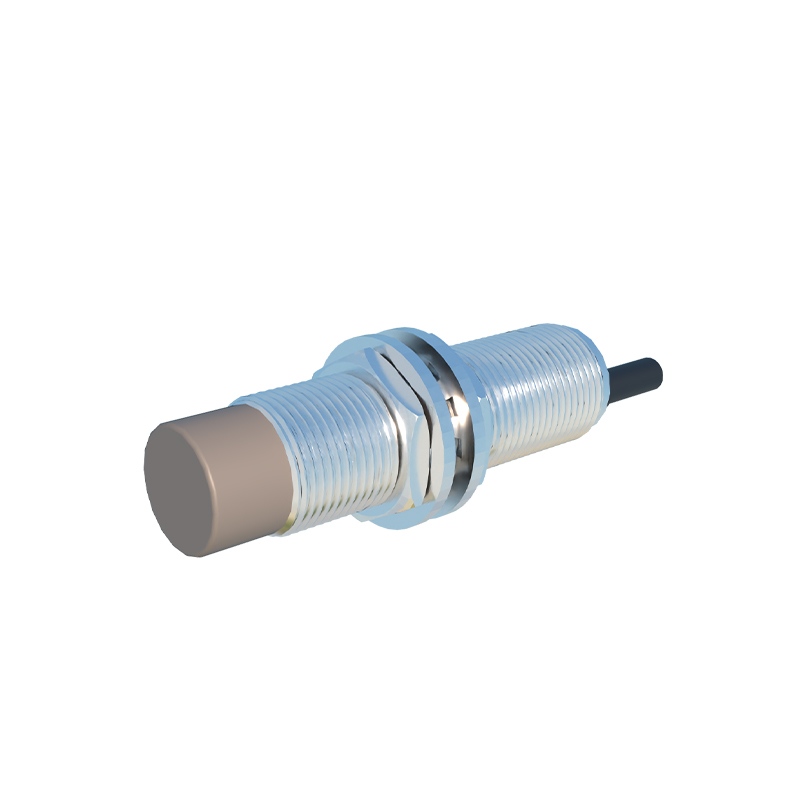
Ultrasonic proximity sensors operate on a principle akin to sonar. A piezoelectric transducer acts as both speaker and microphone. The electronic circuit applies a voltage to generate a high-frequency ultrasonic sound pulse (inaudible to humans). The same transducer then listens for the echo. A timing circuit measures the interval between the emitted pulse and the returned echo. The presence of an object within a set distance is determined by calculating the time-of-flight of the sound wave. Internal signal processing filters out noise and false echoes to ensure accurate detection.
Regardless of type, the internal architecture follows a similar pattern: a sensing element generates a field or beam, a target interaction causes a measurable perturbation, and dedicated electronics convert this analog change into a clean, digital output signal. Modern sensors integrate microcontrollers for advanced functions like programmability, diagnostics, and communication via IO-Link or other protocols. Understanding these internal principles is key to selecting the right sensor for an application, considering factors like target material, required sensing distance, environmental conditions, and response speed. This knowledge empowers engineers and technicians to implement more efficient, reliable, and innovative automated solutions.