Automatic braking systems have become a cornerstone of automotive safety, and at the heart of many advanced implementations lies the laser sensor. This technology, often referred to as LiDAR (Light Detection and Ranging) in its more sophisticated forms, provides the critical real-time data necessary for collision avoidance. Unlike radar or cameras, laser sensors emit pulsed light waves to measure the exact distance to objects with remarkable precision. When integrated into an automatic emergency braking (AEB) system, these sensors continuously scan the vehicle's forward path, creating a dynamic, high-resolution map of the surrounding environment.
The operational principle is based on time-of-flight measurement. A laser diode emits a short, invisible infrared pulse. This pulse travels until it strikes an object—a vehicle, pedestrian, or obstacle—and reflects back to a receiver on the sensor. By calculating the time difference between the emission and reception of the pulse, the sensor's onboard processor can determine the distance to the object with centimeter-level accuracy. This process occurs millions of times per second, generating a dense point cloud of data. The vehicle's central control unit analyzes this data stream, tracking the relative speed and trajectory of detected objects. If an impending collision is predicted and the driver does not respond, the system autonomously initiates braking to mitigate or avoid the impact.
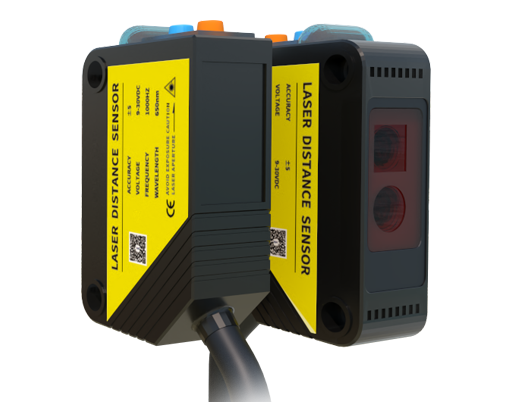
The advantages of laser sensors for automatic braking are significant. Their high angular resolution allows for excellent object discrimination, even in complex urban settings. They can detect the precise contours of a pedestrian stepping off a curb or the narrow profile of a motorcycle, enabling more nuanced decision-making algorithms. Furthermore, laser sensors typically perform well in low-light conditions, as they are active illumination systems. However, engineers must account for their limitations. Performance can degrade in heavy rain, fog, or snow, as water particles scatter the laser beams. This is why most robust AEB systems employ sensor fusion, combining laser data with inputs from radars (which excel in adverse weather) and cameras (which provide rich contextual classification).
From an engineering and manufacturing perspective, the evolution of laser sensors has been driven by demands for miniaturization, cost reduction, and increased reliability. Early systems were bulky and prohibitively expensive for mass-market vehicles. Today, solid-state LiDAR units, with no moving parts, are enabling more compact and durable designs that can be seamlessly integrated into grilles, bumpers, or windshields. The focus on functional safety standards, such as ISO 26262, is paramount. Every component, from the laser emitter to the signal-processing chip, must be designed with fail-operational or fail-safe architectures to ensure the system remains reliable throughout the vehicle's lifecycle.

The future trajectory points toward even greater integration. As the automotive industry advances toward higher levels of automation, the role of laser sensors will expand beyond emergency braking. They will be essential for navigation, adaptive cruise control, and complex urban driving maneuvers. Research is ongoing to improve performance in all weather conditions using different wavelengths or complementary sensing modalities. The continuous reduction in cost per unit will accelerate adoption across all vehicle segments, making this life-saving technology ubiquitous. For electrical and automotive engineers, the challenge and opportunity lie in refining these systems—enhancing their algorithmic intelligence, hardening them against environmental extremes, and ensuring their seamless, safe operation within the broader vehicle ecosystem. The automatic braking laser sensor is not just a component; it is a critical enabler of the safer, automated mobility landscape of tomorrow.
