In the realm of industrial automation and control, proximity sensors are indispensable for detecting the presence or absence of objects without physical contact. While standard inductive, capacitive, and photoelectric sensors are ubiquitous, applications demanding detection over extended ranges necessitate specialized solutions: long-distance proximity sensors. These advanced devices push the boundaries of non-contact sensing, enabling reliable operation where standard sensors fall short. This article delves into the technology behind long-distance proximity sensors, their key applications, and critical factors for selection and implementation.
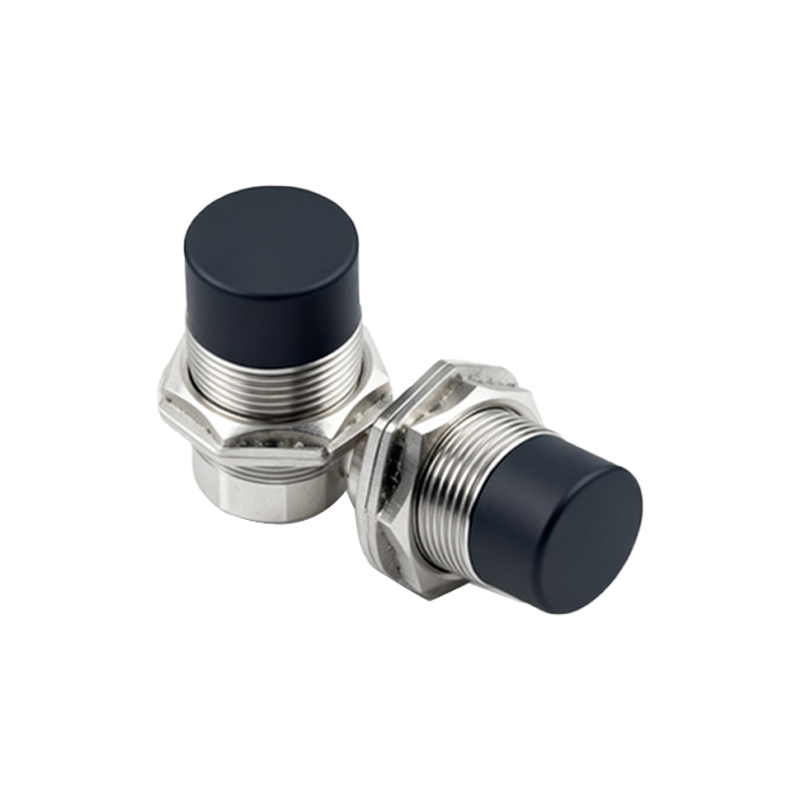
The core challenge in long-distance sensing is maintaining a strong and reliable signal over an increased air gap. Standard inductive sensors, for instance, typically have sensing ranges from a few millimeters to about 40-50 mm for larger models, as their electromagnetic field decays rapidly. Long-distance variants overcome this limitation through several technological enhancements. For inductive types, this often involves optimized coil designs, specialized ferrite cores, and advanced oscillation circuits that generate a more focused and penetrating electromagnetic field. Some models incorporate background suppression or teach-in functionality to ignore distant metallic backgrounds, ensuring they only detect the target within the specified long range, which can extend up to 120 mm for ferrous metals.
Photoelectric sensors are the most common technology for achieving very long sensing distances, often measured in meters rather than millimeters. Three primary photoelectric types excel here: through-beam, retro-reflective, and diffuse reflective sensors with background suppression. Through-beam sensors, with a separate emitter and receiver, offer the longest ranges—easily reaching 100 meters or more—as they rely on the direct interruption of a light beam. Retro-reflective sensors, which bounce light off a reflector, provide substantial ranges, often up to 20-30 meters, and are simpler to install than through-beam pairs. For applications requiring detection from one side only, advanced diffuse sensors with background suppression or time-of-flight (ToF) measurement can accurately detect objects at distances of several meters while ignoring objects beyond a set point.
Ultrasonic sensors also serve as excellent long-distance proximity detectors, especially for non-metallic, liquid, or transparent objects that photoelectrics might struggle with. They operate by emitting sound waves and measuring the echo's return time. Their sensing ranges can comfortably span from a few centimeters to over 10 meters, making them versatile for level detection, bulk material presence, and pallet profiling in logistics.

The industrial applications for these sensors are vast and critical. In material handling and logistics, long-distance photoelectric or ultrasonic sensors monitor high-bay storage, control crane positioning, and detect large packages on conveyors from a safe distance. In the automotive industry, they are used for robot cell safeguarding and detecting vehicle bodies on assembly lines. In forestry and lumber, robust sensors measure log positions. In heavy machinery, long-range inductive sensors monitor the position of large metal components like crane hooks or boom arms. Their ability to detect from a distance allows for earlier process decisions, enhanced safety barriers, and the monitoring of large-scale equipment.
Selecting the appropriate long-distance proximity sensor requires a meticulous analysis of the application parameters. The primary consideration is the required sensing distance, but this cannot be evaluated in isolation. The target material (metal, plastic, wood, liquid), size, color, and surface finish dramatically affect performance, especially for photoelectric and ultrasonic types. Environmental conditions are paramount: dust, fog, steam, and ambient light can cripple photoelectric sensors, while temperature extremes and acoustic noise can impact ultrasonics. Inductive sensors are immune to these but only work with metals. The required response time, output type (PNP/NPN, analog, IO-Link), and housing material (often stainless steel or ruggedized plastic for harsh environments) are also crucial. Finally, mounting constraints and electrical compatibility with the control system must be verified.
Installation and alignment are more critical for long-distance sensors than their short-range counterparts. Even slight misalignment of a through-beam sensor over 50 meters can cause failure. Vibration and thermal expansion can shift alignment over time. Therefore, sensors with visible LED alignment aids, robust mounting brackets, and IP67/IP69K ratings for environmental protection are highly recommended. Regular maintenance checks for lens cleanliness (for photoelectrics) and stable mounting are essential for sustained reliability.
In conclusion, long-distance proximity sensors are sophisticated tools that solve specific challenges in modern industrial automation. By understanding the strengths and limitations of inductive, photoelectric, and ultrasonic technologies, engineers can effectively integrate these sensors to enhance system intelligence, efficiency, and safety over extended ranges. The key to success lies in a thorough application review, careful product selection, and precise installation, ensuring these powerful sensing eyes operate reliably in demanding industrial landscapes.