Laser displacement sensors are pivotal components in modern industrial automation, quality control, and precision measurement systems. Their ability to provide non-contact, high-accuracy distance measurements makes them indispensable across various sectors, including manufacturing, robotics, and aerospace. To fully appreciate their functionality, it is essential to delve into their core composition, which integrates optics, electronics, and sophisticated signal processing algorithms. This article provides a detailed breakdown of the key components that constitute a typical laser displacement sensor.
The fundamental operation of a laser displacement sensor is based on the principle of triangulation or time-of-flight measurement, with triangulation being more common for high-precision, short-range applications. The primary physical components can be categorized into several subsystems.
First is the Laser Diode and Emitter Optics. The heart of the sensor is a laser diode, typically emitting a visible red or infrared coherent light beam. Common types include edge-emitting laser diodes (ELDs) or vertical-cavity surface-emitting lasers (VCSELs). The light from the diode is conditioned by the emitter optics, which usually consist of collimating lenses. These lenses transform the diverging laser beam into a sharp, focused spot on the target surface. The quality and stability of this laser spot are critical for measurement accuracy. Some advanced sensors employ specialized optics to generate a thin, precise line laser for profiling applications.
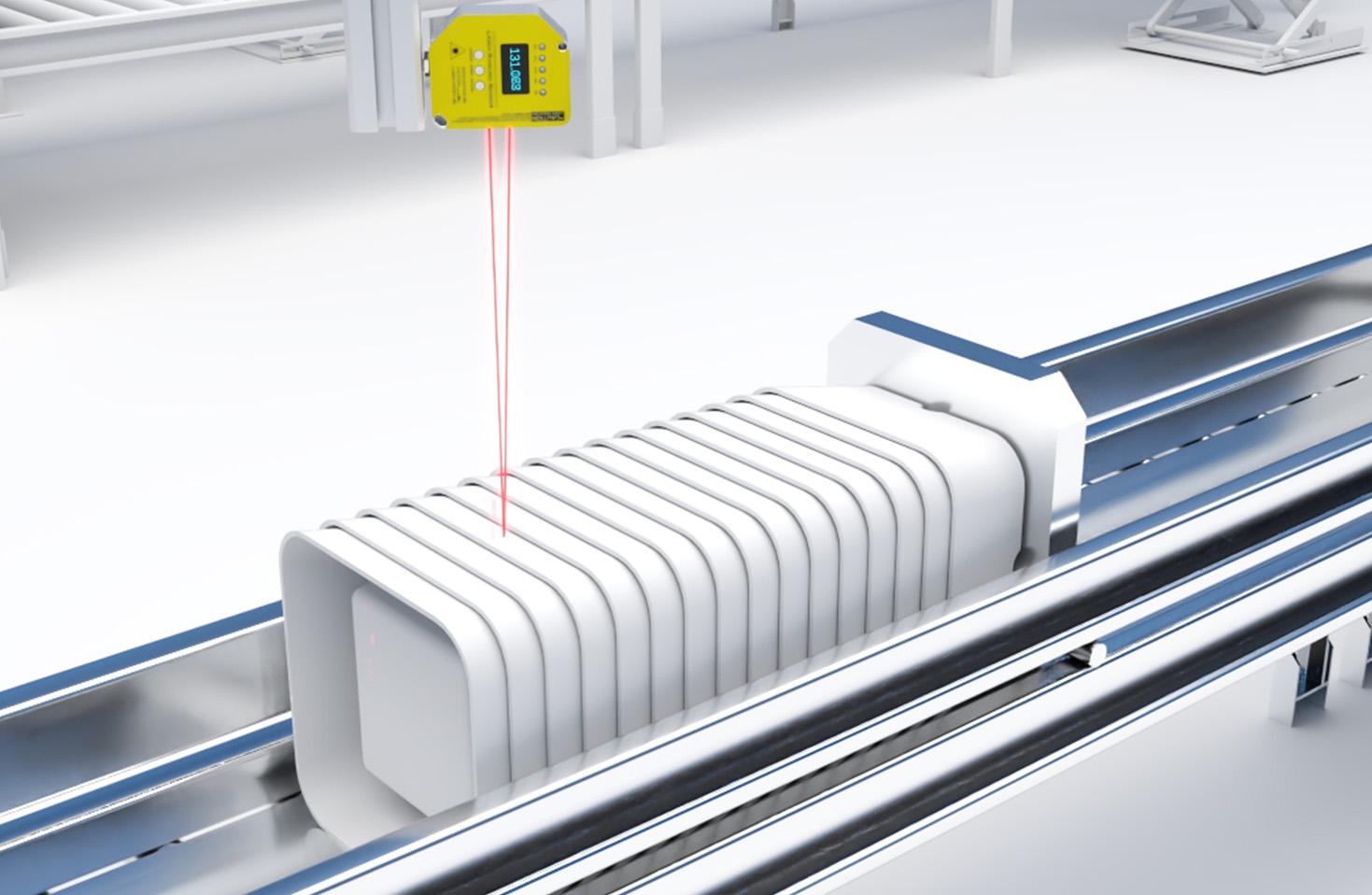
The second critical subsystem is the Receiver Optics and Photodetector. The light spot or line reflected from the target is captured by the receiver lens system. This optics assembly is precisely positioned at a known angle relative to the emitter, forming the triangulation baseline. The receiver lens focuses the reflected light onto a sensitive photodetector. The most common type of photodetector used is a Position Sensitive Device (PSD) or a Charge-Coupled Device (CCD) / Complementary Metal-Oxide-Semiconductor (CMOS) linear image sensor. PSDs provide analog output corresponding to the centroid of the light spot, offering high speed. In contrast, CCD/CMOS sensors capture a digital image of the reflected light, allowing for more complex signal processing to handle difficult surfaces (e.g., translucent, shiny, or uneven materials).
The third core element is the Signal Processing Unit. This is the "brain" of the sensor. The electrical signal from the photodetector, which indicates the position of the reflected light, is raw and noisy. The signal processing unit, comprising analog-to-digital converters (ADCs), microprocessors (MPUs) or digital signal processors (DSPs), and dedicated firmware, performs several crucial tasks. It filters out environmental noise, compensates for ambient light, and calculates the exact displacement value based on the triangulation geometry. Advanced algorithms are employed for peak detection, sub-pixel interpolation (for image sensors), and linearization of the output signal. This unit also manages communication protocols and output configuration.
Supporting these primary components are several Ancillary Systems. A stable Power Supply Unit is required, often with protection against voltage spikes and reverse polarity. Housing and Mechanical Parts provide robust environmental sealing (e.g., IP67 rating) to protect internal components from dust, moisture, and mechanical shock. The housing also ensures precise and stable alignment between the emitter and receiver optics. Furthermore, Input/Output (I/O) and Communication Interfaces are integral. These include analog outputs (e.g., 0-10V, 4-20mA), digital outputs (e.g., NPN/PNP transistors), and serial communication ports (e.g., RS-232, RS-485) or industrial network interfaces (e.g., EtherCAT, PROFINET, Ethernet/IP) for integration into larger control systems.
Finally, the performance is underpinned by Calibration and Software. Each sensor is factory-calibrated against precise reference standards to ensure accuracy and linearity. User-accessible software or built-in teach functions allow for parameter setting, such as setting measurement windows, response time, and output scaling.
In summary, a laser displacement sensor is a sophisticated synergy of optoelectronics and digital processing. From the laser diode generating the probe beam to the photodetector capturing its reflection, and the intelligent processor deriving a precise distance value, each component plays a vital role. Understanding this composition is key to selecting the right sensor for specific application challenges, such as measuring different surface types, coping with high speeds, or operating in harsh industrial environments. As technology advances, trends like miniaturization, integrated smarter processors, and enhanced communication capabilities continue to evolve the composition and capabilities of these essential measurement tools.