In the realm of industrial automation, robotics, and smart systems, the ability to detect the presence, absence, or position of an object without physical contact is paramount. While standard proximity sensors are ubiquitous, certain demanding applications require a higher degree of precision, reliability, or environmental resilience. This is where special proximity sensors come into play, offering tailored solutions for complex challenges.
Special proximity sensors are engineered variants designed to overcome the limitations of conventional inductive, capacitive, ultrasonic, or photoelectric sensors. Their "special" designation stems from unique construction materials, sophisticated operating principles, or specialized functionalities that address specific operational hurdles. One primary driver for their development is extreme environments. For instance, high-temperature proximity sensors are built with specialized ceramics, high-temperature coils, and heat-resistant cables, allowing them to function reliably in foundries, near furnaces, or in engine compartments where temperatures can exceed several hundred degrees Celsius. Conversely, cryogenic sensors are designed for applications in liquefied gas handling or superconducting systems, maintaining performance at temperatures nearing absolute zero.
Another critical category involves sensors for hazardous or corrosive environments. These units often feature housings made from stainless steel (such as V4A/316L), Hastelloy, or PTFE (Teflon) coatings. This robust construction shields the internal electronics from aggressive chemicals, solvents, or saltwater, making them indispensable in chemical processing, pharmaceutical manufacturing, and offshore industries. Furthermore, washdown-rated sensors with high IP69K ratings are specifically sealed to withstand high-pressure, high-temperature steam cleaning in food and beverage production, ensuring hygiene without compromising sensor integrity.
Precision and miniaturization represent another frontier. Special analog or IO-Link enabled proximity sensors provide not just a simple on/off signal but continuous data on the exact distance to a target. This analog output, often as a voltage or current proportional to distance, is crucial for tasks like gap monitoring, thickness measurement, or precise positioning in assembly lines. Miniaturized sensors, some as small as a few millimeters in diameter, can be installed in tightly confined spaces within miniature actuators, medical devices, or compact machinery.
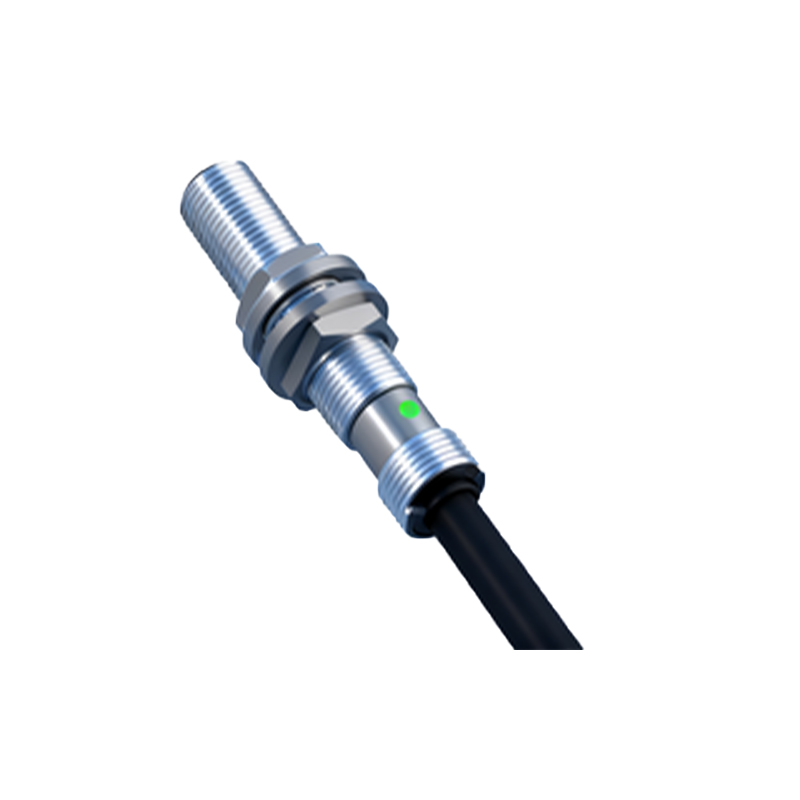
The material of the target object itself can necessitate a special sensor. Standard inductive sensors reliably detect metals but struggle with non-ferrous metals like aluminum, copper, or brass at reduced sensing ranges. Specialized inductive sensors are calibrated or use different operating frequencies to achieve consistent and extended sensing ranges for these challenging materials. For detecting non-metallic substances—such as glass, plastic, liquids, or wood—special capacitive sensors with adjustable sensitivity are employed. They can even detect materials through non-metallic container walls.
Advanced technologies also define special proximity sensors. Magnetic field sensors, like GMR (Giant Magneto Resistance) or Hall-effect sensors, detect specific magnetic fields with extreme sensitivity and are used for precise speed sensing or detecting magnetic pistons in pneumatic cylinders. Ferrous-inclusive sensors are designed to detect only ferrous metals (like iron and steel), ignoring aluminum or stainless steel, which is vital in material sorting applications. Additionally, weld-field immune sensors are hardened against the intense electromagnetic interference generated during resistance welding, preventing false triggering.
The integration of smart features and connectivity is now a standard "special" capability. Sensors with IO-Link communication provide detailed diagnostic data—such as operating temperature, signal strength, and operating hours—enabling predictive maintenance and seamless integration into Industry 4.0 frameworks. This digital intelligence transforms a simple detection device into a valuable source of process data.
In conclusion, special proximity sensors are not merely alternatives but essential components for advanced engineering. They enable automation in places where standard sensors would fail, provide the precision needed for quality control, and ensure safety and reliability in critical processes. From the heat of a steel mill to the sterile environment of a cleanroom, these specialized devices silently and reliably form the sensory foundation of modern, sophisticated industrial systems. Selecting the right special proximity sensor requires a deep understanding of the application's environmental conditions, target material, required precision, and integration needs, underscoring their role as tailored technological tools.