In the world of industrial automation and electronic device design, sensors are the fundamental components that enable machines to perceive and interact with their environment. Among the vast array of sensor types, proximity sensors and contrast sensors are two critical categories often employed for detection tasks. While their end goal—identifying the presence or absence of an object—might seem similar, their underlying operating principles, capabilities, and ideal applications are distinctly different. Understanding these differences is essential for engineers, technicians, and designers to select the right tool for the job, ensuring optimal performance, reliability, and cost-efficiency in any system.
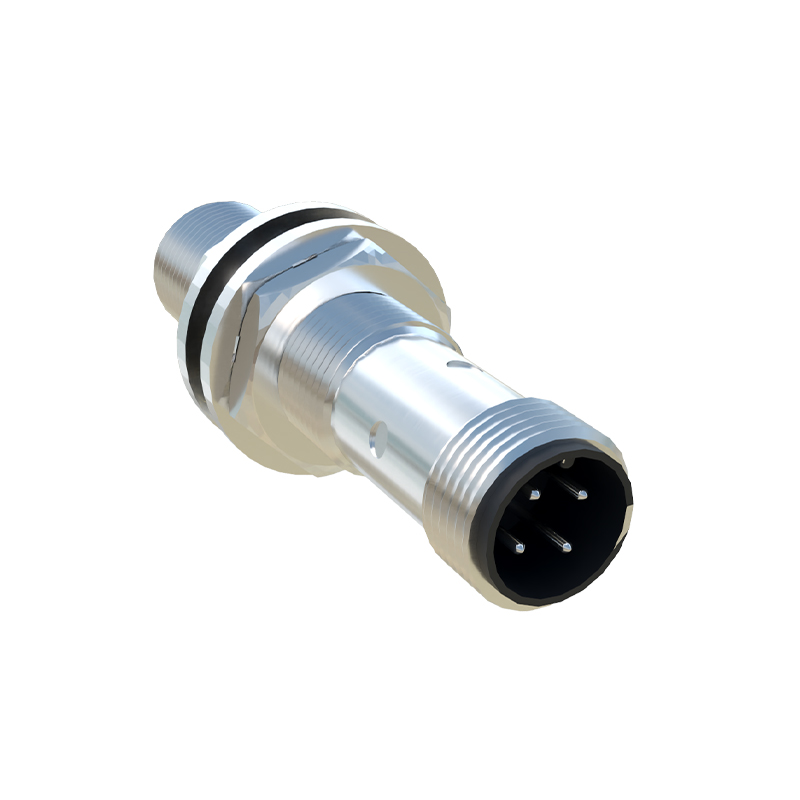
A proximity sensor is a device that detects the presence or absence of a nearby object without any physical contact. It does this by emitting a field or beam of electromagnetic radiation, such as infrared light, or by using an electromagnetic field, and then looking for changes in the return signal or field. The core principle is based on the interaction between the sensor's emitted energy and the target object. Common types include inductive, capacitive, and photoelectric proximity sensors. Inductive sensors detect metallic objects by generating an electromagnetic field. When a metal object enters this field, it induces eddy currents within the object, which the sensor detects. Capacitive sensors can detect both metallic and non-metallic objects (like liquids, plastics, or wood) by measuring changes in capacitance caused by the object's dielectric properties altering an electrical field. Photoelectric sensors use a light beam (visible, infrared, or laser) and detect an object by either the interruption of the beam (through-beam) or the reflection of the beam (retro-reflective or diffuse).
The key strength of proximity sensors lies in their ability to detect an object's mere presence, regardless of its surface characteristics like color or pattern. They are highly reliable for detecting if an object is at a specific location, often used for tasks like counting, position verification, or limit switching. For instance, an inductive sensor is perfect for detecting a metal gear tooth in a high-speed assembly line, while a capacitive sensor can reliably detect the level of liquid inside a non-metallic tank.
In contrast, a contrast sensor is a specialized type of photoelectric sensor designed specifically to detect differences in contrast, color, or luminance on a surface. Instead of just looking for the presence of an object, it evaluates the reflectivity of the surface it is pointed at. It works by emitting a focused light (typically red, green, or blue LED, or white light) onto a target surface and measuring the intensity of the reflected light. The sensor is first "taught" a reference value—the light intensity reflected from a specific background or a mark. During operation, it compares the reflected light from the target area against this stored reference. A significant difference indicates the detection of a mark, label, or a different material.
The primary application of contrast sensors is in mark detection, label positioning, and sorting based on color or surface finish. They are indispensable in packaging, printing, and labeling industries. For example, a contrast sensor on a bottling line can detect the precise position of a label on a bottle by sensing the contrast between the label and the transparent glass. Another critical use is detecting registration marks (fiducials) on printed circuit boards or flexible packaging materials to ensure accurate cutting or placement. Unlike a standard proximity sensor, a contrast sensor can distinguish between a white background and a white object if their reflectivity differs slightly, a task impossible for a simple presence detector.
The choice between a proximity sensor and a contrast sensor hinges entirely on the application's requirements. Ask the fundamental question: Is the goal to detect if something is there, or to detect what is there based on its visual properties? For pure presence detection, especially in harsh environments with dust, dirt, or varying ambient light, a robust proximity sensor (particularly inductive or capacitive) is often the superior choice. They are generally less sensitive to environmental optical noise. For tasks requiring discrimination—finding a black mark on a white package, ensuring a label is correctly aligned, or verifying the correct color cap on a product—a contrast sensor is the necessary tool. Its sensitivity and ability to be finely tuned for specific colors and contrasts make it uniquely capable.
In summary, proximity sensors and contrast sensors serve complementary roles in automation. Proximity sensors act as the reliable "eyes" that see if an object occupies a space, functioning effectively in a wide range of industrial conditions. Contrast sensors act as the discerning "inspectors," analyzing surface details to ensure quality, accuracy, and correct identification. By leveraging the strengths of each—using proximity sensors for robust presence detection and contrast sensors for precise feature verification—engineers can build more intelligent, efficient, and error-resistant automated systems. The correct selection not only solves the immediate detection problem but also contributes to the long-term stability and reduced maintenance of the entire production process.
SEO