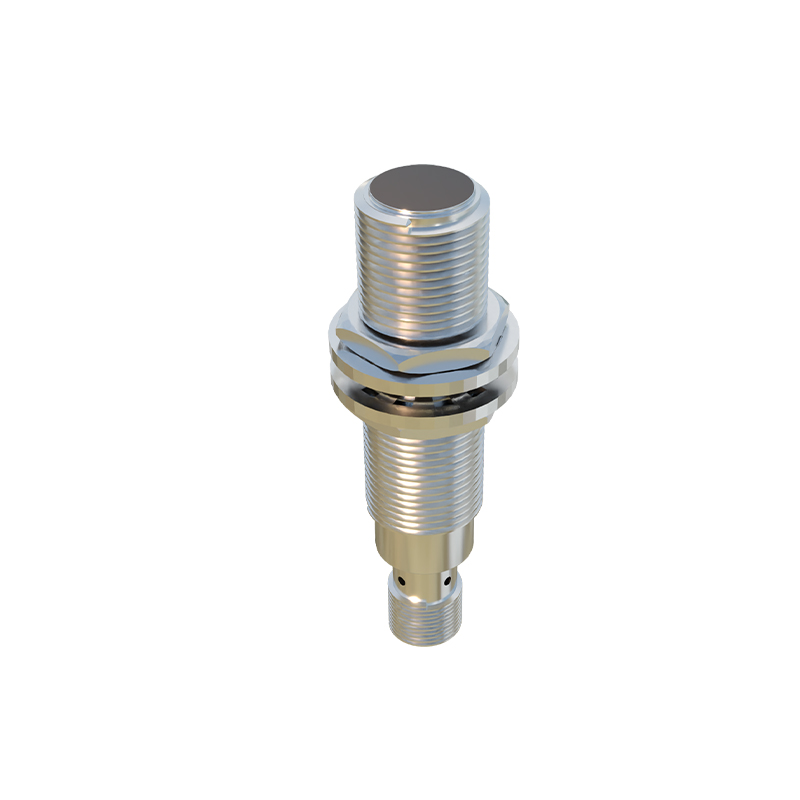
In the dynamic landscape of industrial automation, the ability to detect objects reliably from a significant distance is not merely a convenience—it is a critical operational necessity. Long-range proximity sensors have emerged as pivotal components in this domain, offering enhanced detection capabilities that transcend the limitations of standard sensors. These advanced devices are engineered to identify the presence or absence of objects without physical contact, functioning effectively over distances that can extend from several centimeters to multiple meters, depending on the technology employed.
The core technologies underpinning long-range proximity sensors primarily include ultrasonic, inductive, capacitive, and photoelectric (through-beam, retro-reflective, and diffuse reflective) principles. Each type offers distinct advantages tailored to specific industrial environments. Ultrasonic sensors, for instance, utilize sound waves to measure distance and are highly effective in harsh conditions where dust, moisture, or varying light levels might compromise other sensors. They can reliably detect objects up to several meters away, making them ideal for applications like bulk material level monitoring or large vehicle positioning. Inductive sensors, while typically limited to detecting metallic objects, have seen advancements that allow for extended ranges, particularly useful in metal fabrication or automotive assembly lines where early detection of components is crucial. Capacitive sensors can detect both metallic and non-metallic materials, including liquids and granular substances, over moderate distances, often serving in packaging or food processing industries. Photoelectric sensors, especially through-beam types, offer the longest ranges—sometimes exceeding 100 meters—by using a separate transmitter and receiver. These are invaluable in logistics for parcel sorting, conveyor belt monitoring, or safety curtain applications where precise, long-distance detection is paramount.
The implementation of long-range proximity sensors brings transformative benefits to industrial operations. Firstly, they enhance safety by enabling early warning systems; for example, sensors can detect personnel or obstacles near heavy machinery from a safe distance, triggering automatic shutdowns to prevent accidents. Secondly, they boost efficiency and productivity. In automated storage and retrieval systems (AS/RS), long-range sensors facilitate accurate inventory tracking and positioning of cranes or shuttles over vast warehouse spaces, minimizing errors and reducing cycle times. Moreover, in agricultural automation, sensors monitor equipment like harvesters or sprayers, ensuring optimal operation over large fields. Thirdly, these sensors contribute to predictive maintenance by monitoring equipment wear or alignment issues from a distance, helping to avoid unplanned downtime and extending machinery lifespan.
However, deploying long-range proximity sensors is not without challenges. Environmental factors such as extreme temperatures, electromagnetic interference, or reflective surfaces can affect accuracy. For instance, photoelectric sensors may struggle in foggy or dusty environments, while ultrasonic sensors might be influenced by air turbulence or noise. To mitigate these issues, proper sensor selection based on the application context is essential. Additionally, regular calibration and maintenance are required to ensure consistent performance. Integrating these sensors with Industrial Internet of Things (IIoT) platforms and programmable logic controllers (PLCs) further enhances their utility, enabling real-time data analytics and remote monitoring capabilities.
Looking ahead, the evolution of long-range proximity sensors is closely tied to trends like Industry 4.0 and smart manufacturing. Advances in sensor fusion—combining multiple sensing technologies—are paving the way for more robust and adaptive systems. For example, integrating LiDAR with photoelectric sensors can achieve high-precision, long-range detection for autonomous guided vehicles (AGVs) in factories. Furthermore, the development of energy-efficient and wireless sensor networks promises to reduce installation costs and increase flexibility in industrial setups. As automation continues to expand into sectors like renewable energy, where sensors monitor wind turbine blades or solar panel arrays over vast areas, the demand for reliable long-range detection will only grow.
In conclusion, long-range proximity sensors represent a vital innovation in industrial automation, bridging gaps in detection capabilities and enabling smarter, safer, and more efficient operations. By understanding their technologies, applications, and integration strategies, engineers and industry professionals can leverage these tools to drive progress in an increasingly automated world. As challenges are addressed through technological advancements, these sensors will undoubtedly play an even more central role in shaping the future of manufacturing and beyond.