In the rapidly evolving landscape of smartphone technology, the integration of advanced sensing capabilities has become a key differentiator. Among these, Laser Time-of-Flight (ToF) sensors have emerged as a pivotal component, enabling a new dimension of user interaction and computational photography. This article delves into the operational principles, current applications, and future trajectory of these sophisticated sensors within the mobile ecosystem.
At its core, a Laser ToF sensor measures distance by calculating the time it takes for a laser pulse to travel to an object and back to the sensor. Unlike traditional stereoscopic or structured light systems, ToF technology directly measures the 'time of flight' of light. The system comprises a laser emitter, typically a Vertical-Cavity Surface-Emitting Laser (VCSEL), which projects a grid of near-infrared (NIR) laser dots or a modulated continuous wave onto a scene. A specialized sensor, often a Single-Photon Avalanche Diode (SPAD) array or a specialized CMOS image sensor, then captures the reflected light. By precisely measuring the phase shift or the direct round-trip time of each photon, the sensor's processor can construct a highly accurate depth map of the surrounding environment in real-time. This process occurs at remarkable speeds, allowing for dynamic scene analysis.
The implementation of Laser ToF sensors in mobile phones has unlocked a multitude of applications. The most prominent is in the realm of photography and videography. ToF sensors provide instant and precise depth information, which is crucial for portrait mode effects, allowing for more natural and accurate background blur (bokeh) and advanced foreground segmentation. This depth data also significantly enhances low-light autofocus performance, enabling cameras to lock focus quickly and accurately in challenging lighting conditions where contrast-detection systems struggle. Beyond imaging, ToF sensors are fundamental to Augmented Reality (AR) experiences. By creating a real-time 3D map of the user's physical space, AR applications can place virtual objects with convincing occlusion and spatial awareness, making interactions more immersive. Furthermore, these sensors facilitate gesture control, allowing users to interact with their devices through simple hand movements without touch, a feature with growing potential for accessibility and novel user interfaces. Emerging applications also include improved security through more robust 3D facial recognition and enhanced computational photography features like night mode and post-capture refocusing.
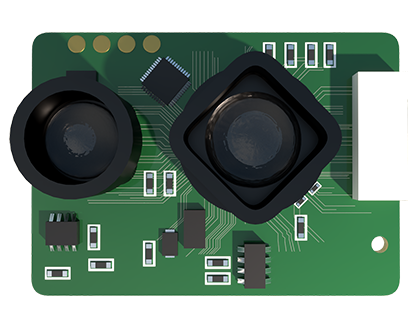
The advantages of Laser ToF sensors are substantial. They offer high speed, excellent accuracy over short to medium ranges (ideal for mobile use), and relative immunity to ambient light interference compared to some other depth-sensing methods. Their ability to capture entire scenes in a single shot, without requiring scanning, makes them efficient and fast. However, challenges remain. Power consumption is a constant concern in mobile design, and while VCSELs are efficient, the sensor system must be meticulously optimized. The effective range is typically limited to a few meters, which is suitable for most phone-based applications but not for longer distances. Additionally, highly reflective or absorbent surfaces can sometimes cause measurement inaccuracies. The cost of integrating high-quality ToF modules also presents a consideration for manufacturers, often reserving the technology for flagship and premium mid-range devices.
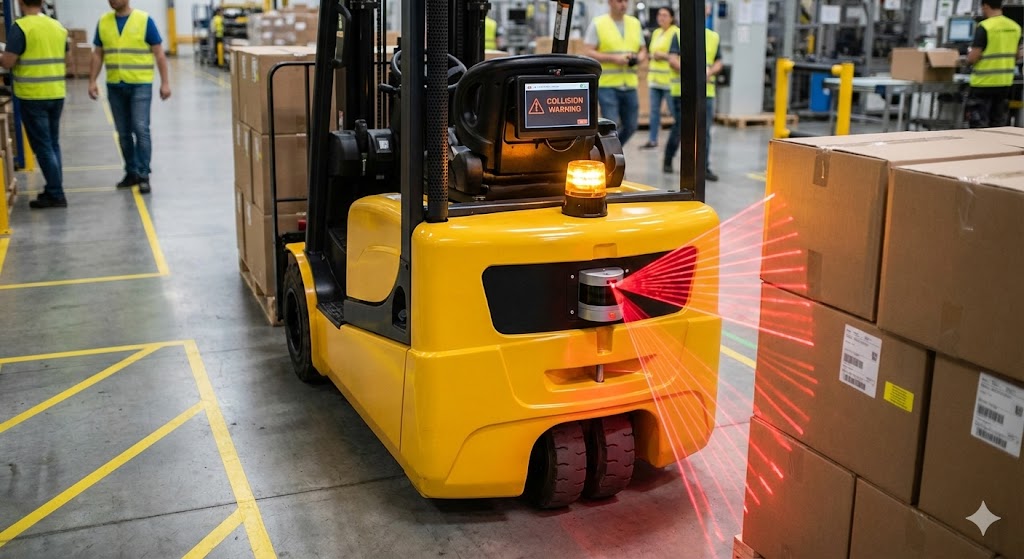
Looking ahead, the future of mobile Laser ToF sensors is intertwined with advancements in several areas. Miniaturization and integration will continue, potentially seeing the sensor combined with other optical components into more compact modules. Improvements in SPAD sensor resolution and efficiency will lead to higher-fidelity depth maps. We can anticipate a deeper fusion of ToF data with inputs from other sensors (RGB cameras, IMUs, LiDAR in some models) through advanced sensor fusion algorithms, creating a more comprehensive environmental understanding for the device. This will be critical for next-generation AR, robotics applications in phones, and advanced computational photography. Furthermore, the development of standard software interfaces and development kits (SDKs) will empower a broader range of app developers to harness the power of 3D sensing, driving innovation in mobile software.
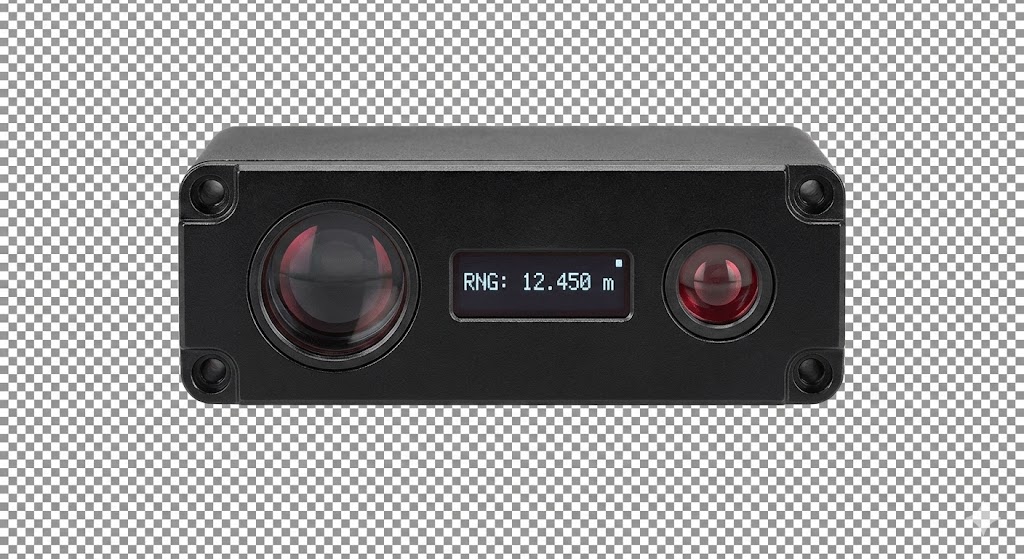
In conclusion, Laser Time-of-Flight sensors represent a significant technological leap for mobile devices, transitioning them from mere image capture tools to sophisticated spatial computing platforms. By providing real-time, accurate depth perception, they enhance everything from photography to augmented reality and human-machine interaction. As the technology matures, becoming more power-efficient, cost-effective, and integrated, its adoption will likely proliferate, solidifying its role as an essential enabler for the immersive and intelligent mobile experiences of the future. The ongoing refinement of this technology will continue to push the boundaries of what is possible within the compact form factor of a smartphone.