In the rapidly evolving landscape of industrial automation and precision engineering, wireless laser distance sensors have emerged as a cornerstone technology. These sophisticated devices harness the principles of laser triangulation or time-of-flight measurement to deliver non-contact, high-accuracy distance data, all while operating free from the constraints of physical cabling. The integration of robust wireless protocols, such as Wi-Fi, Bluetooth Low Energy (BLE), or proprietary industrial networks, has unlocked unprecedented levels of flexibility and efficiency in measurement applications.
The core operational principle involves emitting a focused laser beam towards a target. The sensor then analyzes the reflected light. In triangulation-based sensors, the position of the reflected spot on a dedicated detector array is used to calculate distance with micron-level precision, ideal for close-range tasks like part inspection or thickness gauging. For longer ranges, time-of-flight sensors measure the minute time delay between the emitted and returned laser pulse, calculating distance based on the constant speed of light. This method is exceptionally suited for applications in logistics, warehousing, and large-scale surveying.

The elimination of cables through wireless connectivity addresses several persistent challenges in industrial settings. It drastically simplifies installation in complex or rotating machinery, reduces maintenance costs associated with cable wear and tear, and enables easy redeployment of sensor systems. In dynamic environments like automated guided vehicle (AGV) navigation or robotic arm positioning, wireless sensors provide real-time, untethered feedback crucial for adaptive control systems. Furthermore, they facilitate the deployment of sensor networks across vast areas, such as in inventory management systems monitoring stock levels in real-time or in structural health monitoring of bridges and buildings, where data from multiple points can be aggregated seamlessly.
Key considerations when selecting a wireless laser sensor include measurement range, accuracy specifications, data refresh rate, and the resilience of the wireless link against industrial interference. Modern sensors often incorporate features like IP67-rated enclosures for durability against dust and moisture, advanced algorithms for filtering ambient light noise, and secure, low-latency data transmission. The synergy with Industrial Internet of Things (IIoT) platforms is particularly transformative. Sensor data can be transmitted directly to cloud-based analytics systems, enabling predictive maintenance, process optimization, and centralized monitoring from anywhere in the world.
Industries ranging from automotive manufacturing and aerospace to agriculture and construction are reaping the benefits. On a production line, wireless laser sensors can perform precise gap and flush measurement on vehicle bodies without impeding movement. In smart agriculture, they monitor crop growth or bin levels wirelessly. The future points toward even greater miniaturization, enhanced power management for extended battery life in truly remote applications, and the integration of artificial intelligence for edge-based data processing and anomaly detection.
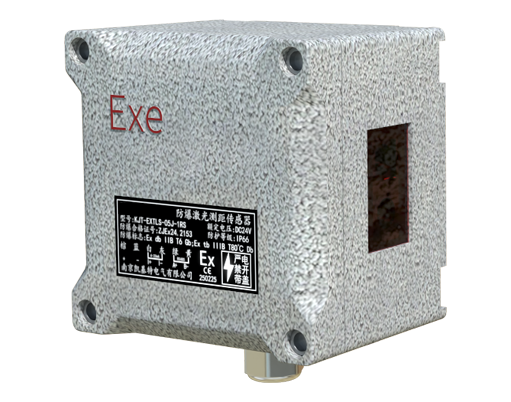
In conclusion, wireless laser distance sensors represent a significant leap forward from their wired predecessors. By combining the inherent accuracy of laser measurement with the freedom and connectivity of wireless technology, they are not merely tools but enablers of smarter, more agile, and data-driven industrial operations. Their continued evolution is set to further blur the lines between physical measurement and digital control systems, paving the way for increasingly autonomous and efficient industries.