In the realm of industrial automation and control systems, proximity sensors, often referred to as proximity switches, play an indispensable role. These non-contact sensing devices are fundamental for detecting the presence or absence of an object within a specified range without any physical contact. Their reliability, durability, and high-speed operation make them a preferred choice in various applications, from manufacturing assembly lines and packaging machinery to automotive systems and robotics. This article delves into the core working principles of the most common types of proximity sensors, explaining the technology that enables them to perform their critical functions.
The fundamental principle behind all proximity sensors is the detection of a target object through the disturbance or change in a field or beam. This detection is achieved without any mechanical contact, which eliminates wear and tear, increases operational life, and allows for very high switching frequencies. The primary types are categorized based on the sensing technology they employ: inductive, capacitive, ultrasonic, and photoelectric. Each type operates on a distinct physical principle, making them suitable for different materials and environmental conditions.
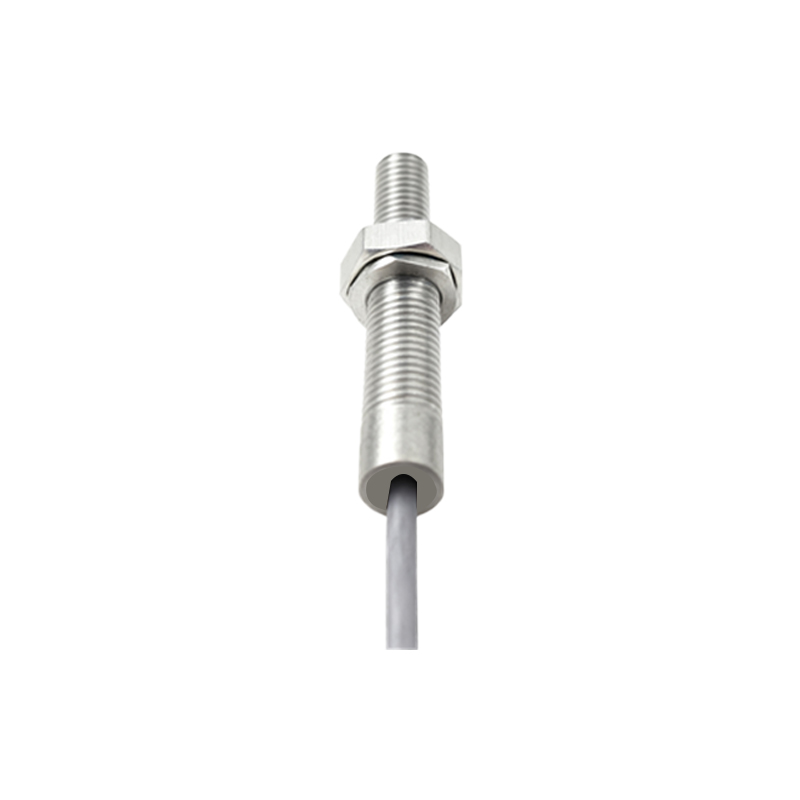
Inductive Proximity Sensors are arguably the most prevalent in industrial settings, particularly for metal detection. Their operation is based on the principle of electromagnetic induction. The sensor's active face contains a coil that is part of an oscillator circuit, generating a high-frequency electromagnetic field. When a metallic target enters this oscillating field, eddy currents are induced on the surface of the metal. These eddy currents draw energy from the sensor's oscillator, causing a reduction in the oscillation amplitude. An evaluation circuit within the sensor monitors this amplitude change. Once the amplitude drops below a predefined threshold—indicating the target is within the sensing range—the circuit triggers a solid-state switch (typically an NPN or PNP transistor) to change state, thereby providing an output signal. It is crucial to note that inductive sensors are primarily sensitive to ferrous and non-ferrous metals, with different sensing distances depending on the metal type, and are generally ineffective for detecting non-metallic materials.
Capacitive Proximity Sensors function by detecting changes in capacitance. The sensor's sensing face acts as one plate of a capacitor, with the target object acting as the other plate, and the medium between them (usually air) as the dielectric. The sensor generates an electrostatic field. When a target object (metallic or non-metallic, such as plastic, wood, glass, or liquids) approaches the sensing face, it alters the dielectric constant and thus the capacitance of the system. This change in capacitance is measured by an internal circuit. When the capacitance exceeds a set level, the sensor's output state switches. This ability to detect a wide variety of materials makes capacitive sensors versatile, though they can be susceptible to false triggers from environmental factors like humidity or dust contamination on the sensor face.
Ultrasonic Proximity Sensors operate on the principle of sound wave reflection, similar to sonar. They emit high-frequency sound waves (inaudible to humans) from a transducer. These waves travel through the air and reflect off a target object. The sensor then detects the reflected echo. By measuring the time interval between the emission of the pulse and the reception of the echo (time-of-flight), the sensor can determine the distance to the object. When an object comes within a preset distance, the output is activated. Ultrasonic sensors are excellent for detecting objects of virtually any material, shape, or color, and are effective in challenging environments with dust, smoke, or light interference. However, their performance can be affected by temperature variations and the texture of the target surface.
Photoelectric Sensors, while sometimes considered a separate category, are a key form of proximity detection. They use a light beam (visible red, infrared, or laser) emitted from a transmitter. The presence of an object is detected either by the interruption of this beam (opposed-mode), by its reflection from the target back to a receiver in the same housing (retro-reflective or diffuse-reflective modes). In the diffuse-reflective mode, the sensor acts as a proximity device, detecting the object when the reflected light intensity is sufficient. Their sensing range is typically longer than inductive or capacitive sensors, and they can detect almost any material, but they may struggle with transparent objects or in environments with heavy ambient light.
The output from these sensors is typically a discrete ON/OFF signal. Common output configurations include DC versions with NPN (sinking) or PNP (sourcing) transistors, and AC/DC versions with relay contacts. The choice depends on the control system's input requirements (e.g., connection to a PLC). Key selection parameters beyond sensing technology include sensing distance, repeat accuracy, response frequency, housing material (e.g., nickel-plated brass or stainless steel for harsh environments), and environmental protection ratings (IP67, IP69K).
In conclusion, proximity sensors are the silent sent