In the rapidly evolving landscape of industrial automation and control, long-range laser sensors have emerged as a cornerstone technology for precise, non-contact measurement and detection over extended distances. These sophisticated devices operate on the principle of emitting a focused laser beam towards a target and analyzing the reflected light to determine parameters such as distance, presence, or profile. Unlike their short-range counterparts, long-range variants are engineered to deliver reliable performance at distances typically ranging from several meters to hundreds of meters, and in some specialized applications, even over a kilometer. This capability makes them indispensable in environments where physical contact is impossible, hazardous, or would compromise the integrity of the object being measured.
The core technology enabling long-range laser sensing primarily revolves around two methodologies: time-of-flight (ToF) and phase-shift measurement. Time-of-flight sensors calculate distance by precisely measuring the time interval between the emission of a laser pulse and the reception of its reflection. This method is highly effective for very long ranges and is commonly used in applications like terrain mapping, crane positioning, and large-scale stockpile monitoring. Phase-shift sensors, on the other hand, modulate the intensity of the continuous laser beam and measure the phase difference between the emitted and reflected signals. This technique offers exceptionally high accuracy and resolution at somewhat shorter but still substantial ranges, making it ideal for precision tasks in manufacturing, such as robotic guidance or roll diameter measurement.
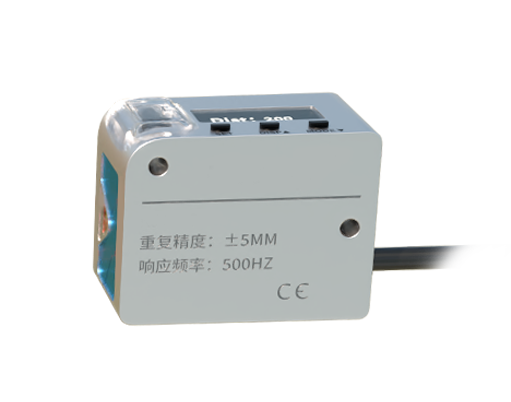
The selection of a long-range laser sensor for a specific industrial application requires careful consideration of several key technical parameters. First and foremost is the required measuring range, which must account for the maximum expected distance with a sufficient safety margin. Equally critical is the sensor's accuracy and repeatability, often specified in millimeters or even sub-millimeter values. Environmental factors pose a significant challenge; therefore, ingress protection (IP) ratings, resistance to ambient light interference, and performance under varying temperatures are paramount. Modern sensors incorporate advanced features like background suppression, which allows them to ignore reflections from objects beyond the target, and sophisticated filtering algorithms to maintain stability in the presence of dust, steam, or vibration.
Industrial applications for these sensors are vast and varied. In logistics and warehousing, they are deployed for high-bay storage retrieval system positioning and container profiling. The automotive industry utilizes them for aligning vehicle bodies on assembly lines or measuring large components. In the energy sector, they monitor the level of bulk materials in silos or the sag of overhead power lines. Furthermore, in infrastructure and security, they facilitate perimeter protection, ship docking assistance, and even landslide detection. Their ability to provide a continuous, real-time data stream integrates seamlessly with Industrial Internet of Things (IIoT) platforms, enabling predictive maintenance and enhanced process optimization.
When integrating a long-range laser sensor into a system, engineers must also address installation and commissioning. Proper mounting is essential to ensure a stable line of sight and minimize mechanical stress. Alignment tools, often built into the device, simplify this process. The choice of output interface—analog (4-20 mA, 0-10 V), digital (IO-Link, RS-485), or industrial Ethernet (Profinet, EtherNet/IP)—must align with the existing control architecture. Regular maintenance, though minimal, involves keeping the optical window clean and verifying calibration periodically to ensure sustained accuracy.
In conclusion, long-range laser sensors represent a powerful fusion of optics, electronics, and software, delivering unmatched capabilities for remote sensing in demanding industrial environments. Their continued evolution, driven by advancements in laser diode efficiency, signal processing, and connectivity, promises to further expand their role in building smarter, safer, and more efficient automated systems. For any project requiring reliable long-distance measurement, a thorough evaluation of sensor specifications against the application's operational demands is the critical first step toward a successful implementation.