In the realm of industrial automation and machinery monitoring, proximity speed sensors are indispensable components for non-contact measurement of rotational or linear speed. Unlike traditional mechanical tachometers, these sensors detect the presence, absence, or passage of a target without physical contact, offering superior reliability, longevity, and precision in harsh environments. This article delves into the classification, operating principles, and typical applications of major proximity speed sensor types.
The fundamental principle behind all proximity speed sensors involves the detection of a changing physical field caused by a moving target. The sensor generates a signal—often a pulse train—whose frequency is directly proportional to the target's speed. By counting these pulses over a known time interval, the rotational speed (in RPM) or linear velocity can be accurately calculated. The primary categories are defined by their underlying sensing technology.
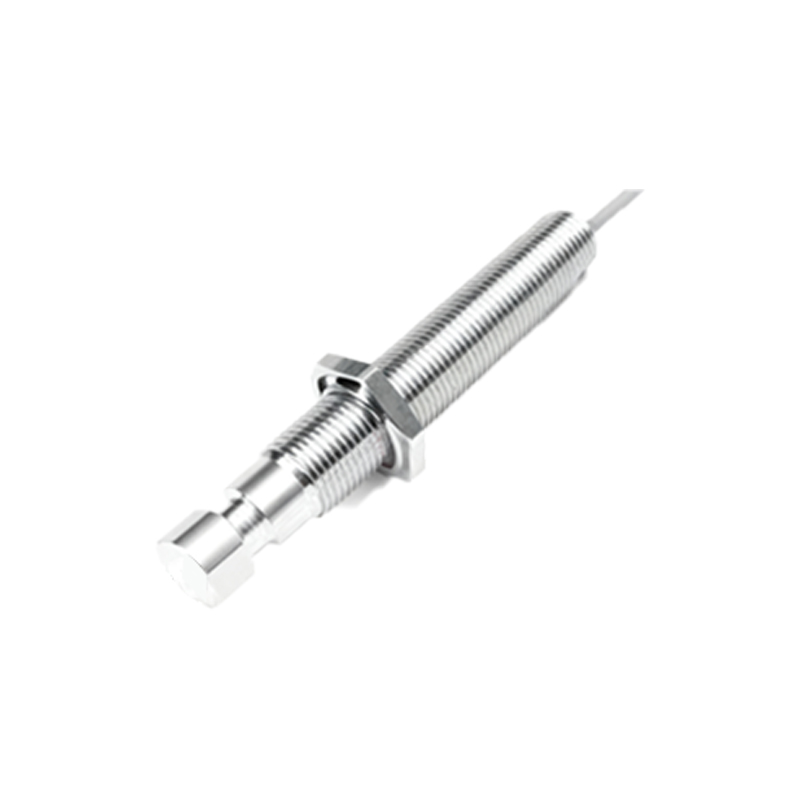
Inductive Proximity Sensors are among the most common for metallic target detection. They contain a coil energized by a high-frequency oscillator. When a ferrous or non-ferrous metal target enters the electromagnetic field, it induces eddy currents, causing a change in the oscillator's amplitude. This change is detected by the sensor's circuitry, triggering a solid-state output switch. For speed measurement, a gear tooth, keyway, or bolt head on a rotating shaft serves as the target. Each passing feature generates one pulse. These sensors are highly robust, resistant to dust, oil, and moisture, making them ideal for heavy industries like automotive manufacturing, steel mills, and conveyor systems.
Capacitive Proximity Sensors operate by detecting changes in capacitance. The sensor's active face and a nearby target form two plates of a capacitor. As the target approaches, the capacitance increases, altering the state of an internal RC oscillator circuit. While they can detect both metallic and non-metallic materials (plastics, wood, liquids), their primary use in speed sensing is often for specialized applications involving non-conductive targets or precise positioning of materials. They are sensitive to environmental factors like humidity and require careful calibration.
Magnetic Proximity Sensors, often referred to as magnetic pickups or variable reluctance sensors, generate a voltage signal when a ferromagnetic target disturbs a magnetic field. They typically consist of a permanent magnet and a coil of wire. As a gear tooth or other ferrous feature moves past the sensor tip, it changes the magnetic flux through the coil, inducing an analog AC voltage pulse. The amplitude and frequency of this pulse are proportional to the target speed and proximity. These sensors are passive (requiring no external power) and exceptionally durable, widely used in automotive crankshaft/camshaft position sensing and industrial gearbox monitoring.
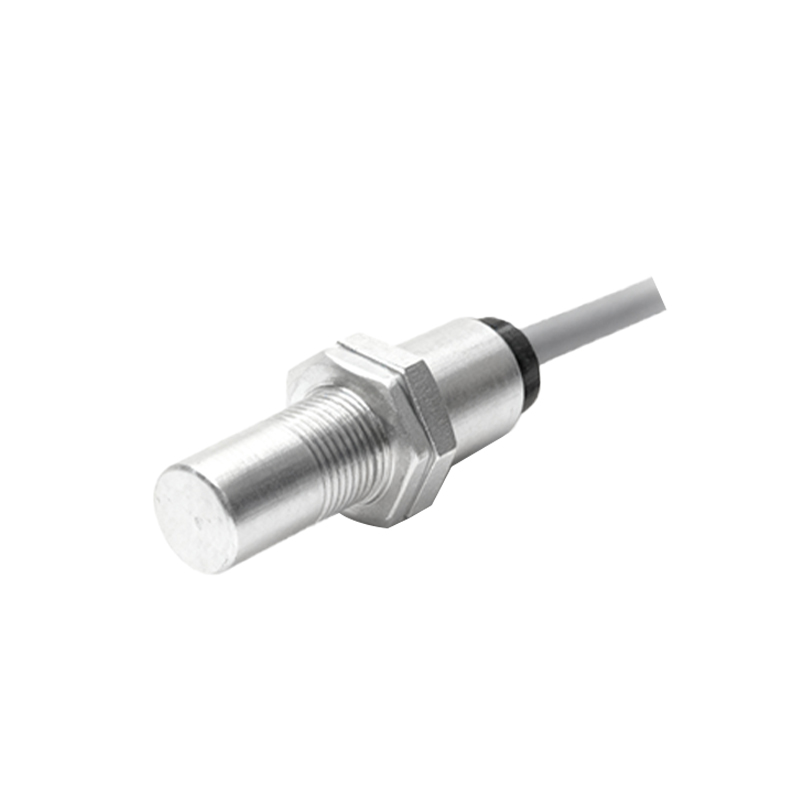
Hall Effect Sensors represent a more modern, solid-state approach. They contain a semiconductor element that produces a voltage (the Hall voltage) when exposed to a magnetic field. A permanent magnet is either integrated into the sensor or mounted on the target. When a ferrous target or a magnetic pole passes by, it modulates the magnetic field strength at the Hall element, causing the output to switch. Hall effect sensors provide a clean, digital square-wave output signal even at very low speeds (including zero speed), with excellent repeatability. They are prevalent in brushless DC motor commutation, automotive wheel speed sensing for ABS systems, and precision servo drives.
Photoelectric Proximity Sensors utilize a light source (LED or laser) and a photodetector. In the through-beam variant for speed sensing, an object passing between the separate emitter and receiver interrupts the light beam. In the reflective version, the sensor detects light reflected from the target. These sensors excel at high-speed counting and can detect virtually any material. They are crucial in packaging, printing, textile machinery, and clean environments where non-metallic or delicate materials are involved.
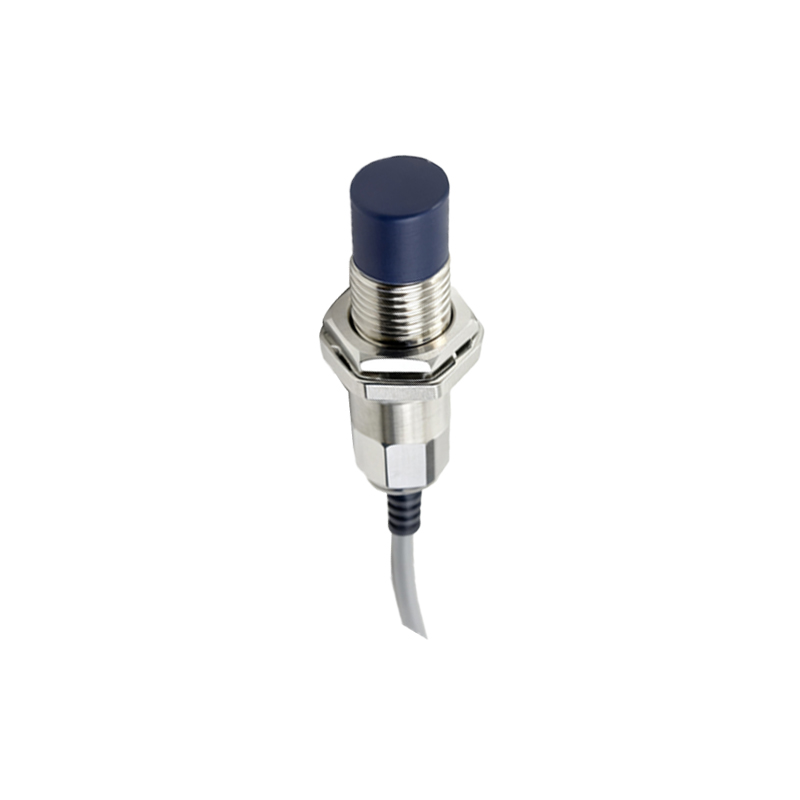
Selection criteria for a proximity speed sensor depend on multiple factors: target material, required sensing distance, speed range, environmental conditions (temperature, contaminants), output signal type (digital NPN/PNP, analog, or voltage pulse), and installation constraints. Inductive and magnetic sensors dominate general industrial metal-sensing applications due to their toughness. Hall effect sensors are chosen for low-speed accuracy and digital integration. Photoelectric sensors offer the greatest flexibility for material type but may be susceptible to ambient light and dirt.
In application, proper installation is critical. The sensor must be mounted at the correct gap or air gap specified by the manufacturer relative to the target. The target feature size, shape, and material must be compatible. For instance, a gear used with an inductive sensor must have a tooth size sufficient to cause a detectable change in the electromagnetic field. Signal conditioning modules are often used to convert raw sensor pulses into standard analog (4-20 mA, 0-10 V) or digital communication signals (PROFIBUS, IO-Link) for PLCs and control systems.
In conclusion, proximity speed sensors form a vital link in the