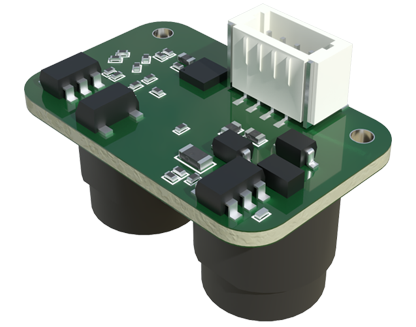
In the rapidly evolving landscape of industrial automation and robotics, intelligent vehicles equipped with laser sensors represent a paradigm shift in operational efficiency and spatial intelligence. These systems, often referred to as LiDAR-based autonomous guided vehicles (AGVs) or autonomous mobile robots (AMRs), leverage the precision of laser sensing technology to navigate complex environments with unprecedented accuracy and reliability. Unlike traditional optical or ultrasonic sensors, laser sensors emit pulsed light waves to measure distances by calculating the time taken for the light to reflect off objects and return to the sensor. This Time-of-Flight (ToF) principle enables the creation of high-resolution, real-time 3D maps of the surroundings, allowing the vehicle to detect obstacles, recognize landmarks, and plan optimal paths dynamically.
The core of an intelligent laser sensor vehicle lies in its sensor fusion and data processing capabilities. A typical system integrates multiple laser scanners, often with a 360-degree field of view, to capture a comprehensive point cloud of the environment. This raw data is processed through sophisticated algorithms, including Simultaneous Localization and Mapping (SLAM), which allows the vehicle to construct a map of an unknown space while simultaneously tracking its own position within it. This is crucial for applications in warehouses, manufacturing plants, and logistics centers where layouts may frequently change. The laser sensor's ability to perform in varying lighting conditions—unaffected by ambient light or darkness—ensures consistent performance where camera-based systems might fail.
From an engineering perspective, the integration involves meticulous calibration between the laser sensors, inertial measurement units (IMUs), wheel encoders, and the central processing unit. The choice of laser sensor—such as 2D LiDAR for floor-level obstacle detection or 3D LiDAR for comprehensive volumetric analysis—depends on the application's complexity. For instance, in automated material handling, 2D laser scanners are commonly used for navigation along predefined virtual paths, while 3D systems are deployed in unstructured environments, such as outdoor construction sites or mining operations, where terrain and obstacles are highly variable.
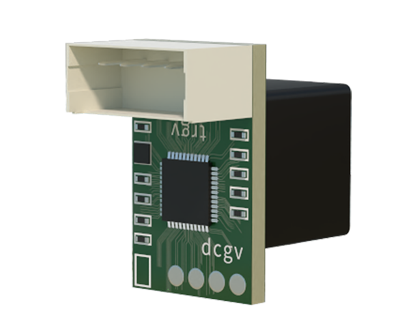
The operational benefits are substantial. These intelligent vehicles enhance safety by reliably detecting both static and dynamic obstacles, including humans, enabling collaborative workspaces. They improve throughput by optimizing route planning and reducing downtime. Moreover, their precision reduces product damage and operational errors. In smart factories aligned with Industry 4.0 principles, these vehicles seamlessly connect with IoT networks, receiving real-time orders from Warehouse Management Systems (WMS) and adapting their tasks accordingly.
However, challenges persist. Environmental factors like highly reflective surfaces, dense smoke, or heavy rain can scatter laser beams, potentially degrading sensor performance. Engineers address this through multi-sensor redundancy, advanced filtering algorithms, and protective housing designs. Furthermore, the high initial cost of precision laser sensors remains a barrier for some small and medium enterprises, though ongoing technological advancements are steadily reducing prices.
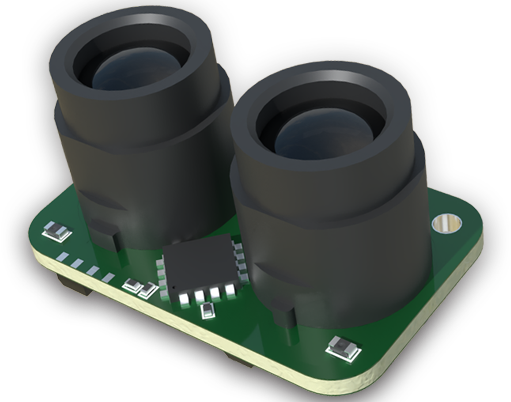
Looking forward, the convergence of laser sensing with artificial intelligence and edge computing promises even greater autonomy. Future iterations will feature enhanced predictive analytics for preemptive maintenance and more nuanced environmental interaction. As 5G connectivity becomes ubiquitous, real-time data exchange between fleets of these vehicles will enable swarming behaviors for coordinated large-scale operations. The intelligent laser sensor vehicle is not merely a tool but a foundational component of the fully automated, adaptive industrial ecosystems of tomorrow, driving forward the frontiers of precision, safety, and efficiency in material movement and beyond.