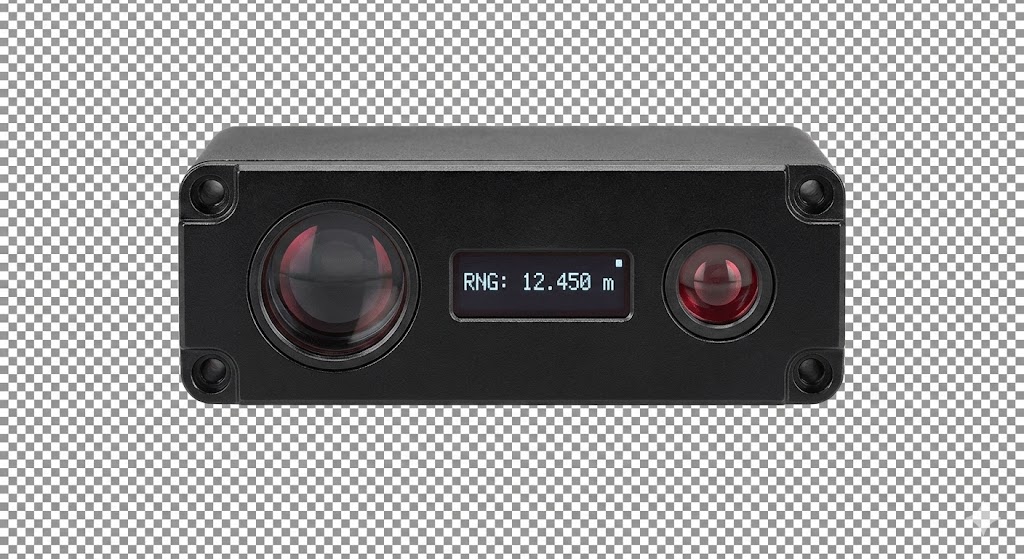
Automatic laser distance sensors represent a transformative technology in industrial measurement and automation. These devices utilize laser beams to accurately determine distances, dimensions, and positions of objects without physical contact. Operating on principles such as time-of-flight, phase-shift, or triangulation, they emit a laser pulse or continuous wave toward a target. The sensor then calculates the distance based on the time taken for the light to reflect back or the phase difference between emitted and received signals. This non-contact method ensures high precision, often achieving sub-millimeter accuracy, even over long ranges.
In industrial settings, automatic laser distance sensors are indispensable for quality control, robotics, and logistics. For instance, in manufacturing assembly lines, they verify component dimensions and alignments in real-time, reducing errors and enhancing product consistency. Robotics systems rely on these sensors for navigation, obstacle detection, and precise manipulation of objects, enabling autonomous operations in warehouses or hazardous environments. Additionally, in construction and civil engineering, they facilitate topographic surveys, monitoring structural deformations, and ensuring adherence to design specifications with minimal human intervention.
The advantages of these sensors extend beyond accuracy. They offer rapid response times, often measuring distances in microseconds, which is critical for high-speed applications like sorting systems or vehicle speed detection. Their robustness allows operation in challenging conditions, including extreme temperatures, dust, or vibrations, thanks to sealed housings and durable materials. Modern sensors integrate smart features such as Ethernet, IO-Link, or wireless connectivity, enabling seamless data transmission to control systems for analytics and process optimization. This connectivity supports Industry 4.0 initiatives, where real-time data from sensors drives predictive maintenance and efficiency improvements.
When selecting an automatic laser distance sensor, engineers must consider key parameters like measurement range, resolution, and environmental tolerance. For example, short-range sensors (up to 10 meters) suit precision tasks in electronics assembly, while long-range variants (over 100 meters) are ideal for mining or aerospace applications. The choice of laser type—typically red visible lasers or infrared—impacts visibility and safety, with Class 1 or 2 lasers ensuring eye-safe operation in most scenarios. Calibration and installation also play vital roles; proper alignment and periodic checks maintain accuracy, especially in dynamic setups where targets move or vary in reflectivity.

Looking ahead, advancements in laser technology and artificial intelligence are pushing the boundaries of these sensors. Innovations like multi-echo detection allow measurements through transparent surfaces or in foggy conditions, while AI algorithms enhance data interpretation for complex shapes or moving objects. As industries increasingly automate, the demand for reliable, high-performance laser distance sensors will grow, solidifying their role as a cornerstone of modern engineering. By enabling precise, efficient, and safe operations, they empower engineers to tackle challenges from micro-scale manufacturing to large-scale infrastructure projects, driving progress across sectors.
In summary, automatic laser distance sensors are vital tools that combine optics, electronics, and software to deliver unmatched measurement capabilities. Their integration into automated systems not only boosts productivity but also fosters innovation, making them a key enabler of the technological evolution in engineering and beyond.