In the realm of industrial sensing and measurement, fiber optic sensors have established themselves as indispensable tools for their immunity to electromagnetic interference, ability to operate in harsh environments, and capacity for remote, distributed sensing. At the very heart of these sophisticated systems lies a critical optical component: the laser lens. This specialized lens is not merely a passive window but an active, precision-engineered element that defines the performance, accuracy, and reliability of the entire fiber optic sensor system.
The primary function of a laser lens within a fiber optic sensor is to precisely shape and direct the laser beam. Light emitted from the laser source, often a laser diode, is coupled into the optical fiber. The lens's role is to efficiently collect this divergent light and focus it into the tiny core of the fiber with minimal loss. Conversely, in sensing applications where light exits the fiber to interrogate a target—such as measuring distance, vibration, temperature, or chemical composition—the lens collimates the exiting beam into a parallel, well-defined profile or focuses it onto a specific point. The quality of this beam shaping directly impacts key sensor parameters: signal-to-noise ratio, measurement resolution, and operational range.
Designing and manufacturing laser lenses for fiber optic sensors present unique engineering challenges that go beyond conventional optics. Material selection is paramount. Lenses must be crafted from materials with exceptional transmission characteristics at the specific laser wavelengths used, commonly in the infrared spectrum for many industrial sensors. Materials like fused silica, sapphire, or specialized optical glasses are favored for their low absorption, high durability, and thermal stability. Coatings are equally critical. Anti-reflective (AR) coatings are meticulously applied to minimize back reflections at both the air-lens and lens-fiber interfaces. Excessive reflections can cause feedback noise in the laser source, destabilizing its operation and corrupting the sensor signal. For high-power laser sensor systems, coatings must also withstand significant optical power densities without degradation.
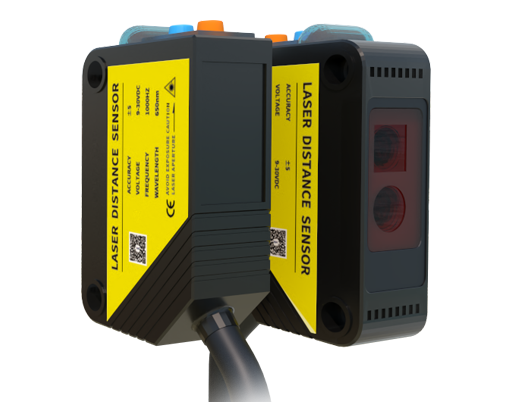
The geometric design of the lens—its curvature, aspheric profiles, and numerical aperture (NA)—is optimized to match the characteristics of both the laser source and the optical fiber. Aspheric lenses are frequently employed to eliminate spherical aberration, ensuring a perfectly focused spot size that matches the fiber core diameter. This maximizes coupling efficiency, often pushing beyond 90%, which is essential for maintaining strong signal levels, especially in long-distance or multiplexed sensor networks. The lens assembly must also provide robust mechanical alignment and long-term stability, as micron-level misalignments can lead to significant signal attenuation.
In practical industrial applications, the performance of the laser lens dictates the capabilities of the fiber optic sensor. In Fabry-Perot interferometric sensors used for ultra-precise strain and temperature monitoring in aerospace composites or civil infrastructure, the lens must produce an exceptionally pure, single-mode Gaussian beam to ensure clean interference patterns. For distributed temperature sensing (DTS) along kilometers of fiber in oil and gas wells, the lens coupling efficiency directly influences the system's ability to detect weak backscattered Raman or Brillouin signals. In laser Doppler vibrometers, the lens's ability to maintain a precise, diffraction-limited focus allows for non-contact measurement of surface vibrations with nanometer-scale resolution.

Furthermore, the advent of harsh-environment sensing in industries like metallurgy, power generation, and chemical processing places additional demands on laser lens design. Lenses may be housed in sealed, ruggedized packages with protective windows, capable of withstanding extreme temperatures, high pressures, corrosive atmospheres, and mechanical shock. The lens itself must maintain its optical properties and precise alignment under these conditions, ensuring the sensor's continuous and reliable operation where traditional electronic sensors would fail.
Maintenance and handling of these precision components are also crucial considerations. Contamination on the lens surface—dust, oils, or condensation—can scatter or absorb light, dramatically reducing sensor performance. Proper cleaning procedures and the use of protective caps when not in service are standard industry practices. For field engineers, understanding that the laser lens is a high-precision consumable, susceptible to damage from mishandling, is key to maintaining system uptime.
Looking forward, the evolution of fiber optic sensor technology continues to drive innovation in laser lens design. The integration of micro-optics and gradient-index (GRIN) lenses allows for more compact sensor heads. Advancements in manufacturing, such as diamond turning and precision molding, enable more complex, cost-effective aspheric designs. As sensors move towards higher bandwidths, multi-parameter sensing, and integration with the Industrial Internet of Things (IIoT), the demand for lenses with even tighter tolerances, broader wavelength compatibility, and enhanced environmental resilience will only grow.
In conclusion, the laser lens is a foundational pillar in the architecture of modern fiber optic sensors. Its role in governing light coupling, beam quality, and overall system efficiency cannot be overstated. For engineers specifying, deploying, or maintaining these sensing systems, a deep appreciation of laser lens technology—from its material science and optical design to its application-specific integration—is essential for unlocking the full potential of fiber optic sensing across the vast landscape of modern industry.