In the rapidly evolving landscape of industrial automation and precision measurement, JTP laser sensors have emerged as a cornerstone technology. These sensors, leveraging the coherent and monochromatic properties of laser light, provide unparalleled accuracy, speed, and reliability for a vast array of applications. This article delves into the operational principles, key advantages, diverse applications, and emerging trends associated with JTP laser sensor technology.
At its core, a JTP laser sensor operates by emitting a focused beam of laser light towards a target object. The sensor then detects changes in the beam's properties—such as its reflection time (Time-of-Flight or ToF), triangulation position, or intensity—to determine critical parameters like distance, displacement, presence, or profile. Common configurations include diffuse reflection sensors, where the emitted light reflects off the target back to a receiver in the same unit; retro-reflective sensors, which use a separate reflector; and through-beam sensors, featuring separate emitter and receiver units for maximum range and reliability. The "JTP" designation often signifies a specific series or model line known for robust construction, high environmental resistance (e.g., IP67 ratings), and advanced signal processing capabilities that filter out ambient light interference.
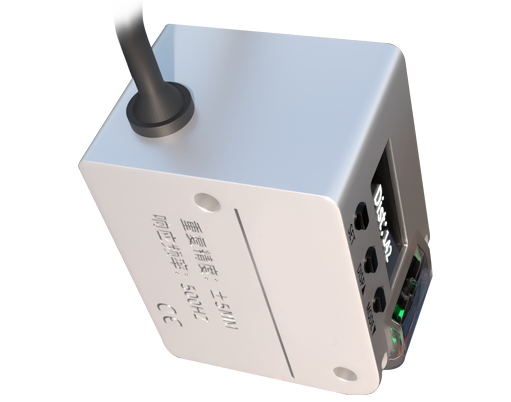
The advantages of implementing JTP laser sensors are manifold. Firstly, they offer exceptional precision, capable of detecting minute displacements in the micrometer range or measuring distances with sub-millimeter accuracy. This is crucial in quality control processes like part dimension verification. Secondly, their non-contact nature eliminates mechanical wear and tear on both the sensor and the target, ensuring long-term stability and preventing damage to delicate objects. Thirdly, laser sensors provide extremely fast response times, often in the microsecond range, making them ideal for high-speed production lines, robotics, and sorting systems. Furthermore, their ability to focus on a very small spot allows for the detection of tiny objects or precise edge detection, even in challenging environments with vibration or varying surface colors and materials.
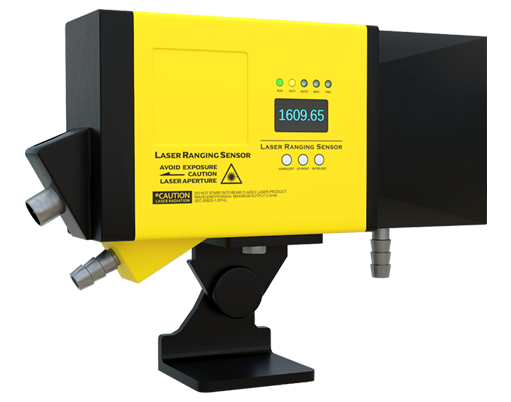
The application spectrum for JTP laser sensors is exceptionally broad across numerous industries. In automotive manufacturing, they are deployed for robot guidance, weld seam tracking, gap and flush measurement on vehicle bodies, and part presence verification on assembly lines. Within the electronics and semiconductor sector, these sensors ensure precise wafer handling, component placement on PCBs, and thickness measurement of coatings. Packaging and material handling benefit from JTP sensors for fill level control, label detection, package counting, and height profiling on conveyor belts. Furthermore, they play a vital role in logistics for palletizing, dimensioning parcels, and automated guided vehicle (AGV) navigation. Beyond traditional industry, they are increasingly used in agricultural automation, construction leveling, and even security systems for intrusion detection.
Looking ahead, the future of JTP laser sensor technology is intertwined with the progression of Industry 4.0 and smart manufacturing. Integration with Industrial Internet of Things (IIoT) platforms is a key trend, where sensor data is seamlessly fed into cloud-based systems for predictive maintenance, real-time process optimization, and big data analytics. The development of more compact, energy-efficient models with integrated intelligence (e.g., onboard diagnostics and Ethernet connectivity) will continue. Another significant trend is the enhancement of multi-functional sensors that can measure multiple parameters simultaneously, such as distance, vibration, and temperature. Advances in laser source technology and computational algorithms will also push the boundaries of resolution, speed, and robustness in even harsher environments.
In conclusion, JTP laser sensors represent a critical enabling technology for modern industrial automation. Their principle of precise optical measurement translates into tangible benefits of accuracy, reliability, and efficiency. As applications diversify and technology converges with digitalization trends, JTP laser sensors are poised to remain at the forefront, driving innovation and enhancing operational capabilities across the global industrial sector. Selecting the right sensor configuration requires careful consideration of the specific measurement task, environmental conditions, and required performance specifications to fully harness its potential.