Capacitive proximity sensors have become indispensable tools in modern industrial automation, particularly in handling and monitoring powdered materials. Unlike inductive sensors that detect only metals, capacitive sensors can detect a wide range of materials, including powders, granules, liquids, and non-metals, by measuring changes in capacitance. This capability makes them exceptionally suitable for applications in industries such as food processing, pharmaceuticals, chemicals, and plastics, where precise powder level detection, presence verification, or contamination prevention is critical.
The operating principle of a capacitive proximity sensor is based on the formation of an electrostatic field between the sensor's active surface and the target material. The sensor essentially functions as one plate of a capacitor, with the target material acting as the other plate. When powder enters the sensing field, it alters the dielectric constant of the space between the plates, leading to a measurable change in capacitance. This change triggers the sensor's output switch, providing a reliable signal for process control systems. For powder detection, sensors are often calibrated to account for factors like material density, moisture content, particle size, and the dielectric properties of the powder itself.
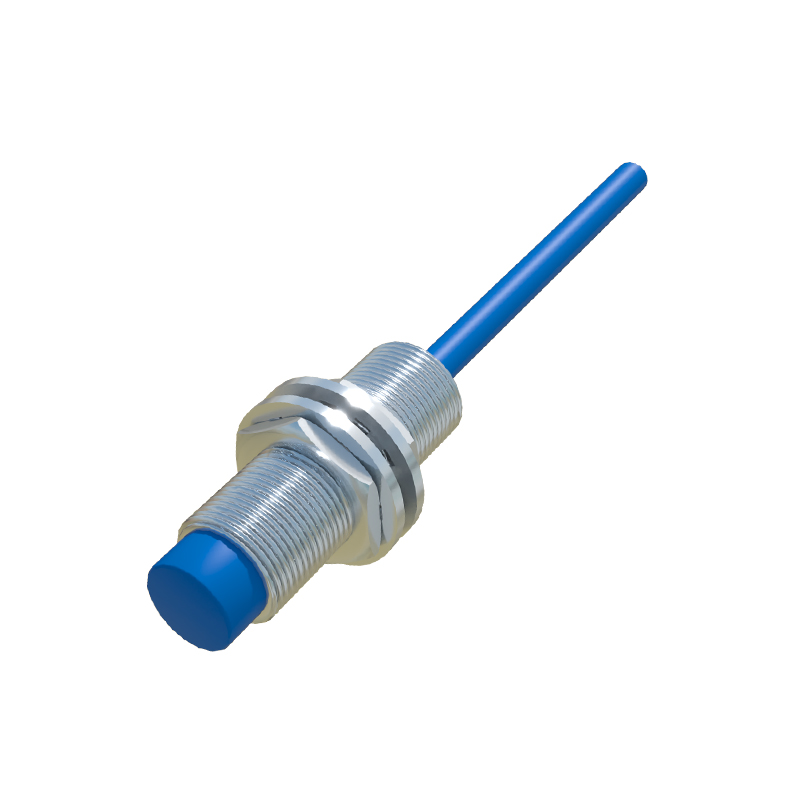
Key advantages of using capacitive sensors for powder detection include their ability to sense through non-metallic container walls, such as those made of glass, plastic, or cardboard. This non-contact sensing allows for hygienic, maintenance-free operation without risk of product contamination or sensor wear. Furthermore, many models feature adjustable sensitivity, enabling fine-tuning to distinguish between the target powder and the container material or to ignore buildup on the sensor face—a common challenge in dusty environments. Advanced sensors incorporate algorithms to compensate for temperature variations and electromagnetic interference, ensuring stable performance.
Typical applications in powder handling are diverse. In silos, bins, or hoppers, they provide continuous level monitoring, preventing overfilling or empty running of conveying systems. On conveyor belts or chutes, they verify the presence or flow of powder, triggering alarms for blockages or interruptions. In packaging lines, they ensure precise fill levels in bags or containers. A critical safety application is in detecting powder accumulation in hazardous areas, such as near electrical equipment, where it could pose a fire or explosion risk.
Selecting the right capacitive sensor for a powder application requires careful consideration. Factors include the sensor's sensing range, which is typically shorter for powders than for solids; the required housing material (e.g., stainless steel for food-grade or corrosive environments); the output type (PNP/NPN analog or digital); and the electrical connection. Environmental conditions like extreme temperatures, pressure, or humidity also influence the choice. Proper installation is equally vital; the sensor must be positioned to account for the material's flow characteristics and potential for coating or bridging. Regular maintenance, primarily cleaning the sensing face to remove adhered material, is recommended to preserve accuracy.
In conclusion, capacitive proximity sensors offer a robust, versatile, and reliable solution for detecting powders across numerous industries. Their non-contact nature, material versatility, and adaptability to challenging conditions make them a cornerstone of efficient and safe bulk material handling. As industrial processes demand greater precision and automation, the role of these sensors in ensuring quality control, operational efficiency, and safety in powder-related applications will only continue to expand.