In modern industrial automation, proximity inductive sensors play a critical role in ensuring precision, safety, and efficiency. These sensors are particularly vital in robotic arm systems, where accurate detection of metallic objects without physical contact is essential. This article explores the principles, selection criteria, and application strategies for inductive proximity sensors in robotic arm setups, providing insights for engineers and technicians in the electrical and automation fields.
Inductive proximity sensors operate based on the principle of electromagnetic induction. The sensor generates an oscillating electromagnetic field from its coil. When a metallic object enters this field, eddy currents are induced on the object's surface, causing a change in the oscillation amplitude. The sensor's circuitry detects this change and triggers an output signal. This non-contact detection method offers significant advantages, including high reliability, long service life, and immunity to environmental factors like dust, oil, and moisture.
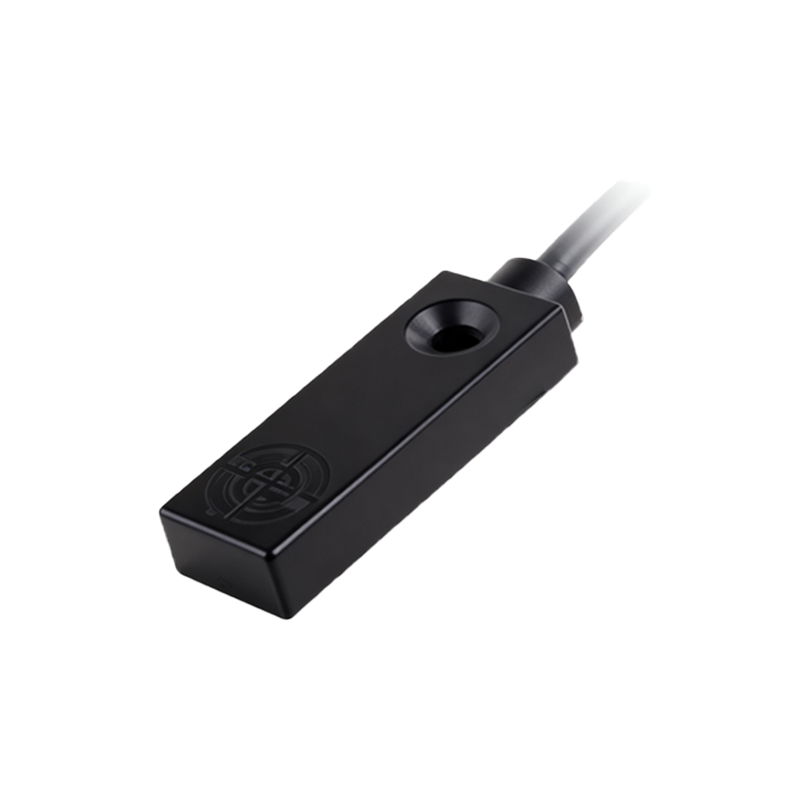
For robotic arm applications, selecting the appropriate inductive sensor involves several key considerations. First, the sensing range must match the operational requirements. Standard sensing distances typically range from 1 to 20 millimeters, with factors such as target material, size, and shape influencing effective range. Ferrous metals like iron and steel provide the longest detection distances, while non-ferrous metals such as aluminum or copper require reduced ranges. Engineers must also consider the sensor's mounting style—flush-mounted, non-flush, or cylindrical designs—based on spatial constraints and installation needs.
Output configuration is another critical factor. Inductive sensors commonly offer digital outputs like NPN, PNP, or push-pull, with some models providing analog outputs for distance measurement. The choice depends on the control system's input requirements. Additionally, environmental ratings, such as IP67 or IP69K, ensure durability in harsh industrial conditions, including exposure to coolants, vibrations, and temperature extremes.
In robotic arms, inductive sensors serve multiple functions. They are used for end-of-arm tooling detection, verifying the presence of grippers or welding torches. Position verification sensors confirm that the arm has reached a specific location, preventing collisions and ensuring repeatability. Part presence detection on conveyors or fixtures allows the robotic system to identify workpieces accurately, enabling synchronized operations. Furthermore, these sensors facilitate safety interlocking by monitoring guard positions or detecting unauthorized entry into restricted zones.
Installation and alignment are paramount for optimal performance. Sensors should be positioned to avoid interference from surrounding metal structures, which could cause false triggering. Shielding considerations are essential; shielded sensors can be mounted flush with metal, while unshielded types require a clearance zone. Regular maintenance, including cleaning the sensing face and checking electrical connections, prolongs sensor life and prevents operational downtime.
Advancements in inductive sensor technology continue to enhance robotic applications. Modern sensors feature compact designs, higher switching frequencies, and improved resistance to electromagnetic interference. Some models incorporate IO-Link communication for real-time diagnostics and parameter adjustments, aligning with Industry 4.0 initiatives. These innovations contribute to smarter, more adaptive manufacturing environments.
In conclusion, inductive proximity sensors are indispensable components in robotic arm systems, offering reliable non-contact detection of metallic objects. By understanding their operating principles, selection parameters, and application techniques, engineers can optimize robotic performance, enhance safety, and boost productivity. As automation evolves, these sensors will remain at the forefront of industrial innovation, driving efficiency and precision in manufacturing processes.