In the realm of industrial automation and electronic control, the need for reliable, non-contact sensing is paramount. Among the various technologies available, the Hall Effect proximity switch stands out for its robustness, precision, and versatility. Unlike mechanical switches that require physical contact or inductive sensors that detect metallic objects, a Hall Effect switch operates based on a fundamental physical principle, offering unique advantages in countless applications.
The core principle behind this technology is the Hall Effect, discovered by Edwin Hall in 1879. When a current-carrying conductor is placed in a magnetic field, a voltage difference, known as the Hall voltage, is generated perpendicular to both the current and the field. A Hall Effect proximity switch integrates a semiconductor element (the Hall element), a magnet, and signal conditioning circuitry into a single package. When a ferromagnetic object (like a steel gear tooth) or another magnet approaches the sensor, it disturbs the magnetic field. This disturbance alters the Hall voltage, which is then processed by the integrated circuit to produce a clean, digital output signal—typically switching from OFF to ON, or vice versa.
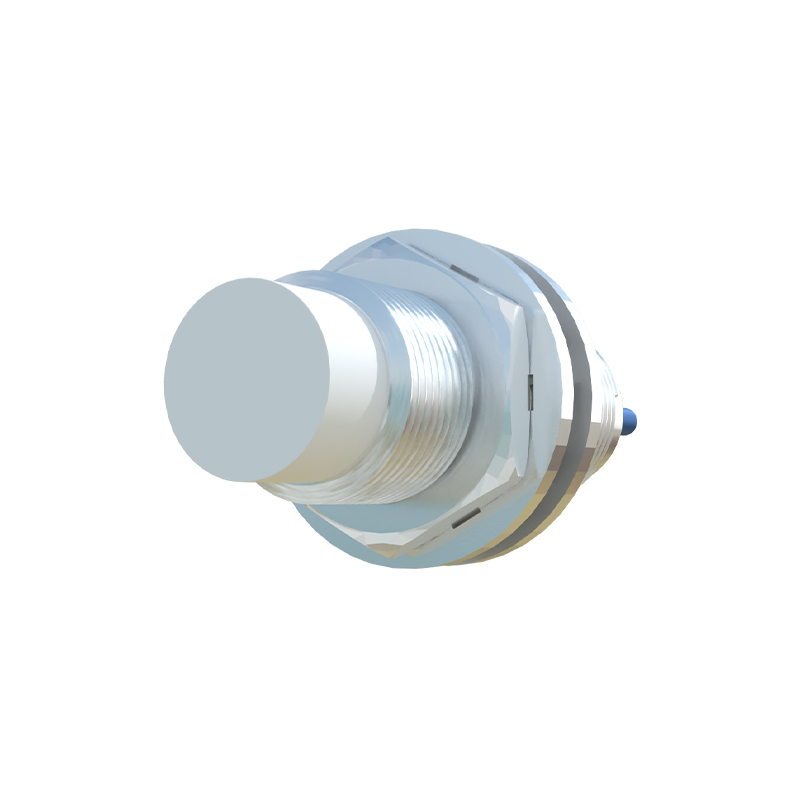
This operating principle grants Hall Effect switches several critical benefits. First, they are truly non-contact, meaning there is no wear and tear from physical interaction, leading to an exceptionally long operational life. They are immune to environmental contaminants such as dust, oil, and moisture, provided the housing is appropriately sealed. They can operate at very high switching frequencies, detecting objects moving at rapid speeds. Furthermore, they are not affected by the target object's surface color, texture, or material composition (as long as it is magnetically perceptible), and they maintain consistent performance over a wide temperature range.
The applications of Hall Effect proximity switches are vast and varied. In the automotive industry, they are ubiquitous, used for measuring crankshaft and camshaft position, detecting wheel speed for anti-lock braking systems (ABS), and sensing seatbelt engagement. In industrial manufacturing, they are employed for precise position detection on conveyor systems, counting products, monitoring rotational speed of motors and fans, and as end-of-travel limit switches in automated machinery. Consumer electronics also utilize miniature Hall switches for features like laptop lid closure detection (sleep/wake function) and in smartphones for flip cover detection.
When selecting a Hall Effect proximity switch for a specific application, several key parameters must be considered. The sensing distance, or switch point, is crucial and must be matched to the mechanical requirements. The output type is another major decision point: options include digital (PNP or NPN transistor outputs, which are common in programmable logic controller systems), analog (providing a voltage proportional to the magnetic field strength), and push-pull configurations. The supply voltage range (e.g., 5V DC, 12-24V DC) must be compatible with the control system. Physical characteristics like housing material (often stainless steel or nickel-plated brass), size, and connection type (pre-wired cable or connector) are chosen based on the installation environment. Finally, one must specify whether a unipolar switch (activates with a single south or north pole), bipolar switch (responds to both poles), or omnipolar switch (activates with either pole) is needed based on the magnetic source.
Installation and wiring are generally straightforward. Ensuring correct polarity of the power supply is essential. The sensor must be positioned so that the target object moves within its specified sensing range. For optimal performance and to avoid interference, it is advisable to keep the sensor away from strong external magnetic fields or large current-carrying cables.
In comparison to other sensor types, Hall Effect switches offer distinct pros and cons versus inductive and capacitive proximity sensors. Inductive sensors only detect metals and their sensing range can be influenced by the type of metal. Capacitive sensors can detect non-metallic materials but are sensitive to environmental factors like humidity. The Hall switch's definitive requirement is a magnetic trigger, making it ideal for applications involving permanent magnets or ferrous metals.
In conclusion, the Hall Effect proximity switch is a cornerstone of modern sensing technology. Its foundation in a simple yet elegant physical law translates into a device that is durable, fast, and highly reliable. By understanding its operating principle, key features, and application considerations, engineers and technicians can effectively harness this technology to create more efficient, safe, and intelligent automated systems across every industry.