Proximity sensors are indispensable components in modern industrial automation, enabling non-contact detection of objects within a defined range without physical interaction. These devices play a critical role in enhancing efficiency, safety, and reliability across manufacturing, packaging, assembly, and material handling systems. Understanding their operational principles is essential for engineers and technicians working with automated machinery.
At their core, proximity sensors function by emitting an electromagnetic field, light beam, or ultrasonic waves and detecting changes in the return signal or field when an object enters their sensing zone. The absence of mechanical contact eliminates wear and tear, ensuring long service life and minimal maintenance. Proximity sensors are broadly categorized based on their detection technology: inductive, capacitive, ultrasonic, and photoelectric.
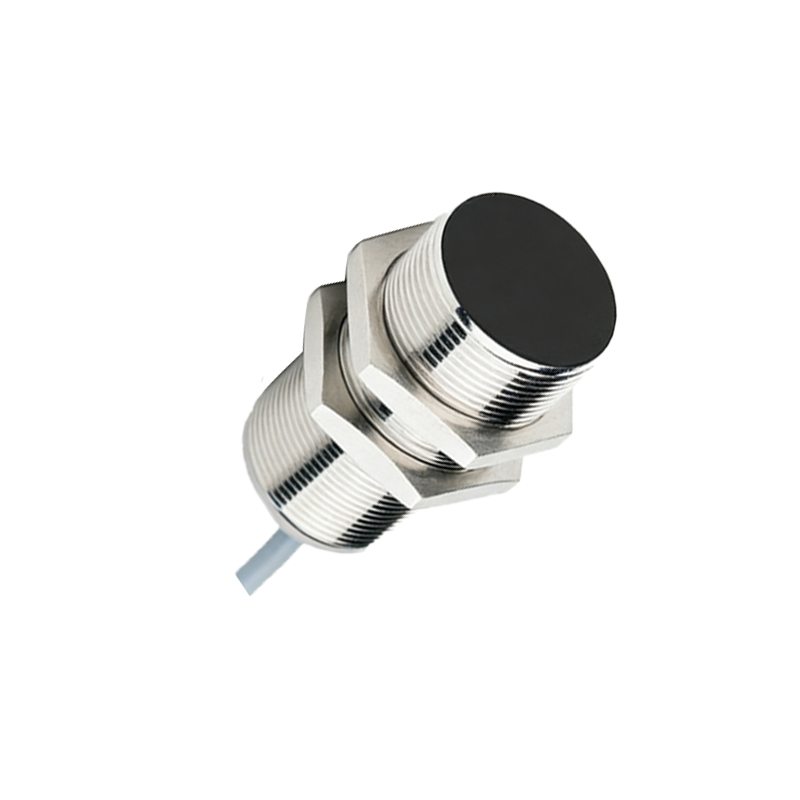
Inductive proximity sensors are widely used for detecting metallic objects. They consist of an oscillator circuit that generates a high-frequency electromagnetic field around the sensor's active surface. When a ferrous or non-ferrous metal object enters this field, eddy currents are induced on the metal's surface, causing a change in the oscillation amplitude. This change is detected by the sensor's threshold circuit, which triggers an output signal—typically a solid-state switch—to indicate the object's presence. Inductive sensors are ideal for harsh environments, as they are resistant to dust, moisture, and vibrations. Common applications include position sensing of metal parts, speed monitoring of rotating gears, and end-of-travel detection in machinery.
Capacitive proximity sensors can detect both metallic and non-metallic materials, including liquids, plastics, wood, and granular substances. They operate by generating an electrostatic field between two electrodes: one acting as the sensor's active surface and the other as the ground reference. When an object enters the sensing area, it alters the dielectric constant of the surrounding medium, increasing the capacitance between the electrodes. This capacitance change is measured by the sensor's internal circuitry, which activates the output when a preset threshold is exceeded. Capacitive sensors are valuable in level detection for tanks, material handling for non-metallic products, and presence verification in packaging lines.
Ultrasonic proximity sensors utilize sound waves beyond the human hearing range (typically 20 kHz to 200 kHz). They emit ultrasonic pulses and measure the time taken for the echo to return after reflecting off an object. By calculating the time-of-flight, the sensor determines the distance to the target. These sensors are effective for detecting objects regardless of color, transparency, or material composition, making them suitable for complex applications like liquid level monitoring, object profiling, and collision avoidance in automated guided vehicles (AGVs).
Photoelectric proximity sensors rely on light beams—usually infrared, visible red, or laser—to detect objects. They consist of a light emitter and a receiver. When an object interrupts or reflects the light beam, the receiver detects the change in light intensity, triggering an output. Photoelectric sensors are classified into three main types: through-beam (separate emitter and receiver), retro-reflective (emitter and receiver in one unit with a reflector), and diffuse (emitter and receiver in one unit, detecting reflected light from the object). They excel in long-range detection, precise positioning, and identifying small or transparent items.
Key selection criteria for proximity sensors include sensing distance, response time, environmental conditions (temperature, humidity, contaminants), output type (PNP/NPN, analog, IO-Link), and housing material. Proper installation and alignment are crucial to avoid false triggers from background interference. Regular calibration and maintenance ensure consistent performance.
Advancements in sensor technology have led to the development of smart sensors with integrated diagnostics, self-monitoring capabilities, and network connectivity via Industrial IoT protocols. These innovations enable predictive maintenance, real-time data analytics, and seamless integration into Industry 4.0 ecosystems.
In summary, proximity sensors are vital for automating industrial processes by providing reliable, non-contact object detection. Their diverse operating principles allow tailored solutions for specific applications, driving productivity and operational safety in modern manufacturing environments.