In modern industrial automation and precision measurement systems, laser receiving sensors play a critical role in enabling high-accuracy detection, alignment, and data transmission. These sensors are designed to capture laser beams emitted from sources, converting optical signals into electrical outputs for processing by control systems. The core technology involves photodetectors, such as photodiodes or phototransistors, which respond to specific wavelengths of laser light—commonly in the visible (e.g., 650 nm) or infrared (e.g., 850 nm, 1550 nm) spectra. Key parameters include sensitivity, response time, and signal-to-noise ratio, ensuring reliable performance even in challenging environments with ambient light interference or vibrations.
Industrial applications span diverse fields. In manufacturing, laser receivers are integral to alignment systems for machinery setup, where they detect laser lines or points to guide precise positioning of components. For example, in CNC machining or robotic assembly, sensors ensure tools follow programmed paths with micron-level accuracy. In construction and surveying, laser level detectors use receiving sensors to interpret rotating or static laser beams, facilitating leveling and grading tasks over long distances. Additionally, in safety systems like light curtains, laser sensors monitor intrusion into hazardous zones, triggering immediate shutdowns to prevent accidents.
The design of laser receiving sensors must account for environmental factors. Many models feature rugged housings with IP67 or higher ratings for dust and water resistance, suitable for harsh factory floors or outdoor sites. Advanced optics, such as lenses or filters, enhance signal clarity by focusing laser light while rejecting stray ambient radiation. Digital interfaces, including analog outputs (0-10V, 4-20mA) or communication protocols like IO-Link and Ethernet/IP, enable seamless integration with PLCs and industrial networks. Some sensors incorporate microprocessors for real-time signal processing, allowing adaptive threshold adjustments to maintain accuracy despite varying conditions.
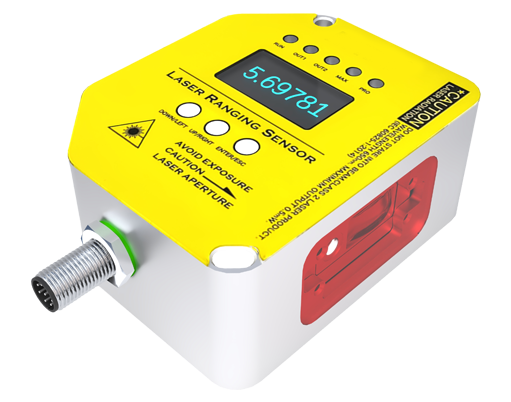
Recent advancements focus on improving versatility and intelligence. Multi-function sensors can handle multiple laser wavelengths or modulation frequencies, reducing the need for separate devices in complex setups. Smart sensors with embedded diagnostics provide feedback on alignment status or contamination levels, supporting predictive maintenance. Innovations in materials, such as silicon carbide photodetectors, extend operational ranges to higher temperatures or corrosive environments. Moreover, the integration of AI algorithms enables pattern recognition, where sensors distinguish between intentional laser signals and background noise, enhancing reliability in dynamic settings.
Selecting the right laser receiving sensor involves evaluating application requirements. For high-speed applications like barcode scanning or LiDAR, fast response times (nanoseconds) are essential. In contrast, long-range detection, such as in telecommunication or distance measurement, prioritizes sensitivity and low noise. Users should also consider mounting options, alignment aids (e.g., visual indicators), and compliance with industry standards like IEC 60825 for laser safety. Regular calibration and maintenance, including lens cleaning and output verification, ensure sustained performance over time.

As industries embrace Industry 4.0, laser receiving sensors are evolving toward greater connectivity and autonomy. Wireless variants reduce cabling complexity, while cloud-based monitoring allows remote analysis of sensor data for optimization. Future trends may include miniaturization for embedded systems and enhanced energy efficiency for battery-powered devices. Ultimately, these sensors form a backbone of precision engineering, driving efficiency and safety across sectors from automotive to aerospace. By understanding their principles and applications, engineers can leverage laser technology to solve complex challenges in modern industrial landscapes.
