Wavelength laser sensors represent a significant advancement in precision measurement technology, widely adopted across various industrial sectors due to their high accuracy, reliability, and non-contact operation. These sensors operate by emitting laser light at specific wavelengths and analyzing the reflected or scattered signals to determine parameters such as distance, thickness, or surface characteristics. The core principle relies on the interaction between laser wavelength and target material properties, enabling applications in environments where traditional sensors may fail, such as high-temperature zones or corrosive atmospheres.
In manufacturing, wavelength laser sensors are integral to quality control processes. For instance, in automotive assembly lines, they measure component dimensions with micron-level precision, ensuring compliance with strict tolerances. The sensors' ability to function without physical contact minimizes wear and tear, reducing maintenance costs and downtime. Additionally, their fast response times support real-time monitoring, allowing for immediate adjustments in production workflows. This enhances overall efficiency and product consistency, critical in high-volume industries like electronics and aerospace.
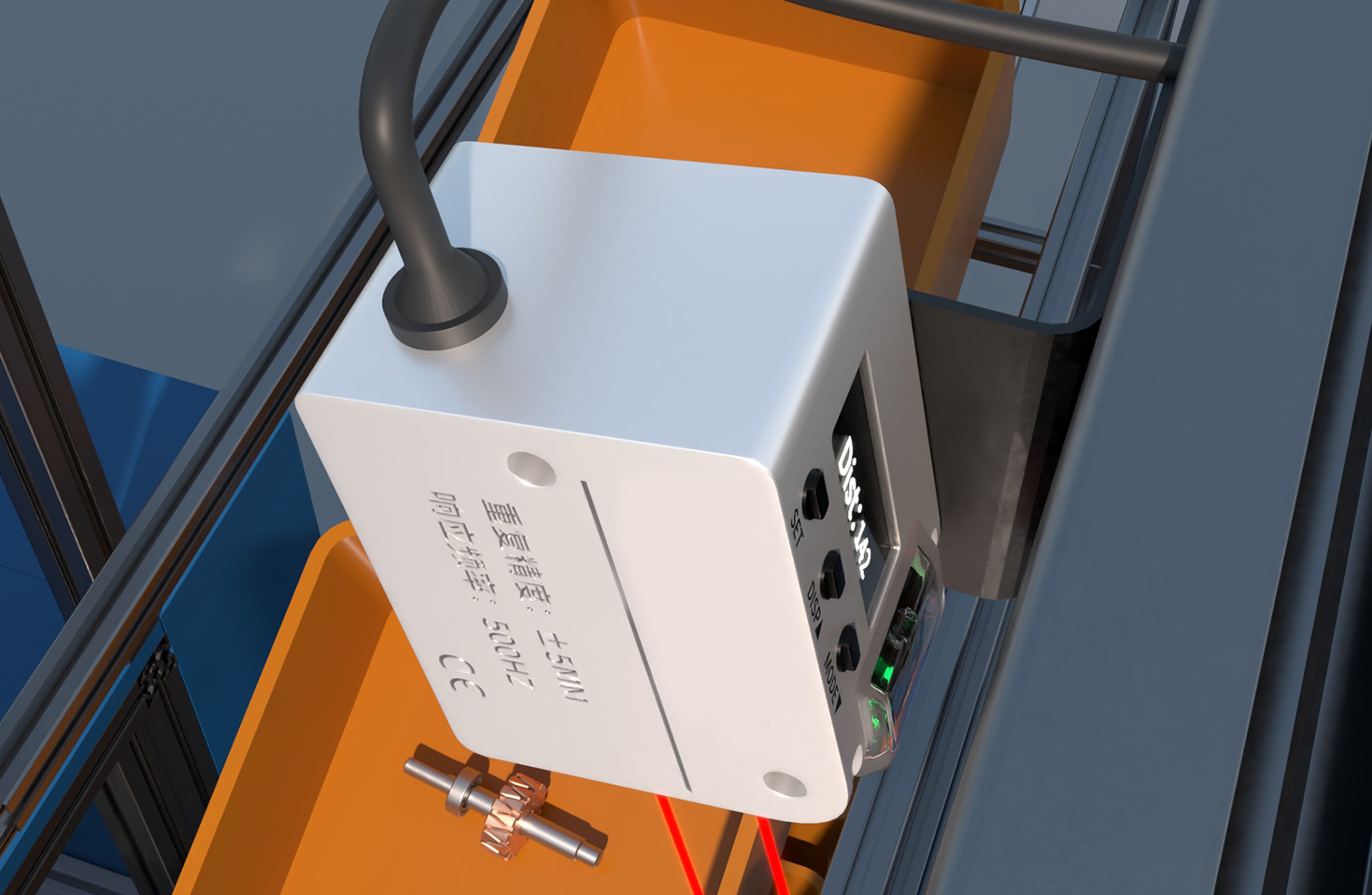
The selection of appropriate laser wavelengths is crucial for optimal performance. Different materials absorb or reflect light variably across the electromagnetic spectrum. For example, infrared wavelengths are often used for organic materials, while ultraviolet lasers suit applications involving glass or semiconductors. Engineers must consider factors such as environmental interference, target reflectivity, and required resolution when designing sensor systems. Advanced models incorporate tunable lasers, which can adjust wavelengths dynamically to adapt to changing conditions, further expanding their utility in complex industrial settings.

Recent innovations in wavelength laser sensor technology focus on integration with digital systems. IoT connectivity enables data collection and analysis through cloud platforms, facilitating predictive maintenance and process optimization. Machine learning algorithms can interpret sensor outputs to detect anomalies or predict failures, enhancing operational safety. Moreover, miniaturization efforts have led to compact sensor designs that fit into confined spaces, opening new possibilities in robotics and medical device manufacturing. These developments align with Industry 4.0 trends, emphasizing automation and smart factory solutions.
Despite their advantages, challenges remain in deploying wavelength laser sensors. Calibration requirements can be stringent, necessitating specialized expertise. Environmental factors like dust, humidity, or vibration may affect accuracy, though protective housings and filtering algorithms mitigate these issues. Cost considerations also play a role, as high-end sensors with advanced features involve significant investment. However, the long-term benefits in terms of reduced waste, improved safety, and enhanced productivity often justify the initial expenditure, making them a valuable asset for competitive industries.
Looking ahead, research into new laser sources and materials promises to broaden sensor capabilities. Quantum dot lasers and photonic integrated circuits could lead to even smaller, more efficient devices. As industries continue to prioritize precision and automation, wavelength laser sensors will likely evolve to meet emerging demands, solidifying their role as indispensable tools in modern engineering. Their versatility and performance underscore why they remain at the forefront of measurement technology, driving innovation across global industrial landscapes.