In the landscape of industrial automation and precision measurement, the dominance of laser-based sensors is often highlighted for their accuracy and speed. However, a diverse array of non-laser sensing technologies continues to play critical, often irreplaceable, roles across numerous sectors. These alternatives, leveraging principles from ultrasonics to capacitive and inductive sensing, offer robust solutions where lasers may be impractical due to environmental constraints, cost considerations, or specific material properties.
Ultrasonic sensors, for instance, operate by emitting high-frequency sound waves and measuring the time taken for an echo to return. This technology excels in applications involving liquid level detection, object presence in dusty or foggy environments, and distance measurement for non-reflective surfaces. Unlike lasers, ultrasonic waves are unaffected by color or transparency and perform reliably in conditions with airborne particulates that would scatter a laser beam. Their non-contact nature makes them ideal for handling delicate materials or in food and beverage industries where contamination must be avoided.
Capacitive sensors detect changes in an electrical field. They can sense both conductive and non-conductive materials, including liquids, powders, plastics, and glass. This versatility is paramount in process control, such as monitoring fill levels through container walls or detecting the presence of thin films and foils. Their ability to function without physical contact prevents wear and tear, ensuring longevity in high-cycle operations. While perhaps not matching the pinpoint resolution of some laser systems for minute detail, capacitive sensors provide exceptional reliability for presence/absence detection in challenging industrial settings.

Inductive sensors, on the other hand, are specifically designed for metallic objects. They generate an electromagnetic field and react to the eddy currents induced in a metal target. This makes them the workhorse of manufacturing and automotive assembly lines for tasks like part counting, position verification of metal components, and speed detection. Their rugged construction allows them to withstand severe environments with oil, coolant, and vibration—conditions that could compromise more delicate optical systems like lasers. The inherent insensitivity to non-metallic substances also reduces false triggers.

Another significant category is photoelectric sensors that use non-laser light sources, typically LEDs. These sensors employ modulated infrared, visible, or colored light to detect objects. Diffuse, retro-reflective, and through-beam modes offer flexibility for various ranges and object types. Modern advanced versions with background suppression or color recognition capabilities handle complex tasks like contrast detection on packaging lines. They present a cost-effective and eye-safe alternative to laser sensors for many standard detection applications, offering a solid balance of performance, safety, and durability.
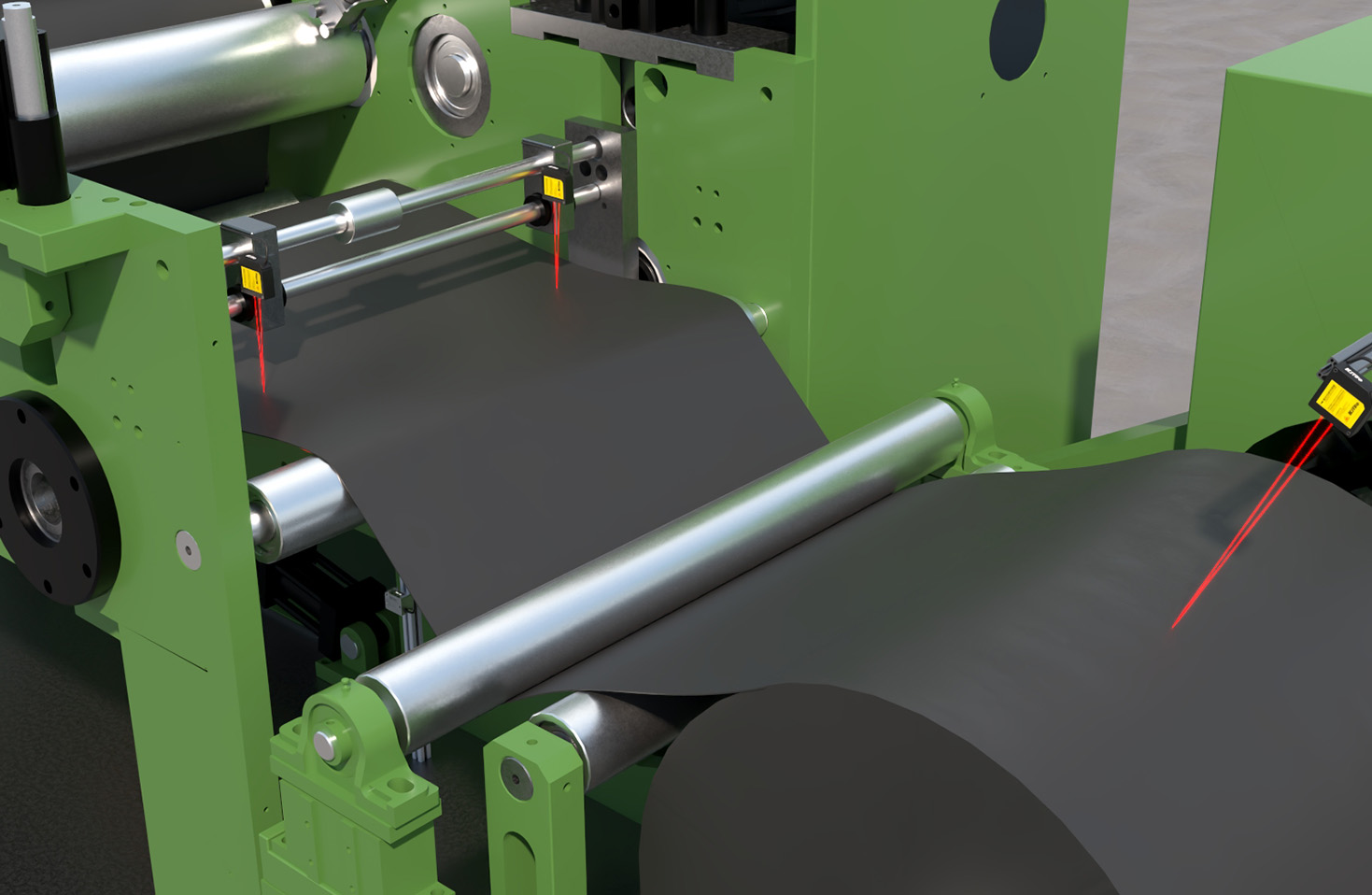
The selection criteria between laser and non-laser sensors hinge on specific application parameters. Factors such as target material, required sensing distance, environmental conditions (humidity, dust, temperature), necessary precision, and overall system cost must be meticulously evaluated. Non-laser sensors often provide superior solutions where environmental robustness, cost-effectiveness for the task, or material-specific sensing is the priority. Their continued evolution, incorporating smarter electronics and improved algorithms, ensures they remain at the forefront of industrial innovation, delivering dependable performance that underpins modern manufacturing, logistics, and process industries.