In the realm of industrial automation and precision engineering, laser displacement sensors have become indispensable tools for non-contact measurement. While single-point sensors are widely used, their capabilities are significantly expanded through the implementation of sensor arrays, often referred to as point arrays or matrix configurations. This article delves into the principles, applications, and key considerations of laser displacement sensor arrays.
A laser displacement sensor array fundamentally consists of multiple laser emitter and receiver pairs arranged in a specific pattern—linear, grid, or custom matrix. Each point in the array independently measures the distance to a target surface using triangulation or time-of-flight principles. By firing lasers sequentially or simultaneously, these systems capture a dense set of displacement data across a defined area, effectively creating a high-resolution profile or contour map of the target object. This contrasts with single-point sensors that only provide data for one specific spot.

The core advantage of a point array is its ability to perform multi-point measurement in a single operation. This enables comprehensive inspection tasks such as flatness assessment, warpage detection, thickness profiling, and 3D shape verification. For instance, in semiconductor manufacturing, an array can scan an entire wafer to identify microscopic deformations. In automotive assembly, it can measure multiple weld points or panel gaps simultaneously, drastically reducing cycle time compared to moving a single sensor or the target itself.
Key technical specifications for evaluating these systems include measurement range, resolution, sampling speed, and point spacing. The spacing between laser points determines the lateral resolution of the captured profile. A tighter spacing yields finer detail but may require more sensors or faster data processing. Modern arrays often incorporate sophisticated controllers that synchronize data acquisition from all points and handle the substantial data throughput.
Integration of laser displacement sensor arrays into production lines requires careful planning. Environmental factors like ambient light, vibration, and surface characteristics (e.g., reflectivity, color, texture) can affect accuracy. Many advanced models feature automatic sensitivity adjustment and built-in algorithms to filter noise. Communication protocols like EtherCAT, PROFINET, or Ethernet/IP are commonly supported for seamless connectivity with PLCs and industrial networks, enabling real-time process control and data logging.
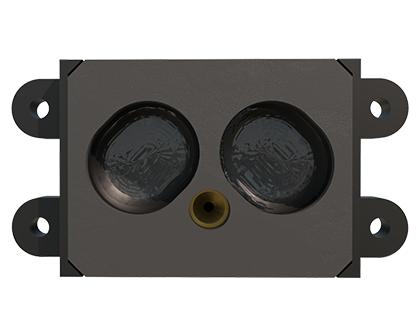
Applications span numerous industries. In electronics, arrays inspect solder paste height or component coplanarity. In metalworking, they monitor sheet flatness or roll alignment. In robotics, they provide guidance for bin-picking or assembly by generating precise 3D coordinates. The trend is toward smarter, more compact arrays with embedded processing power for edge computing, allowing features like outlier detection and pass/fail judgments to be made directly at the sensor level.
Selecting the right array involves balancing performance needs with cost. While offering unparalleled speed and completeness of data, arrays are a higher investment than single-point solutions. Engineers must define the required measurement area, tolerance levels, and environmental conditions to specify an appropriate system. As Industry 4.0 advances, the fusion of laser displacement sensor arrays with AI and machine vision is paving the way for even more adaptive and intelligent quality control systems, ensuring higher productivity and precision in manufacturing.