Inductive proximity sensors are fundamental components in modern industrial automation, offering non-contact detection of metallic objects. Their robust design, reliability, and versatility make them indispensable in countless applications, from assembly lines and robotic systems to machine safety and material handling. This article delves into the operational principles, key characteristics, common applications, and critical factors for selecting the right inductive proximity switch for your specific needs.
At the core of an inductive proximity sensor is an oscillator circuit that generates a high-frequency electromagnetic field at its active face. This field is emitted from a coil wound around a ferrite core. When a conductive metal target enters this field, eddy currents are induced on the target's surface. These eddy currents draw energy from the sensor's oscillator, resulting in a measurable reduction in the oscillation amplitude. An evaluation circuit within the sensor detects this amplitude change and triggers a solid-state output switch (typically PNP or NPN). The sensor thus provides a discrete signal indicating the presence or absence of the target without any physical contact, eliminating mechanical wear and enabling high-speed operation.
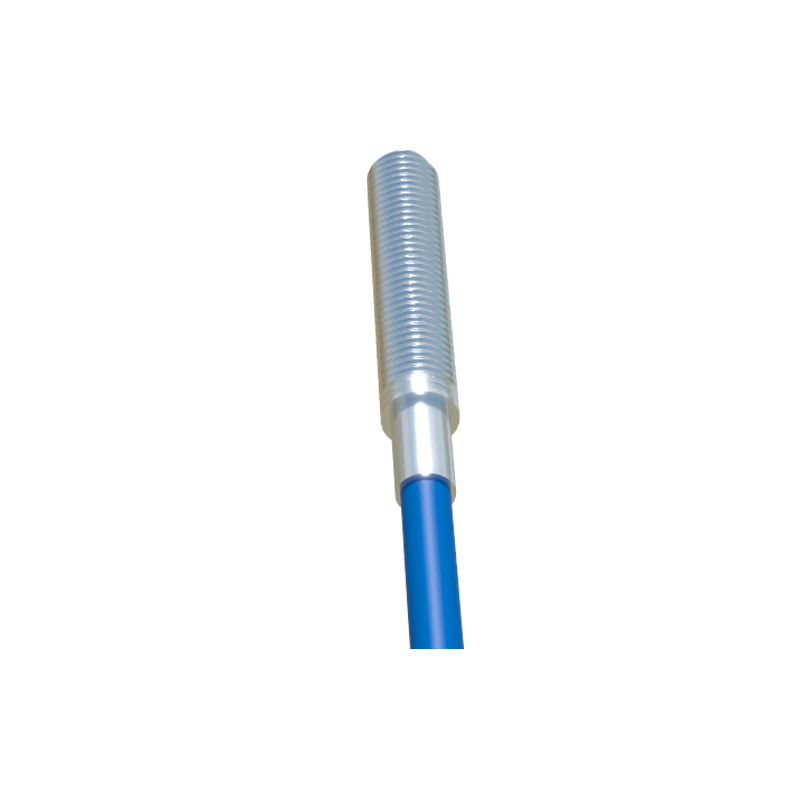
Key specifications define the performance and suitability of an inductive sensor. The sensing distance, or nominal range (Sn), is a critical parameter, typically ranging from 1 to 60 mm for standard cylindrical models. It's important to note that this rated distance is defined for a standard target of mild steel. Factors like target material, size, shape, and installation conditions can affect the actual sensing distance. For instance, non-ferrous metals like aluminum or copper have a reduced effective sensing range, often requiring a correction factor. The sensor's housing material, such as nickel-plated brass, stainless steel, or PBT plastic, determines its resistance to environmental factors like chemicals, coolants, and physical impact. The output configuration is another vital choice. Two-wire AC/DC, three-wire DC (PNP or NNP sourcing/sinking), and four-wire versions (with both NO and NC contacts) are available to interface seamlessly with different control systems like PLCs, relays, and counters.
The applications for inductive proximity switches are vast. In manufacturing, they are used for part detection on conveyors, verifying the presence of components in fixtures, counting metallic items, and monitoring end positions of cylinders. In machine tools, they serve as limit switches for axis positioning and tool breakage detection. Their sealed designs (IP67, IP69K) make them ideal for harsh environments, including washdown areas in food and beverage processing or outdoor applications. A specialized variant, the cylindrical "threaded barrel" style, is particularly popular for easy mounting in drilled and tapped holes, providing precise and repeatable positioning.
Selecting the optimal inductive sensor requires careful consideration of several factors beyond just the sensing distance. First, identify the target material (steel, stainless steel, aluminum, brass) and its minimum size to ensure reliable detection. The required mounting style—flush, non-flush, or embedded—affects the sensing characteristics; flush-mountable sensors can be installed without a lateral clearance zone but have a shorter range. Environmental conditions are paramount: consider temperature extremes, exposure to cutting fluids, oils, or abrasive dust, and the need for high-pressure washdown capabilities. The electrical requirements, including operating voltage (10-30V DC, 20-250V AC) and output current capacity, must match the control system. For applications involving different metals, sensors with factor-1 characteristics (same sensing distance for all metals) are available, though at a higher cost. Finally, consider special features like short-circuit protection, reverse polarity protection, and IO-Link digital communication for advanced diagnostics and parameter setting.
In conclusion, inductive proximity sensors are a mature yet continually evolving technology. Their simple principle translates into exceptionally reliable operation. By understanding their working mechanism, key specifications, and the detailed requirements of the application, engineers and technicians can effectively leverage these sensors to enhance system reliability, increase production speed, and reduce maintenance costs. As Industry 4.0 advances, the integration of smart sensors with digital communication protocols like IO-Link is further expanding their role from simple binary switches to intelligent data points within connected industrial ecosystems.