In the realm of industrial automation and control systems, PNP speed sensors and proximity switches play a pivotal role in monitoring rotational speed, detecting object presence, and ensuring precise operational control. These devices are fundamental components in machinery across various sectors, including automotive manufacturing, conveyor systems, packaging, and material handling. A PNP (Positive-Negative-Positive) sensor, in the context of proximity switches and speed sensing, refers to the transistor output configuration. Specifically, a PNP sensor switches the positive voltage supply to the load when activated. This is in contrast to NPN (Negative-Positive-Negative) sensors, which switch the negative or ground side. The choice between PNP and NPN often depends on the prevailing electrical conventions of the control system, with PNP being commonly preferred in many European and Asian designs for their compatibility with sinking input modules.
A PNP speed sensor, often a type of inductive or magnetic proximity switch, is designed to detect the rotational speed of a target, such as a gear tooth, cam, or encoder wheel. It operates on the principle of electromagnetic induction or Hall effect. As a ferromagnetic target (like a gear tooth) approaches the sensor's active face, it disrupts the sensor's electromagnetic field. This change is converted into a digital output signal—a series of pulses. The frequency of these pulses is directly proportional to the rotational speed of the target. This data is then fed into a programmable logic controller (PLC), frequency counter, or tachometer to calculate and display the RPM (revolutions per minute). The robustness of these sensors allows for reliable operation in harsh environments with presence of dust, oil, and vibration.
The term "proximity switch" underscores its primary function: to detect the presence or absence of an object without physical contact. A PNP proximity switch, when an object enters its sensing range, activates its output transistor, connecting the output wire to the positive supply voltage. This provides a "high" signal to the control system. Key specifications include sensing distance, which can range from a few millimeters to several tens of millimeters, response frequency (how quickly it can detect objects passing by), and environmental protection ratings like IP67 for dust and water resistance. The non-contact nature eliminates mechanical wear, granting these switches exceptional longevity and maintenance-free operation compared to mechanical limit switches.
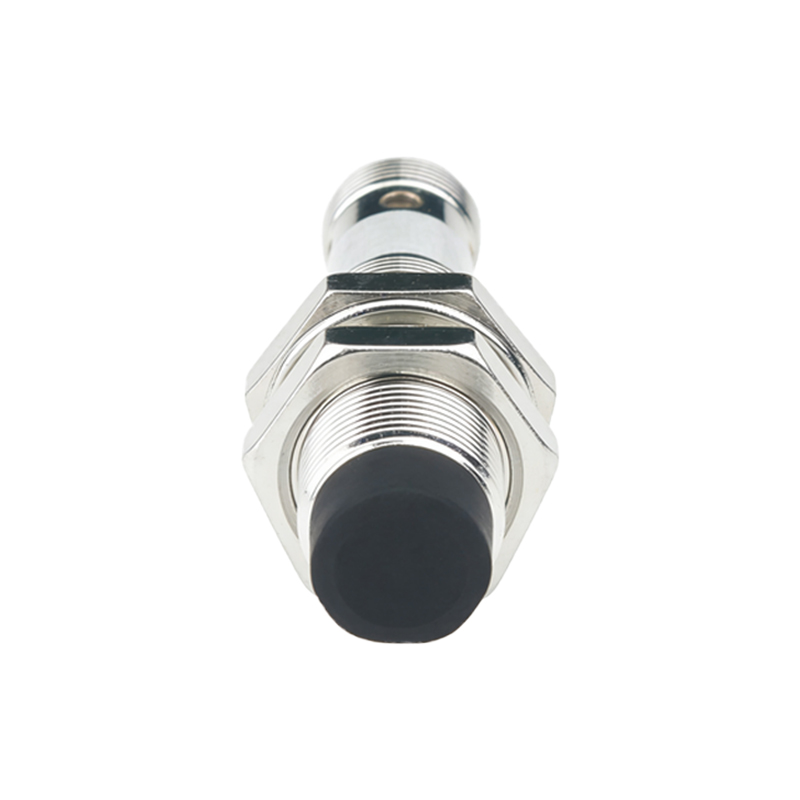
Integrating a PNP speed sensor into a system requires careful consideration of wiring and compatibility. The standard three-wire configuration consists of a brown wire for positive supply (typically +24V DC), a blue wire for negative/common (0V), and a black wire as the switched PNP output. When the sensor is active, the black wire supplies the positive voltage to the load. It is crucial to ensure the control device (e.g., PLC input) is designed to receive a PNP (sourcing) signal. Incorrect pairing with an NPN-input module can lead to malfunction. Additionally, factors like target material (steel is ideal for inductive sensors), target size, installation alignment, and electrical noise immunity must be addressed for optimal performance. Shielding and proper cable routing are essential in electrically noisy industrial environments to prevent false triggering.
Applications are vast and critical. In automotive assembly lines, PNP speed sensors monitor the RPM of robotic arms and conveyor motors. On wind turbines, they provide vital overspeed protection. In printing presses, they ensure precise synchronization of rollers. The combination of speed sensing and proximity detection in one device makes it indispensable for position verification and speed control in automated processes. The advantages of using PNP versions include straightforward interfacing with many common PLCs and a signal level that is often considered safer in fault conditions, as a wire break typically results in a low (0V) signal rather than a floating high voltage.
Maintenance primarily involves periodic checks for physical damage, accumulation of metallic debris on the sensing face, and verification of output signal integrity using a multimeter or oscilloscope. As technology advances, modern PNP sensors are becoming more intelligent, with integrated diagnostics like short-circuit protection, IO-Link communication for parameterization and data exchange, and enhanced resistance to extreme temperatures and electromagnetic interference. Selecting the right PNP speed sensor or proximity switch demands a clear understanding of the application requirements, including required sensing range, speed measurement range, output current capacity, and environmental conditions. By making an informed choice, engineers can significantly enhance system reliability, safety, and efficiency, ensuring seamless automation and control.