In the realm of industrial automation, laser sensors have become indispensable tools for precise detection, measurement, and positioning. Among the various output configurations available, PNP laser sensors hold a significant place, particularly in regions and systems where this sourcing output type is standard. This article delves into the operational principles, key advantages, typical applications, and selection criteria for PNP laser sensors, providing a comprehensive guide for engineers and system integrators.
A PNP laser sensor, fundamentally, refers to the transistor output type of the sensor. In a PNP (Positive-Negative-Positive) configuration, the output switch connects the load to the positive supply voltage when activated. In simpler terms, when the sensor detects an object, its output terminal switches to a high state, sourcing current to the load. This is in contrast to NPN (Negative-Positive-Negative) sensors, which sink current to ground. The choice between PNP and NPN often depends on the prevailing electrical conventions of the control system, such as Programmable Logic Controllers (PLCs), with PNP being commonly used in Europe and many other parts of the world for positive logic systems.
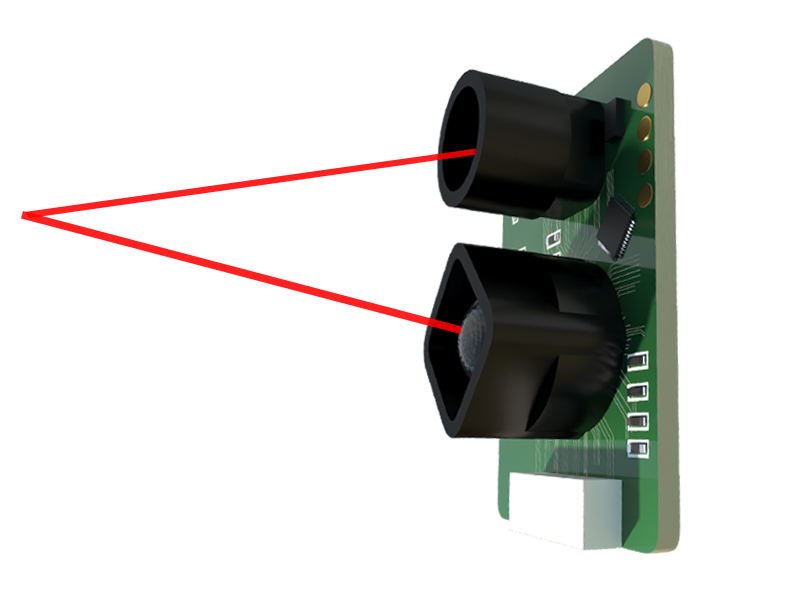
The core of a PNP laser sensor is its laser diode emitter and a photoelectric receiver. The sensor projects a focused, coherent laser beam onto a target. The detection method can vary: through-beam sensors have separate emitter and receiver units, detecting an object when it interrupts the beam; retro-reflective types use a reflector to bounce the beam back to a combined unit; and diffuse reflective sensors detect light scattered directly back from the object. Upon receiving the reflected or interrupted light signal, the internal circuitry processes it and triggers the PNP transistor output, providing a switching signal.
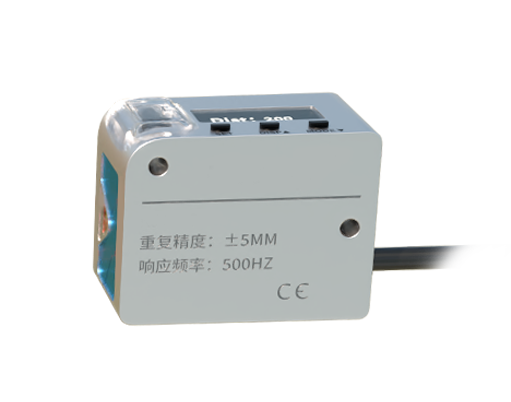
The advantages of using PNP laser sensors are numerous. Their high precision, enabled by the fine laser spot, allows for the detection of very small objects or precise edge positioning. They offer excellent response times, making them suitable for high-speed production lines. Laser sensors generally provide longer sensing distances compared to standard photoelectric sensors. The PNP output is often considered straightforward to interface with common PLC input modules designed for sourcing signals, simplifying wiring and reducing potential integration errors. Furthermore, many models feature adjustable sensitivity, time delays, and teach-in functions for flexible setup.
Typical applications for PNP laser sensors span across diverse industries. In automotive manufacturing, they are used for precise part presence verification, robot guidance, and gap measurement. In electronics assembly, they detect miniature components on circuit boards. Packaging machinery utilizes them for label detection, fill level control, and product counting. They are also crucial in material handling for object positioning on conveyors and in logistics for dimensioning parcels. Their robustness and reliability make them ideal for harsh environments where dust, vibration, or varying ambient light might be present.
When selecting a PNP laser sensor for a specific application, several critical parameters must be evaluated. The sensing range must be appropriate for the working distance. The size of the laser spot should be smaller than the smallest feature to be detected. The required response time must align with the process speed. Environmental factors like temperature, humidity, and potential exposure to contaminants dictate the necessary ingress protection (IP) rating. The output configuration (PNP) must be compatible with the control system's input card. Additionally, mechanical considerations such as housing size, mounting style, and connection type (pre-wired cable or connector) are vital for seamless integration.
Installation and maintenance are straightforward but require attention. Ensure the sensor is securely mounted and aligned correctly. Avoid optical interference from highly reflective surfaces or other light sources. Regular cleaning of the lens is essential to maintain optimal performance. Always refer to the manufacturer's datasheet for specific wiring instructions, typically involving a brown wire for positive supply (e.g., +24V DC), a blue wire for negative/common, and a black wire as the PNP output signal.
In conclusion, PNP laser sensors are a powerful and versatile category of photoelectric sensors. Their ability to provide accurate, high-speed switching signals via a sourcing output makes them a cornerstone in modern industrial control systems. By understanding their operation, benefits, and application guidelines, automation professionals can effectively leverage these devices to enhance efficiency, quality, and reliability in a wide array of automated processes. As technology advances, features like background suppression, precise analog measurement outputs, and IO-Link communication are becoming more integrated, further expanding the capabilities of the humble PNP laser sensor.