In the realm of industrial automation, safety systems, and interactive technology, the 32-inch proximity sensor stands as a critical component for non-contact detection. Unlike smaller sensors designed for precise, short-range tasks, a sensor with a 32-inch (approximately 81 cm) sensing range fills a unique niche, enabling the monitoring of larger areas or the detection of objects at a safer, more practical distance. This guide delves into the technology behind these sensors, their key operating principles, and the diverse applications where they prove indispensable.
At its core, a proximity sensor is a device that detects the presence or absence of an object within a specified field without physical contact. For a 32-inch range, the most common and reliable technologies are inductive, capacitive, and ultrasonic sensors, each with distinct advantages.
Inductive proximity sensors are the workhorses for detecting metallic objects. They generate an electromagnetic field. When a metal target enters this field, it induces eddy currents within the target, which in turn causes a change in the sensor's own oscillation amplitude. This change is detected and triggers an output signal. For achieving a 32-inch range with inductive technology, specialized designs and often larger sensor housings are required. They are exceptionally robust, resistant to environmental contaminants like dust and oil, and offer high switching frequencies. Typical applications include position verification of large machinery parts, conveyor line monitoring for metal containers or pallets, and as safety presence checks in automotive manufacturing lines.
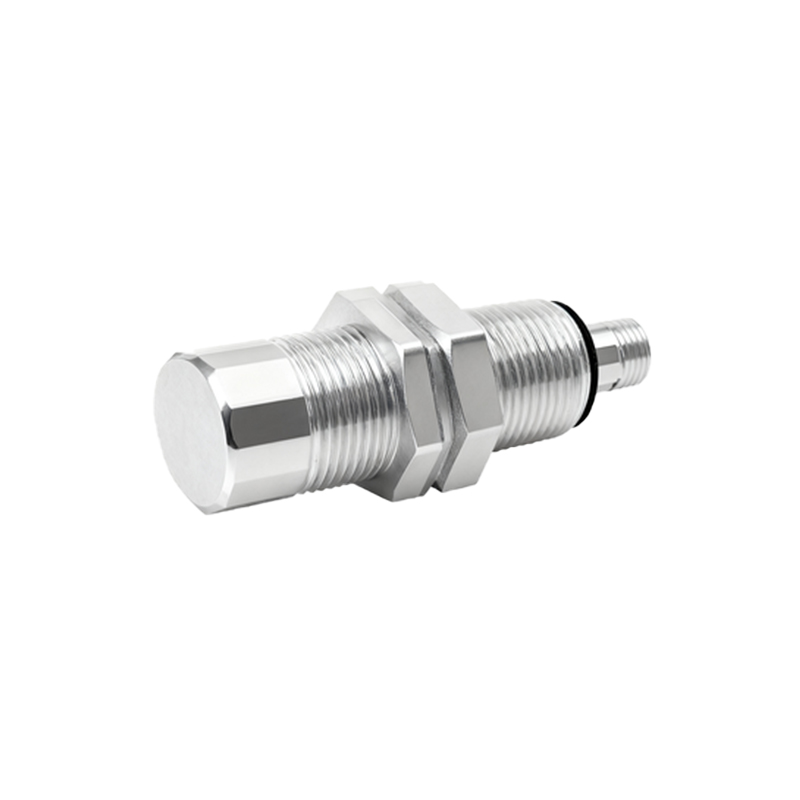
Capacitive proximity sensors can detect both metallic and non-metallic materials, including liquids, plastics, wood, and granules. They function by generating an electrostatic field. Any object that enters this field alters the capacitance of the sensor's circuit. This change is measured, and when it exceeds a preset threshold, the sensor activates. Achieving a stable 32-inch detection range with capacitive sensors is challenging due to their sensitivity to environmental factors like humidity and material composition. They are more commonly found in shorter ranges but specialized versions are used in level detection for bulk materials in large silos or presence detection of non-metallic objects on wide conveyors.
Ultrasonic sensors are arguably the most effective technology for consistent and reliable long-range non-contact detection, making them ideal for the 32-inch benchmark. They operate on the principle of echolocation. The sensor emits high-frequency sound waves (inaudible to humans) and then listens for the echo reflected from a target object. By calculating the time difference between the emission and reception of the sound wave, the sensor can precisely determine the distance to the object. Ultrasonic sensors are largely material-agnostic, detecting almost any solid or liquid object regardless of color, transparency, or surface texture. They are minimally affected by dust, light, or smoke, though temperature variations and wind can influence accuracy. Their 32-inch range is easily achievable and highly accurate. Applications are vast, including palletizing and depalletizing robot guidance, loop control in warehouse automation, parking assistance systems for large vehicles, and liquid level control in large tanks.
Selecting the right 32-inch proximity sensor requires careful consideration of several factors beyond just range. The target material is paramount: metal dictates inductive, diverse materials suggest ultrasonic or capacitive. The required output type (e.g., digital switch, analog 4-20mA, or IO-Link for smart communication) must match the control system. Environmental conditions are crucial; factors like temperature extremes, washdown requirements, or exposure to corrosive chemicals will determine the necessary housing material (often stainless steel or PBT plastic) and ingress protection (IP) rating. Finally, mounting considerations and the sensor's form factor (barrel-shaped, rectangular) must be compatible with the installation space.
In practical use, these sensors enhance efficiency and safety. On a packaging line, a 32-inch ultrasonic sensor can detect an approaching pallet, signaling a robotic arm to begin its cycle, thus optimizing throughput. In a hazardous area, an inductive sensor can confirm that a large safety gate is fully closed before heavy machinery is enabled, protecting personnel. Their ability to function without wear and tear, as no physical contact is involved, translates to lower maintenance costs and higher system reliability.
The evolution of Industry 4.0 and the Industrial Internet of Things (IIoT) is further integrating these sensors. Modern 32-inch proximity sensors often come with advanced diagnostics and communication protocols like IO-Link. This allows for remote monitoring of sensor health, predictive maintenance alerts, and dynamic adjustment of parameters like sensing range or output delay without manual intervention, maximizing uptime and operational intelligence.
In conclusion, the 32-inch proximity sensor is not merely a larger version of its smaller counterparts but a specialized solution for specific challenges in automation and safety. By understanding the strengths of inductive, capacitive, and ultrasonic technologies, engineers and system integrators can effectively deploy these sensors to bridge gaps, ensure safety over wider areas,