In the rapidly evolving landscape of industrial automation, laser sensors have emerged as a cornerstone technology, enabling unprecedented levels of precision, speed, and reliability. This article delves into several real-world case studies that highlight the transformative impact of laser-based sensing solutions across diverse sectors. By examining specific applications, we can better understand the operational principles and tangible benefits these systems deliver.
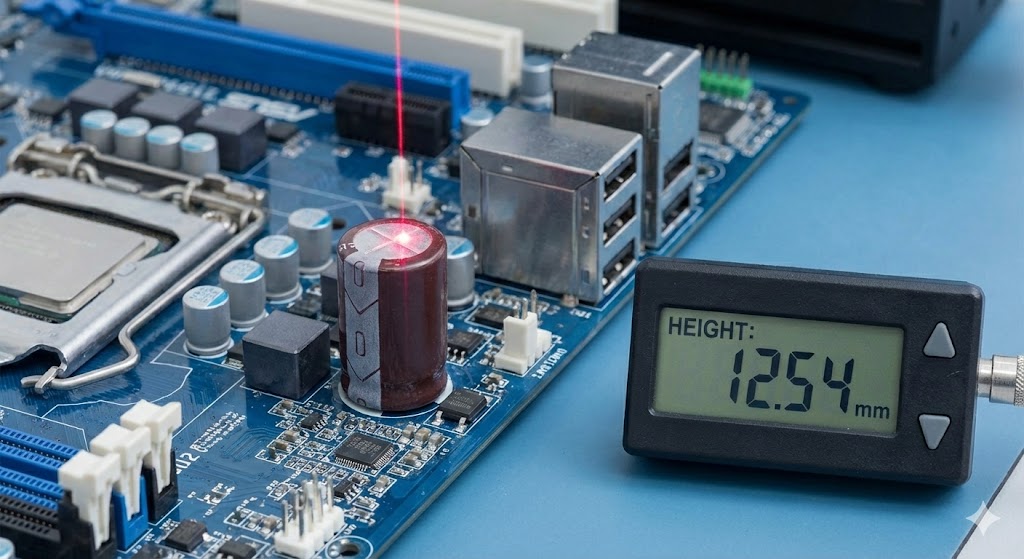
One prominent case involves a major automotive assembly line. Here, laser displacement sensors are deployed for high-precision gap and flush measurement on vehicle body panels. Traditional mechanical gauges were prone to wear and required frequent calibration, leading to production bottlenecks. The implementation of non-contact laser sensors, operating on the principle of triangulation, allowed for continuous, real-time measurement with an accuracy of ±10 micrometers. The sensors project a laser spot onto the target surface, and a receiving lens captures the reflected light's position. Any variation in the target's distance causes a shift in the light's position on the detector, which is precisely calculated. This system not only improved quality control by 40% but also reduced inspection time per vehicle by over 60%, directly boosting throughput and ensuring consistent product quality.
Another compelling application is found in the logistics and warehousing industry. A large distribution center integrated laser profile scanners for automated parcel dimensioning and volume calculation. Mounted above conveyor belts, these sensors utilize time-of-flight or phase-shift measurement techniques to rapidly capture a 3D profile of each passing package. The system instantly calculates the length, width, and height, feeding this data into the warehouse management software for optimal storage assignment and shipping cost calculation. This automation eliminated manual measuring errors, increased processing speed by 300%, and optimized space utilization within the facility. The robustness of laser sensors allows them to perform reliably in dusty environments typical of warehouses, a challenge for many optical systems.
In the semiconductor manufacturing sector, the demand for nanometer-scale accuracy is paramount. A case study from a chip fabrication plant showcases the use of ultra-high-resolution laser interferometer sensors for wafer stage positioning. These sensors measure displacement by analyzing the interference pattern created by splitting a laser beam, with one part reflecting off a moving target (the stage) and the other serving as a reference. This technology provides feedback with sub-nanometer resolution, enabling the photolithography equipment to align silicon wafers with absolute precision. The result is a significant reduction in microscopic alignment errors, leading to higher chip yields and performance. The non-contact nature of the laser is critical here, as any physical contact could contaminate or damage the delicate wafers.
Furthermore, the food and beverage industry presents unique challenges, such as hygiene requirements and handling of variable organic products. A dairy company implemented laser-based contrast sensors for label detection on transparent glass bottles moving at high speeds on a filling line. These sensors distinguish between the label and the transparent glass by evaluating the contrast of the reflected laser light. Unlike photoelectric sensors that can struggle with low-contrast targets, the focused laser beam provides a stable, precise detection point. This ensured that only correctly labeled bottles proceeded to packaging, virtually eliminating mislabeled products and reducing waste. The sensors' sealed housings also met stringent IP69K ratings for washdown environments.
The common thread across these cases is the ability of laser sensors to solve complex measurement and detection problems in challenging industrial settings. Key advantages consistently observed include:

* Non-contact Measurement: Eliminates mechanical wear, prevents product damage, and allows measurement of delicate, hot, or moving objects.
* High Speed and Precision: Capable of micron-level accuracy at kHz sampling rates, essential for modern high-speed automation.
* Robustness: Modern designs are resistant to ambient light, vibration, and harsh environmental conditions like dust, steam, or temperature fluctuations.
* Flexibility: Available in various types (displacement, profile, contrast, distance) and with configurable outputs to integrate seamlessly into PLC and SCADA systems.
In conclusion, these case studies demonstrate that laser sensors are not merely components but strategic enablers of efficiency, quality, and innovation. From ensuring the perfect fit of a car door to positioning a silicon wafer with atomic-level accuracy, laser sensing technology continues to push the boundaries of what is possible in industrial automation. As technology advances, with developments in areas like spectral analysis and integrated AI for data interpretation, the scope and sophistication of laser sensor applications will only continue to expand, solidifying their role as indispensable tools for the smart factory of the future.